
What's inside
- What Makes the Best Inflatable Kayak for Camping Different
- Quick Comparison: Best Inflatable Kayak for Camping Models
- Detailed Reviews: Best Inflatable Kayak for Camping Picks
- Buying Guide: How to Choose the Best Inflatable Kayak for Camping
- Frequently Asked Questions About Best Inflatable Kayak for Camping
As an Amazon Associate I earn from qualifying purchases. This post may contain affiliate links at no extra cost to you.
The best inflatable kayak for camping solves the camper’s oldest transport problem: the boat that is not there. A hard-shell kayak demands a roof rack, a garage wall, and a vehicle arranged around its fourteen feet; the camping trip that begins with a small car, an apartment’s storage closet, or a campervan’s finite cupboards leaves it at home, and the lake at the campsite is admired from the shore. An inflatable kayak packs into a duffel that rides in a boot, a closet, or a caravan locker, inflates at the water’s edge in minutes, and puts the camper on the water the hard-shell owner at the next pitch is still describing wistfully. The modern inflatable is not the beach toy its reputation remembers. The serious classes in this table are built from reinforced PVC and drop-stitch floors borrowed from the inflatable paddleboard’s revolution — chambers that inflate to a firmness a foot cannot dent, hulls that track across a lake with a skeg’s help, and capacities, in their makers’ stated terms, that carry a camper and a dry bag of lunch with dignity. The honest limits deserve the same paragraph as the virtues: an inflatable is slower and more wind-blown than a hard shell of the same length, its floor and chambers ask respect around sharp rock and fish hooks, and it is a flatwater and gentle-river craft in the classes priced for campers, not a whitewater or open-sea instrument. Within those honest borders, which describe most campsite water on earth, it is the most camping-shaped boat ever made.
This guide compares real, currently sold inflatable kayaks from Intex, Sevylor, Advanced Elements, Aquaglide, and Sea Eagle, across the prices a budget-camper reader actually pays, from the entry duffels that put a first paddler afloat for the price of a tank of fuel to the drop-stitch touring classes that rival hard shells on a lake crossing. Each is graded on the camper’s criteria: packed size and weight, because the boat competes for the boot with the tent and the cooler; set-up, in minutes and in the pump arrangements the maker supplies or specifies; on-water manners, tracking, stability, and comfort across an hour’s paddle; construction, in the makers’ stated materials and chamber design, with the repair story told, because an inflatable’s relationship with its patch kit is a long marriage; and capacity, stated and honest, for the paddler plus the picnic. Water safety frames every word of this guide and is never abbreviated on this site: every person in the boat wears a properly fitted personal flotation device, in the jurisdictions that require it and on the waters that merely deserve it; the weather and the water are checked before launching and the trip stays within the paddlers’ ability and the boat’s class; cold water is treated as the hazard it is, with the season’s PFD and clothing rules of the local authority honoured; no alcohol captains the boat; a float plan is left with someone ashore; and the local rules — launch permits, registration where the jurisdiction asks it of inflatables, prohibited waters — are checked before the pump comes out. The inflatable makes the water accessible. The disciplines make it survivable, and they are the price of the second trip.
Our Top Picks
 BRIS 12 ft Inflatable Kayak Fishing Tender Inflatable12 ft144 x 3.8 x 10.8 inches70.5 poundsCheck on Amazon
What Makes the Best Inflatable Kayak for Camping Different
Construction Classes: Vinyl, Reinforced PVC, and the Drop-Stitch Revolution
Inflatable kayaks divide by how their hulls are built, and the construction is the price, the performance, and the lifespan in one specification. The entry class, Intex’s and Sevylor’s famous duffels, is built from vinyl and reinforced vinyl in their makers’ terms, in multiple air chambers with the safety logic the better entry designs honour: a main hull chamber, an inflatable floor that stiffens the boat and softens the ride, and separate seat and small chambers, so that a single puncture is an inconvenience that floats rather than a sinking. Their floors are soft by the nature of their pressures, their tracking leans entirely on their skegs, and their service life is measured in seasons of careful use — which, at their prices, is a fair contract, honestly stated. The middle class adds the materials the marine world trusts: PVC tarpaulin and reinforced fabrics in the makers’ terms, stiffer floors, better valves of the Boston and military classes that boaters know, and hulls that hold a shape the water respects. The revolution at the top is drop-stitch: a floor, and in the fullest designs a hull, built from thousands of internal threads joining its faces, which inflates to pressures, in the makers’ stated terms, an order beyond the soft classes, and arrives at a rigidity that knuckles rap like a board. A drop-stitch inflatable tracks straighter, paddles faster, carries its capacity with less flex, and packs, deflated, to the same duffel as its soft cousins — which is why the touring camper’s money, where the budget reaches, goes there, and why the classes beneath it remain the right answer for the sheltered lake and the first season. Read the maker’s page for the exact model’s chambers, valves, and pressures, inflate to the stated figure and no further, with a gauge where the design is a pressure design, because an under-inflated boat paddles like a mattress and an over-inflated one, in the sun’s heat, is a failure looking for a seam.
Tracking, Stability, and the Skeg’s Honest Work
A kayak’s manners are the camper’s daily experience of it, and the inflatable’s manners are governed by physics its buyer should understand. Stability is the class’s gift: a wide, flat, buoyant hull in the makers’ stated widths is a platform a beginner, a child passenger, or a camper fishing from the seat can trust, and the inflatable’s soft sides forgive the dock and the rocky shore that scar a hard shell. Tracking — the boat’s willingness to go where it is pointed rather than yaw with every stroke — is the class’s homework, and it is done by the skeg: the removable or fixed fin, in the makers’ designs, that gives the hull a keel’s memory, supplemented in the better classes by a stiffer floor and a longer waterline. Fit the skeg for open water, remove it where the maker directs for the shallows and the river’s rocks, and expect, even fitted, a measure more correction than a hard shell asks, repaid by the duffel in the boot. Wind is the inflatable’s honest tax: a light hull riding high is a sail in a crosswind, and the camper’s disciplines answer it — paddle the sheltered shore, respect the afternoon’s building breeze in the day’s plan, keep the return leg’s wind at your back where the lake allows the arrangement, and never let the boat’s ease of launching talk you into water the weather is closing. Seats close the manners brief, because an hour’s paddle is sat, not just floated: the better classes carry adjustable, supported seats in their makers’ designs, and the budget classes’ inflatable cushions are improved, where the maker allows, by the camper’s own sit-pad, a five-dollar upgrade an hour’s back will bless. Capacity, finally, is read as the makers state it and then discounted by experience: the boat carries its stated figure, but it paddles its best at three-quarters of it, with the paddler and the gear low and centred, and the camping load — the tent, the overnight kit for a paddle-in site — distributed in dry bags fore and aft where the design provides the room.
Pumps, Valves, Drying, and the Repair Marriage
An inflatable’s ownership is a routine, and the routine is where cheap regrets are manufactured. Inflation first: the maker supplies or specifies the pump, and the camper’s kit should hold a pump that matches the valves and the pressures — a hand or foot pump for the soft classes, a gauge-equipped pump for the drop-stitch pressures, with the 12-volt electric classes, run from the car’s socket at the launch, earning their price on the big hulls and the impatient mornings. Inflate in the shade where the day is hot, to the maker’s stated pressure, and let the boat rest and be checked before the water, because air expands in the sun on the beach exactly as it contracts in cold water at the launch, and the seasoned paddler tops up at the shore as a ritual. Drying is the marriage’s daily vow: a boat packed wet is a boat mildewing in its duffel, its seams and fabrics degrading in the dark, so the trip’s last act is the boat opened, wiped, and dried — at the site where time allows, at home without exception — before it is stored loose, cool, and out of the sun’s cupboard. The repair kit, the maker’s patches and adhesive in the kit the boat came with or its stated equivalent, lives with the boat, and its use is a skill rehearsed in the garden, not discovered on a far shore: find the leak by soapy water, dry, patch by the instructions, cure for the stated time. A puncture so repaired is a story; a puncture discovered without the kit is an ending. Buy the boat whose valves your pump fits, whose kit is complete, and whose maker’s instructions you have read once, in an armchair, before the lake asks the questions.
Quick Comparison: Best Inflatable Kayak for Camping Models
| Model | Capacity, Length and Key Specs | Best For | Typical Price Range | Rating |
|---|---|---|---|---|
| Advanced Elements AdvancedFrame class | Solo and convertible classes, stated lengths, built-in frame elements in maker’s design, reinforced construction positioning | Best inflatable kayak for camping overall | $480 – $750 by model | 4.6 / 5 |
| Sea Eagle 330 and 370 class | Tandem classes, stated capacities in maker’s terms, reinforced hull material positioning, skegs in maker’s design | Best tandem for campers and families | $280 – $450 by model | 4.5 / 5 |
| Aquaglide Navarro and Chelan class | Solo and tandem classes, drop-stitch floor classes in maker’s line, stated capacities | Best drop-stitch touring for campers | $550 – $950 by model | 4.6 / 5 |
| Intex Excursion Pro and Explorer K2 class | Tandem classes, stated capacities in maker’s terms, multiple chambers, supplied pump and paddles in maker’s bundles | Best budget tandem | $120 – $320 by model | 4.3 / 5 |
| Sevylor Quikpak and Colorado class | Backpack-carry and tandem classes in maker’s line, stated capacities, multiple chambers positioning | Best packable and value classes | $140 – $380 by model | 4.3 / 5 |
| Intex Challenger K1 and K2 class | Solo and tandem entry classes, stated capacities in maker’s terms, supplied pump in maker’s bundles | Best first boat under strict budgets | $80 – $180 by model | 4.1 / 5 |

Sea Eagle 300x Explorer Solo Inflatable Kayak, Pro Package | Tall Back Seat, 8ft AB40 Paddle, SUP Pump, FlexBrace2 Footrest, Stow Bag, Carry Bag, Removable Skeg, 395 lb Capacity
As an Amazon Associate we earn from qualifying purchases. Product prices and availability are accurate as of the date/time indicated.
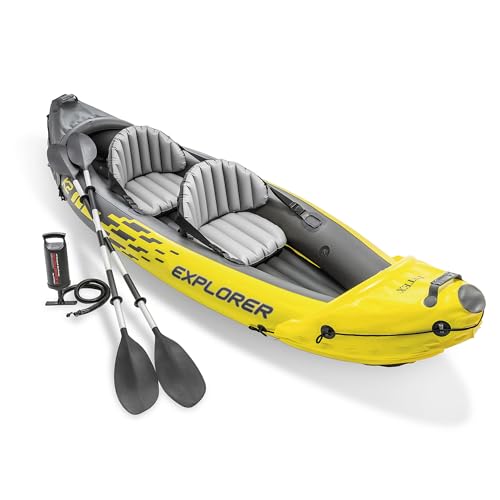
INTEX Explorer K2 2-Person Inflatable Kayak Set with Oars and Pump | 68307EP - Lightweight, Compact, and Portable Kayak with Inflatable I-Beam Floor, Oars, Hand Pump for lakes, mild rivers
As an Amazon Associate we earn from qualifying purchases. Product prices and availability are accurate as of the date/time indicated.
BRIS 12 ft Inflatable Kayak Fishing Tender Inflatable Poonton Boat 2 Person Kayak


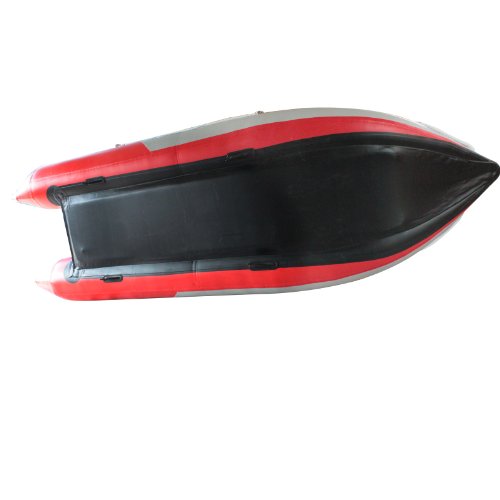

As an Amazon Associate we earn from qualifying purchases. Product prices and availability are accurate as of the date/time indicated.
Lengths, widths, weights, packed sizes, capacities in persons and weight, chamber counts, valve types, stated inflation pressures, materials, skeg arrangements, and the paddles, pumps, and seats included are each maker’s stated details for the current version and bundle; capacities should be read with this guide’s working discount, and every boat used within its maker’s stated waters and conditions. Prices are typical retail ranges and vary by model, bundle, retailer, region, and promotion. Ratings are editorial for camping use: packed size and set-up, on-water tracking and stability in class, construction and repair support, seat comfort, capacity honesty, and value in class.
Detailed Reviews: Best Inflatable Kayak for Camping Picks
1. Advanced Elements AdvancedFrame Class – Best Overall
The AdvancedFrame’s founding idea is to give an inflatable a skeleton: built-in frame elements in the maker’s design at the bow and stern that let the hull hold a kayaker’s line through the water, inside a reinforced, multi-chamber construction that packs to a duffel. Its tracking is the soft classes’ ceiling, its durability a class above the vinyl fleet, and its solo and convertible arrangements serve the camper who paddles alone at dawn and takes a partner at noon. It is the table’s most complete answer to the camper who will paddle often and far, and its price is the honest midpoint between the toys and the tourers.
2. Aquaglide Drop-Stitch Class – Best Touring
Aquaglide’s drop-stitch classes are the hard-shell’s rebuttal in a duffel: floors, and in the fuller designs hulls, that inflate to a rigidity the knuckle test mistakes for plastic, tracking and gliding across a lake’s crossing with a composure the soft classes cannot counterfeit. For the camper whose campsite water is a real lake, whose paddle-in sites are a morning’s journey, and whose budget reaches, this is where the inflatable stops apologising. Its pumps and pressures demand the gauge discipline this guide teaches, and repay it at hull speed.
3. Sea Eagle 330 and 370 Class – Best Tandem
Sea Eagle’s tandem classes are the family camper’s institution: reinforced hulls in the maker’s positioning that have carried couples, children, and the occasional patient dog across a generation of campsite lakes, stated capacities that survive this guide’s discount with room for the picnic, and a repair-and-support story from a house that sells nothing else. Their manners are the stable platform’s, their skegs do the honest work, and their duffels ride in boots that also hold the tent. For two paddlers and a lake, they are the default.
4. Intex Excursion Pro and Explorer Class – Best Budget Tandem
Intex’s upper classes are the budget’s serious face: stronger materials in the maker’s terms than the entry fleet, proper seats and skegs in the bundles, and capacities that put two campers afloat for the price of a single restaurant dinner out. The Excursion Pro class in particular punches at the middle of this table from its lower price. For the family equipping a whole camp on a budget — tent, bags, stove, and now a boat — this is the row where the boat joins the kit without breaking it.
5. Sevylor Quikpak and Colorado Class – Best Packable
Sevylor’s classes span the camper’s two value ideas: the Quikpak school, whose boat carries as a backpack in the maker’s design for the hike-in lake, and the Colorado school, a tandem in the fishing-and-family positioning with room and stability for the long afternoon. Their construction is the reinforced value class’s, their chambers the safety pattern this guide prescribes, and their prices the camp shop’s friendliest. Tested at the shore and used within their waters, they give seasons of service for the cost of a whim.
6. Intex Challenger Class – Best First Boat
The Challenger classes are where more paddlers alive began than any boats in this table: a solo and a tandem at prices that make the experiment nearly free, with pumps in the bundle and manners gentle enough for a first hour on a sheltered lake. Their limits — soft floors, modest tracking, vinyl’s seasons — are this guide’s entry-class description exactly, and within them, respected, they are honest boats. Buy one to learn whether your camp is a paddling camp. If it is, this table’s upper rows are waiting, and the Challenger retires to the children’s fleet with honour.
Buying Guide: How to Choose the Best Inflatable Kayak for Camping
Match the Boat to Your Water, Your Car, and Your Crew
Begin with the water your camps actually offer, because it assigns the class. The sheltered campsite lake, the gentle river’s float, and the harbour’s calm are the whole table’s waters, and the budget classes serve them honourably; the bigger lake, the crossing, and the paddle-in expedition argue for the drop-stitch and framed classes, whose tracking and rigidity are bought exactly there; whitewater and open sea are other boats’ waters, and no row here should be talked into them. Match the crew next: solo for the dawn paddler, tandem for the couple and the family, with the convertible classes the elegant answer for the camp that does both, and capacity read at three-quarters of the maker’s stated figure for the boat’s best manners with gear. Then match the car and the closet: the packed dimensions and weight from the maker’s page, measured against the boot’s real remaining space on a camping load, because the inflatable’s whole promise is a packed size, and a duffel that does not fit is a roof rack by another name. Confirm the bundle’s completeness — pump, paddles, seats, skegs, repair kit, carry bag — item by item against the listing, price the personal flotation devices for every paddler in the same purchase, fitted by size and worn without exception, and check the launch rules of your waters, the permits and registrations your jurisdiction asks of inflatables, before the first trip is planned around a lake that requires paperwork.
Commission It at Home, Then Keep the Routine
Inflate the boat for the first time in the garden, by its maker’s instructions, to its stated pressure, and leave it standing while you read the manual whole: the chambers in their order, the valves in their operation, the skeg in its fitting, the seats in their adjustment. Check it after some hours for the softening that confesses a leak, rehearse the patch kit on its instructions, and pack and unpack it once, so the shore’s first performance is a second performance. At the water, the routine this guide sets out governs: inspect, inflate in the shade, check at the shore, PFDs on every paddler before the boat floats, the weather and the return wind considered, the float plan left ashore, and the boat used within its class and its crew’s ability, with cold water, currents, and distances treated with the respect the local authority’s guidance prescribes. After the paddle, rinse where the water was salt or silty, dry the boat opened and completely, at the site or at home without exception, and store it loose, cool, and dark, its kit and pump beside it. Do all of that, and the best inflatable kayak for camping becomes what its owners at a hundred campsites report while the duffel, impossibly, swallows a boat: the lake is yours now — the dawn crossing, the picnic shore no road reaches, the child asleep against the dry bag as you paddle home under the campsite’s first stars — in a car that never knew it was carrying a navy.
Frequently Asked Questions About Best Inflatable Kayak for Camping
What is the best inflatable kayak for camping?
The Advanced Elements AdvancedFrame class is the best overall, Aquaglide’s drop-stitch classes the best for touring and lake crossings, Sea Eagle’s tandem classes the best for couples and families, Intex’s Excursion Pro and Explorer classes the best budget tandems, Sevylor’s classes the packable value, and the Intex Challenger the first boat at the strictest budget. The best for your camp is chosen by water first — sheltered lakes and gentle rivers serve the whole table, bigger water argues for the framed and drop-stitch rows — then by crew and honest capacity, then by the packed size your car and closet actually hold. Every paddler’s flotation device is part of the same purchase, fitted and worn, and the boat is used within its maker’s stated waters, under the local rules, or the finest duffel in this table is a liability with a pump.
Are inflatable kayaks durable enough for camping use?
Yes, within their design’s honest borders, and their durability is a partnership between the maker’s construction and the owner’s routine. The reinforced and drop-stitch classes in this table are built from materials the marine inflatable world trusts, with multiple chambers arranged so a single puncture floats rather than sinks, and they survive seasons of lakes, gentle rivers, docks, and shorelines. Their enemies are the predictable ones: sharp rock and shell dragged under a loaded hull, fish hooks and knives loose in the cockpit, over-inflation in the sun’s heat, and storage packed wet in a dark duffel, where mildew does in a month what a lake could not do in a year. Launch from sand and grass where you can, lift rather than drag, keep sharps sheathed and stowed, inflate to the maker’s figure, dry the boat completely before storage, and carry the patch kit the maker supplies. A camper who keeps that routine retires an inflatable from age, not from injury, which is the durability that matters.
How long does an inflatable kayak take to set up?
Minutes, once the routine is rehearsed — and the first time, at home, is the rehearsal this guide insists on. The entry classes inflate by their supplied hand or foot pumps in the region of ten minutes for a tandem hull with its chambers, floor, and seats; the larger and drop-stitch classes take longer and reward the 12-volt electric pump classes, run at the car, that their pressures and volumes argue for, with a gauge where the design is a pressure design and the maker’s stated figure the law. Add the skeg, the seats, and the paddles assembled, and the shore-to-water interval for a practised camper is a small fraction of the hard-shell owner’s roof-rack ceremony at the same launch. Packing away is the same interval reversed, plus the drying the boat is owed — wiped and opened at the site, dried completely at home — which is not set-up time but lifespan, paid in minutes and repaid in seasons.
Can you take an inflatable kayak on a river or the sea?
Within its class and the local rules, the river yes and the sea with great care, and the distinction deserves precision. The classes in this table are flatwater and gentle-river boats: a slow river’s float, without rapids beyond the maker’s stated class for the exact model, is their designed water, with the skeg removed where the maker directs for shallows and the usual river disciplines — PFDs worn, obstacles scouted, strainers and low bridges treated as the serious hazards they are. Whitewater beyond the stated class is another sport’s equipment entirely. The sea asks the hardest questions: the sheltered bay and harbour in calm weather, close to shore, is the experienced paddler’s edge case for the stronger classes here, while open coast, offshore wind, and cold sea water are beyond these boats’ brief, because a light, high-riding hull is a sail in an offshore breeze and a long swim in cold water is a hazard no duffel justifies. Read the maker’s stated waters for your exact model, obey the local authority’s rules and permits, wear the flotation, leave the float plan, and let the boat’s ease of launching never argue you onto water its design, or your ability, has not cleared.
Related guides
- Best Walkie Talkies for Camping and Kayaking in 2026: Midland, Motorola, Cobra, and Rocky Talkie Radios Compared for Waterproofing, Honest Range, Floating Designs, and Keeping a Group Together on Land and Water
- Best Lithium Battery for Camping in 2026: Lithium Battery for Camping, Lithium Camping Batteries, and Best Camping Batteries
- Best Camping Kayaks Under 500 in 2026: 7 Best Camping Kayaks Under 500 Dollars That Are Stable, Roomy, and Built for Camping
- Best Stove for Kayak Camping in 2026: 7 Best Stoves for Kayak Camping That Are Light, Compact, and Boil Fast
More from Amazon
Programs that pair well with the guide above. Offers and eligibility are set by Amazon and may change.
Free shipping on eligible items, Prime Video and more. Eligible new members can start with a free trial.
Start a Prime free trialA Prime membership for ages 18-24 with a trial period. Eligibility is set by Amazon.
See Prime for Young AdultsAudiobooks and podcasts to listen to on the go. Eligible new members can start with a free trial.
Try Audible freeAd-free music streaming. Eligible new subscribers can start with a free trial.
Try Music Unlimited freeAs an Amazon Associate we earn from qualifying purchases.

Write Your Review
No reviews yet. Be the first to share your experience!