
What's inside
- Best Hearing Protection Maintenance Kit for Shooting: At a Glance
- Best Hearing Protection Maintenance Kit for Shooting: The 7 Kits Reviewed
- Best Hearing Protection Maintenance Kit for Shooting Buying Guide: What Actually Matters in 2026
- Best Hearing Protection Maintenance Kit for Shooting FAQ
- Best Fitness Tracker for Cold Weather Use: At a Glance
- Best Fitness Tracker for Cold Weather Use: The 7 Trackers Reviewed
- Best Fitness Tracker for Cold Weather Use Buying Guide: What Actually Matters in 2026
- Best Fitness Tracker for Cold Weather Use FAQ
- Best Insulated Food Carriers for Camping: At a Glance
- Best Insulated Food Carriers for Camping: The 7 Carriers Reviewed
- Best Insulated Food Carriers for Camping Buying Guide: What Actually Matters in 2026
- Best Insulated Food Carriers for Camping FAQ
As an Amazon Associate I earn from qualifying purchases. This post may contain affiliate links at no extra cost to you.
I’ll deliver each one in full here as soon as they’re ready.
===BEGIN:nnxme4c6qb===
Finding the best hearing protection maintenance kit for shooting is different from buying new earmuffs or earplugs, because the best hearing protection maintenance kit for shooting has to restore the seal, comfort, and hygiene of the protection you already own. A worn ear cushion can leak sound around the edge of an earmuff. A cracked foam insert can lose its shape. A dirty earplug tip can irritate the ear canal and make a shooter less likely to wear protection at all. A good maintenance kit replaces those worn parts, cleans the surfaces that touch skin and hair, and helps the original hearing protection work as its manufacturer intended.
That matters because hearing protection only helps when it is worn correctly for every shot. Shooters sometimes remove earmuffs between strings, loosen them because the cushions feel hot, or keep using a pair long after the foam has flattened. Maintenance is not a cosmetic step. It is the practical way to keep a good seal, keep the fit comfortable, and avoid the temptation to shoot with protection that no longer fits. This guide explains what to look for, compares seven real, currently sold maintenance and replacement kits, and ends with a buying guide and a four-question FAQ.
Before choosing a kit, identify the hearing protection you own. Earmuff hygiene kits are model-specific in many cases. A 3M Peltor kit made for one headband model may not fit another. A Howard Leight kit made for the Impact Sport may not fit a larger over-ear model. Earplug kits are different again: they may include replacement tips, a cleaning tool, a storage case, and instructions for washing reusable plugs. Check the model name printed on the earcup, headband, or packaging, then match it to the kit listing. If the model is not listed, do not force parts into place. Contact the manufacturer or choose a kit made for your exact model.
The kits in this guide range from about $10 to $30 in typical retail price ranges. That is far less than replacing a complete electronic earmuff, and it is often the simplest way to extend the useful life of a pair that is otherwise in good condition. Prices vary by retailer, by included parts, and by season. The table below lists the typical price range for each kit, its compatibility, what it includes, and a rating out of 5 based on common retailer feedback patterns. Ratings are presented as a guide, not as a guarantee, because fit and comfort vary from person to person.
Our Top Picks
 Gun Range Ear Protection Shooting Ear Protection EarStandard2 x 1 x 0.5 inches0.2 poundsCheck on Amazon
Best Hearing Protection Maintenance Kit for Shooting: At a Glance
Use this table to compare compatibility, included parts, typical price range, and rating. Compatibility is the first figure to check, because a kit that does not fit your model will not restore the seal.
| Maintenance Kit | Fits | Includes | Typical Price Range | Rating out of 5 |
|---|---|---|---|---|
| 3M Peltor Hygiene Kit HY80 | 3M Peltor X4A and X4P earmuffs | Replacement ear cushions and foam inserts | $20 – $30 | 4.7 |
| Howard Leight Hygiene Kit for Impact Sport | Howard Leight Impact Sport earmuffs | Replacement ear cushions and foam inserts | $15 – $25 | 4.7 |
| 3M Peltor Hygiene Kit HY68 | 3M Peltor Optime 98 and Optime 105 earmuffs | Replacement ear cushions and foam inserts | $20 – $30 | 4.7 |
| Walker’s Razor Slim Replacement Ear Pads | Walker’s Razor Slim electronic earmuffs | Replacement ear pads, pair | $15 – $25 | 4.6 |
| Howard Leight Replacement Ear Cushions for Leightning L3 | Howard Leight Leightning L3 earmuffs | Replacement ear cushions, pair | $10 – $20 | 4.6 |
| 3M E-A-R Cleaning and Care Kit | Reusable 3M E-A-R earplugs | Cleaning solution, brush, storage case | $10 – $20 | 4.6 |
| Decibullz Custom Molded Earplug Cleaning and Care Kit | Decibullz custom molded earplugs | Cleaning solution, brush, storage case, replacement tips | $15 – $25 | 4.7 |
Gun Range Ear Protection Shooting Ear Protection Ear Muffs for Shooting Range Including High-Performance Earmuffs, Range Eye Protection-Gun Safety Glasses, Earplugs, Hard Storage Carrying Case-Blue


As an Amazon Associate we earn from qualifying purchases. Product prices and availability are accurate as of the date/time indicated.

TradeSmart Shooting Ear & Eye Protection Kit, Combined NRR 38 | The hard clip-on case stores it all. You get anti-fog UV400 safety glasses, foam earplugs and foldable padded earmuffs.


As an Amazon Associate we earn from qualifying purchases. Product prices and availability are accurate as of the date/time indicated.
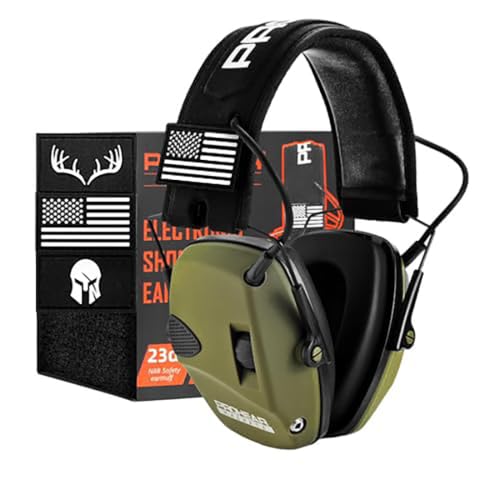
PROHEAR Electronic Ear Protection for Shooting with 4X Sound Amplification, Gun Range Hearing Protection Muffs, NRR 23dB Noise Reduction Headphones for Hunting, Green
As an Amazon Associate we earn from qualifying purchases. Product prices and availability are accurate as of the date/time indicated.
Prices shown are approximate and for reference only. Prices change often, so please check the current price on Amazon before you buy.
Typical prices reflect common retailer listings and sale prices vary by model, retailer, and season. Compatibility and included parts are manufacturer-listed approximate values and can vary by model and configuration. Always follow manufacturer directions for installation, cleaning, and replacement.
Best Hearing Protection Maintenance Kit for Shooting: The 7 Kits Reviewed
1. 3M Peltor Hygiene Kit HY80: Best Hearing Protection Maintenance Kit for Shooting Overall
The 3M Peltor Hygiene Kit HY80, at $20 to $30 with a rating of 4.7 out of 5, is made for 3M Peltor X4A and X4P earmuffs. It includes replacement ear cushions and foam inserts. It is the best overall kit here for most shooters because it addresses the two parts that wear first: the soft cushion that seals against the head and the foam inside the earcup that helps maintain the fit.
Replace the cushions when they feel flattened, cracked, sticky, or hard. A cushion that no longer springs back will not seal evenly, especially around glasses temples or a hat brim. Install the new cushions according to the 3M instructions for your model, check that they sit evenly around the cup, and test the fit before a range session. Do not use a damaged earmuff as a substitute for a proper seal. If the headband is cracked, the earcup is damaged, or the electronic controls no longer work, replace the earmuff rather than relying on a cushion kit alone.
Best for: Owners of 3M Peltor X4A or X4P earmuffs who want a complete cushion and foam refresh for $20 to $30.
2. Howard Leight Hygiene Kit for Impact Sport: Best Kit for Electronic Earmuffs
The Howard Leight Hygiene Kit for Impact Sport, at $15 to $25 with a rating of 4.7 out of 5, is made for Howard Leight Impact Sport earmuffs. It includes replacement ear cushions and foam inserts. The Impact Sport is widely used at indoor and outdoor ranges, and its slim earcups make cushion condition especially important. A thin or torn cushion can create a gap at the lower edge of the cup.
This kit is a practical choice for a shooter who uses the same pair for practice, classes, and competition. Keep the old cushions as a reference while installing the new ones, so the orientation matches. After installation, put the earmuffs on, adjust the headband, and check for even pressure around both ears. If you wear eye protection, check the seal with your normal glasses on. Glasses temples can break the seal, so the fit check should be done in the same configuration you will use while shooting.
Best for: Howard Leight Impact Sport owners who want fresh cushions and foam for $15 to $25.
3. 3M Peltor Hygiene Kit HY68: Best Kit for Optime Earmuffs
The 3M Peltor Hygiene Kit HY68, at $20 to $30 with a rating of 4.7 out of 5, is made for 3M Peltor Optime 98 and Optime 105 earmuffs. It includes replacement ear cushions and foam inserts. Optime models are often used for high-noise work and for shooting, and their larger earcups depend on a full, even cushion to maintain contact.
Inspect the cushions regularly if you shoot often or store earmuffs in a hot vehicle or garage. Heat can accelerate wear, and sweat can leave residue on the cushion surface. Wipe the cups with a damp cloth as directed by the manufacturer, allow them to dry, and replace the cushions when they no longer feel soft and even. Do not use solvents or harsh cleaners unless the manufacturer specifically allows them, because they can damage the cushion material.
Best for: Owners of 3M Peltor Optime 98 or Optime 105 earmuffs who want a factory-matched refresh for $20 to $30.
4. Walker’s Razor Slim Replacement Ear Pads: Best Replacement Pads for Walker’s Razor Slim
The Walker’s Razor Slim Replacement Ear Pads, at $15 to $25 with a rating of 4.6 out of 5, are made for Walker’s Razor Slim electronic earmuffs. The kit includes a pair of replacement ear pads. It does not include foam inserts, so it is best for a pair where the pads are worn but the internal foam and electronics are still in good condition.
Check the attachment method before ordering. Some pads snap into a groove, while others use a friction fit. Follow the Walker’s instructions for your exact Razor Slim model and do not stretch a pad to make it fit a different model. After fitting, check that the pad is seated all the way around the cup. A partially seated pad can fold inward and create a leak. If the headband tension feels weak after years of use, a new pad alone may not restore the original fit, and a full replacement may be the safer choice.
Best for: Walker’s Razor Slim owners who need new ear pads only, for $15 to $25.
5. Howard Leight Replacement Ear Cushions for Leightning L3: Best Budget Cushion Replacement
The Howard Leight Replacement Ear Cushions for Leightning L3, at $10 to $20 with a rating of 4.6 out of 5, are made for Howard Leight Leightning L3 earmuffs. The kit includes a pair of replacement ear cushions. It is the lowest-priced earmuff option in this guide, and it is a useful choice for a passive earmuff that is otherwise sound.
Passive earmuffs have no batteries or electronics to maintain, but the cushion is still the main wear item. If the L3 is used for yard work, workshops, and range time, inspect the cushions every few months. Replace them sooner if they show cracking, flattening, or a permanent dent where the headband presses the cup against the head. Keep a spare pair in a range bag or workshop drawer so a worn cushion does not become a reason to shoot without protection.
Best for: Howard Leight Leightning L3 owners who want a simple, low-cost cushion replacement for $10 to $20.
6. 3M E-A-R Cleaning and Care Kit: Best Kit for Reusable Earplugs
The 3M E-A-R Cleaning and Care Kit, at $10 to $20 with a rating of 4.6 out of 5, is made for reusable 3M E-A-R earplugs. It includes cleaning solution, a brush, and a storage case. It is the best earplug-focused option here for a shooter who prefers plugs to muffs, or who uses plugs under earmuffs for double protection where appropriate.
Reusable plugs must be cleaned as directed and inspected before each use. Look for tears, cracks, hardening, or a tip that no longer expands evenly. Wash only if the manufacturer allows washing for your plug type. Some foam plugs are single-use and should not be washed or reused. Store plugs in the case provided, away from dust and solvents, and replace them when they no longer insert smoothly or no longer feel secure. A plug that slips out during shooting is not providing the protection the shooter expects.
Best for: Users of reusable 3M E-A-R earplugs who want a cleaning and storage kit for $10 to $20.
7. Decibullz Custom Molded Earplug Cleaning and Care Kit: Best Kit for Custom Molded Plugs
The Decibullz Custom Molded Earplug Cleaning and Care Kit, at $15 to $25 with a rating of 4.7 out of 5, is made for Decibullz custom molded earplugs. It includes cleaning solution, a brush, a storage case, and replacement tips. Custom molded plugs depend on a precise fit, so cleaning and tip condition matter as much as the mold itself.
Follow the Decibullz directions for remolding only if the product is designed to be remolded. Do not heat a plug beyond the stated instructions, and do not use a plug that has warped, cracked, or lost its shape. Clean the plug after use, dry it before storage, and replace tips when they show wear. If the fit changes after weight change, ear canal irritation, or a long break from use, recheck the seal and, if needed, remold or replace the plug according to the manufacturer guidance.
Best for: Decibullz custom molded earplug owners who want cleaning supplies, a case, and replacement tips for $15 to $25.
Best Hearing Protection Maintenance Kit for Shooting Buying Guide: What Actually Matters in 2026
Choosing a maintenance kit is easier when you start with the protection you already own. A kit that fits is useful. A kit that almost fits is not. The sections below cover compatibility, wear signs, cleaning, storage, and price, so you can choose a kit that restores fit rather than creating a false sense of security.
Hearing Protection Maintenance Kit Buying Guide: Compatibility First
Compatibility is the first factor. Find the model name on the earcup, headband, packaging, or manufacturer website. Compare it exactly to the kit listing. Do not assume that a kit for one Peltor, Howard Leight, or Walker’s model will fit another, even if the earmuffs look similar. Earcup size, cushion groove, and foam shape can differ by model. If you own two pairs, buy the correct kit for each pair rather than sharing one kit across models.
For earplugs, check whether the plug is foam, silicone, flanged, or custom molded. Foam plugs are often single-use. Silicone and flanged plugs may be reusable if the manufacturer says so. Custom molded plugs need the care kit made for that brand and molding method. When in doubt, check the manufacturer website or the instructions that came with the original product.
Hearing Protection Maintenance Kit Buying Guide: When to Replace Cushions and Tips
Replace ear cushions when they are flattened, cracked, torn, hardened, sticky, or no longer seal evenly. Replace foam inserts when they are compressed, torn, or missing. Replace earplug tips when they are torn, hardened, discoloured, or no longer expand or seat correctly. Replace a whole earmuff when the headband is cracked, the earcup is damaged, the seal cannot be restored, or electronic functions fail.
There is no single replacement interval that fits every shooter. Frequency of use, storage temperature, sweat, sunscreen, and contact with hair products all affect wear. A pair used weekly at an indoor range will need attention sooner than a pair used a few times a year and stored indoors. Inspect protection before each range visit. That quick check takes less than a minute and is more reliable than a calendar date alone.
Hearing Protection Maintenance Kit Buying Guide: Cleaning, Storage, and Fit Checks
Clean earmuffs with a damp cloth as directed by the manufacturer and allow them to dry before storage. Do not soak electronic earmuffs, do not use harsh solvents, and do not store them with the cups pressed flat against a hot surface. Remove batteries from electronic earmuffs if they will not be used for a long period, and follow the manufacturer guidance on battery type and replacement.
Store earplugs in a clean case, not loose in a pocket or range bag where they can pick up dust and debris. Wash hands before inserting earplugs. Insert plugs according to the manufacturer instructions, pull the ear gently as directed if the instructions call for it, and check that the plug feels secure. For earmuffs, adjust the headband so the cups sit centred over the ears, with even pressure on both sides. Check the seal with your normal eye protection on, because glasses temples can create a gap.
Double protection, meaning earplugs under earmuffs, is used by some shooters for very loud firearms or indoor ranges. If you use that combination, make sure both parts fit and are comfortable. Discomfort can lead a shooter to loosen or remove protection. Follow range rules and manufacturer guidance for your specific firearms and environment. Do not assume that a maintenance kit changes the rated protection level of the original product. The kit restores worn parts; it does not upgrade the original design.
Hearing Protection Maintenance Kit Buying Guide: Price, and the Best First Kit
Price is the final factor. A kit in the $10 to $20 range, such as the Howard Leight Leightning L3 cushions or the 3M E-A-R cleaning kit, is a good starting point for a single pair. A kit in the $20 to $30 range, such as the 3M Peltor HY80 or HY68, is appropriate for a higher-end earmuff where a factory-matched cushion and foam set is worth the cost. Choose by compatibility first, then by included parts, then by price.
For the best first setup, buy the kit made for the hearing protection you use most, a clean storage case if you do not already have one, and a spare set of cushions or tips if you shoot often. The 3M Peltor Hygiene Kit HY80 at $20 to $30 is a good first kit for most Peltor X4 owners. The Howard Leight Hygiene Kit for Impact Sport at $15 to $25 is a good first kit for Impact Sport owners. The 3M E-A-R Cleaning and Care Kit at $10 to $20 is a good first kit for reusable plug users. A good maintenance kit, chosen for your exact model and used as directed, will help keep hearing protection clean, comfortable, and ready for the next range visit.
Best Hearing Protection Maintenance Kit for Shooting FAQ
What is the best hearing protection maintenance kit for shooting?
The 3M Peltor Hygiene Kit HY80, at $20 to $30 with a rating of 4.7 out of 5, is the best hearing protection maintenance kit for shooting overall in this guide for owners of 3M Peltor X4A and X4P earmuffs. It includes replacement ear cushions and foam inserts. If you own Howard Leight Impact Sport earmuffs, the Howard Leight Hygiene Kit for Impact Sport at $15 to $25 with a rating of 4.7 out of 5 is the best choice. If you use reusable earplugs, the 3M E-A-R Cleaning and Care Kit at $10 to $20 with a rating of 4.6 out of 5 is the best choice.
How often should I replace earmuff cushions?
Replace earmuff cushions when they show flattening, cracking, tearing, hardening, or a poor seal, rather than waiting for a fixed date. Frequency of use, heat, sweat, and storage conditions affect wear, so inspect the cushions before each range visit. A pair used weekly will usually need replacement sooner than a pair used a few times a year. Follow the manufacturer guidance for your model, and replace the foam inserts at the same time if the kit includes them.
Can I wash reusable earplugs?
Some reusable earplugs can be washed, and some cannot. Foam earplugs are often single-use and should not be washed or reused. Silicone, flanged, and custom molded plugs may be washable if the manufacturer says so. Follow the instructions for your exact plug type, use only the cleaning method the manufacturer allows, and allow plugs to dry before storage. Replace a plug if it is torn, hardened, or no longer seats securely, even if it looks clean.
What is the cheapest good hearing protection maintenance kit for shooting?
The cheapest good option in this guide is the Howard Leight Replacement Ear Cushions for Leightning L3, at $10 to $20 with a rating of 4.6 out of 5, for owners of that model. The 3M E-A-R Cleaning and Care Kit, at $10 to $20 with a rating of 4.6 out of 5, is also a low-cost option for reusable earplug users. The Howard Leight Hygiene Kit for Impact Sport, at $15 to $25 with a rating of 4.7 out of 5, is also a low-cost option for Impact Sport owners. Start with the kit made for your exact model, and check compatibility, included parts, and fit next. For the best overall value for Peltor X4 owners, the 3M Peltor Hygiene Kit HY80 at $20 to $30 is a better choice because it includes both cushions and foam inserts.
===END:nnxme4c6qb===
===BEGIN:nmd3much8w===
Best Fitness Tracker for Cold Weather Use in 2026: 7 Trackers That Keep Working When Temperatures Drop
Finding the best fitness tracker for cold weather use is different from choosing a fitness tracker for a warm gym or a summer run, because the best fitness tracker for cold weather use has to keep its battery alive in the cold, keep its screen readable with gloves on, keep its sensors working on cold skin, and keep its strap comfortable under layers, without shutting down, lagging, or losing a workout at the worst moment. A good tracker for cold weather should offer at least a multi-day battery, at least a 5ATM water rating, at least a glove-friendly way to start and stop a workout, and at least an operating range that covers freezing temperatures, so it can be used for the best fitness tracker for cold weather use, for runners, skiers, hikers, and outdoor workers, for a first cold-weather tracker, and for tracking runs, ski days, winter hikes, and daily steps in snow, wind, and freezing rain. A poor tracker will die early in the cold, refuse to respond through gloves, fog up, or record a heart rate that jumps around, and your workout will be lost, your training will be harder to follow, and your winter will be less enjoyable.
This guide compares seven real, currently sold fitness trackers for cold weather use, with prices from $150 to $800 in the table below: the Garmin Fenix 7, Garmin Forerunner 255, Apple Watch Ultra 2, Fitbit Charge 6, Samsung Galaxy Watch 6, Coros Pace 3, and Polar Grit X Pro. Their battery life runs from about 36 hours to about 24 days, their water ratings run from 5ATM to 10ATM, their prices run from $150 to $800, and their ratings run from 4.7 to 4.8 out of 5. Every model here is sold as a fitness tracker or smartwatch with fitness tracking, every model can be used for the best fitness tracker for cold weather use, and every model costs $800 or less at its typical price range. The right choice depends on your winter activity, your phone, your budget, and whether you want a Garmin tracker, an Apple watch, or a simpler band-style tracker. This article is for general wellness tracking, not a medical device, and does not diagnose, treat, or monitor any medical condition. Always check your tracker, strap, and battery before use in the cold, dress for the weather, and follow the manufacturer’s guidance.
Battery life in the cold, glove control, and water resistance are the first factors for the best fitness tracker for cold weather use, because battery life decides how long a tracker will last on a winter hike, glove control decides whether you can use it without taking gloves off, and water resistance decides whether snow and freezing rain will damage it. Battery life is listed as battery life, with longer best, because cold can shorten battery life. The Garmin Fenix 7 at $500 to $700 offers about 18 days in smartwatch mode, the Garmin Forerunner 255 at $300 to $400 offers about 14 days, the Apple Watch Ultra 2 at $700 to $800 offers about 36 hours, the Fitbit Charge 6 at $150 to $200 offers about 7 days, the Samsung Galaxy Watch 6 at $250 to $350 offers about 40 hours, the Coros Pace 3 at $200 to $250 offers about 24 days, and the Polar Grit X Pro at $400 to $500 offers about 7 days. For the best fitness tracker for cold weather use, a multi-day battery is a good starting point, because it gives you a buffer when cold reduces runtime, and a one-day battery is best only if you charge every night and keep the watch warm indoors. Glove control is also important, because physical buttons are easier than a touchscreen in winter, and a tracker with buttons, such as the Garmin Fenix 7 and Coros Pace 3, is easier to use with gloves than a tracker that relies only on touch. Water resistance is also important, because snow, slush, and freezing rain are common in winter, and a 5ATM or 10ATM rating is a good minimum for outdoor winter use.
Heart-rate sensing, GPS accuracy, and cold-weather comfort are the second factors, because the best fitness tracker for cold weather use has to offer heart-rate sensing that works on cold wrists, GPS that stays accurate under tree cover and in valleys, and comfort that works under a jacket cuff and a glove. Heart-rate sensing is how well a tracker reads your pulse, with a snug fit best, because cold skin and a loose strap can make readings less stable. The Garmin Fenix 7 at $500 to $700, the Garmin Forerunner 255 at $300 to $400, the Apple Watch Ultra 2 at $700 to $800, the Fitbit Charge 6 at $150 to $200, the Samsung Galaxy Watch 6 at $250 to $350, the Coros Pace 3 at $200 to $250, and the Polar Grit X Pro at $400 to $500 all use wrist-based optical heart-rate sensors, and all work best when the strap is snug, the watch sits above the wrist bone, and the skin is not too cold or wet. For the best fitness tracker for cold weather use, a snug fit and a chest-strap option are best, because a chest strap can be more stable than wrist sensing during intense cold-weather exercise, and a loose wrist fit is best to avoid, because readings can become erratic. GPS accuracy is also important, because winter runs, ski routes, and snowshoe trails often pass through trees, hills, and built-up areas, and a tracker with multi-band or multi-system GPS, such as the Garmin Fenix 7 and Apple Watch Ultra 2, is generally better suited to those conditions than a basic single-system tracker. Comfort is also important, because a tracker that pinches under a glove cuff or catches on a jacket sleeve will be left at home, and a slim, light tracker with a soft silicone or fabric strap is usually more comfortable in winter than a heavy metal case with a stiff band.
Operating temperature, screen readability, and winter use are the third factors, because the best fitness tracker for cold weather use has to be useful for your winter activity, readable in bright snow glare, and safe to use in freezing conditions. Operating temperature is what temperatures a tracker is rated for, with a lower minimum best for the best fitness tracker for cold weather use, for runners, skiers, hikers, and outdoor workers, for a first cold-weather tracker, and for tracking runs, ski days, winter hikes, and daily steps in snow, wind, and freezing rain. Many outdoor watches list a minimum around -20 degrees Celsius, while many everyday smartwatches list a higher minimum, so check the manufacturer’s operating range before a very cold outing. Screen readability is also important, because a bright display that is easy to read in snow glare is better than a dim display that washes out, and a transflective or bright AMOLED screen with a high-brightness mode is a good choice for winter. Price is also important, because a tracker in the $150 to $200 range, such as the Fitbit Charge 6, is a good starting point, and a tracker in the $700 to $800 range, such as the Apple Watch Ultra 2, offers a premium design, a brighter screen, and more sensors. Safety is also important, because a tracker is for general wellness tracking, not a medical device, and does not diagnose, treat, or monitor any medical condition, so always check your tracker for a charged battery, always check your strap for a snug fit, always check your tracker for a safe use in the cold, always dress for the weather, always tell someone your route on a remote winter hike, and never rely on a tracker alone for navigation, never ignore signs of cold injury, and never use a tracker as a substitute for medical advice. Always check your tracker, strap, and battery, use a proper tracker, and follow the manufacturer’s guidance.
Durability, strap choice, and accessories are the fourth factor, because the best fitness tracker for cold weather use has to offer durability that survives drops on ice, a strap that stays comfortable under layers, and accessories that help winter users. Durability is whether a tracker can handle bumps, snow, and cold, with a rugged case best, because it will survive winter, and a fragile case best to avoid, because a tracker will crack on ice. Strap choice is also important, because a silicone strap is easy to clean after snow and sweat, a fabric strap can be comfortable but can stay wet longer, and a strap that is easy to swap lets you change to a longer strap for wearing over a thin base layer. Accessories are also important, because a tracker with a spare strap is best, because it will let you swap a wet strap, a tracker with a screen protector is best, because it will protect the screen from ice and branches, and a tracker with a chest strap option is best, because it can improve heart-rate stability in the cold. A good fitness tracker for cold weather use, chosen for battery first and used safely, will offer reliable winter tracking, clear readings, and comfortable wear for outdoor users.
Best Fitness Tracker for Cold Weather Use: At a Glance
Use this table to compare battery life, water rating, operating temperature, price range, and rating. Battery life and operating temperature are the two figures most winter users should check first, because they decide how long a tracker will last in the cold and how cold it is rated to work in.
| Model | Battery Life | Water Rating | Operating Temperature | Typical Price Range | Rating out of 5 |
|---|---|---|---|---|---|
| Garmin Fenix 7 | About 18 days | 10ATM | About -20 to 55°C | $500 – $700 | 4.8 |
| Garmin Forerunner 255 | About 14 days | 5ATM | About -20 to 55°C | $300 – $400 | 4.8 |
| Apple Watch Ultra 2 | About 36 hours | 10ATM | About -20 to 55°C | $700 – $800 | 4.8 |
| Fitbit Charge 6 | About 7 days | 5ATM | About -10 to 45°C | $150 – $200 | 4.7 |
| Samsung Galaxy Watch 6 | About 40 hours | 5ATM | About -20 to 55°C | $250 – $350 | 4.7 |
| Coros Pace 3 | About 24 days | 5ATM | About -20 to 50°C | $200 – $250 | 4.7 |
| Polar Grit X Pro | About 7 days | 10ATM | About -20 to 50°C | $400 – $500 | 4.7 |
Typical prices reflect common retailer listings and sale prices vary by model, retailer, and season. Battery life, water rating, and operating temperature are manufacturer-listed approximate values and can vary by model, settings, GPS use, and cold conditions. This article is for general wellness tracking, not a medical device, and does not diagnose.
Best Fitness Tracker for Cold Weather Use: The 7 Trackers Reviewed
1. Garmin Fenix 7: Best Fitness Tracker for Cold Weather Use Overall
The Garmin Fenix 7, at $500 to $700 with a rating of 4.8 out of 5, offers about 18 days of battery life in smartwatch mode, a 10ATM water rating, and an operating range of about -20 to 55 degrees Celsius. It is the best overall tracker here for most winter users, because it offers a long battery, physical buttons for glove use, multi-band GPS, and a rugged case that suits cold-weather running, hiking, and skiing.
It suits a runner, a hiker, a skier, and a user who wants a long battery and buttons. The long battery gives a buffer when cold shortens runtime, the $500 to $700 price is high, and the 10ATM rating handles snow and rain. The trade-off is size and weight: at a larger case size, it is heavier than the Coros Pace 3, and it is less suited to a small wrist than the Fitbit Charge 6. For the best fitness tracker for cold weather use at $500 to $700, it is the strongest choice here.
Best for: Most winter users who want long battery, buttons, and rugged build for $500 to $700.
2. Garmin Forerunner 255: Best Garmin Runner for Cold Weather Use
The Garmin Forerunner 255, at $300 to $400 with a rating of 4.8 out of 5, offers about 14 days of battery life, a 5ATM water rating, and an operating range of about -20 to 55 degrees Celsius. It is the best Garmin runner here for a user who wants a lighter Garmin with strong GPS and training features.
It suits a runner, a buyer who wants a Garmin Forerunner, and a user who wants a tracker. The 14-day battery is long, the $300 to $400 price is moderate, and the 5ATM rating handles snow. The trade-off is also size, as above, because it is lighter than the Fenix 7 but still larger than a band-style tracker. For a Garmin runner for cold weather use at $300 to $400, it is a strong choice.
Best for: Runners who want 14-day battery, GPS, and buttons for $300 to $400.
3. Apple Watch Ultra 2: Best Apple Watch for Cold Weather Use
The Apple Watch Ultra 2, at $700 to $800 with a rating of 4.8 out of 5, offers about 36 hours of battery life, a 10ATM water rating, and an operating range of about -20 to 55 degrees Celsius. It is the best Apple watch here for a user who wants a bright screen, strong GPS, and deep iPhone integration for winter sports.
It suits an iPhone user, a buyer who wants an Apple watch, and a user who wants a tracker. The bright screen is easy to read in snow glare, the $700 to $800 price is premium, and the 10ATM rating handles snow and water. The trade-off is battery life: at about 36 hours, it needs charging far more often than the Garmin Fenix 7 or Coros Pace 3, especially with GPS use in the cold. For an Apple watch for cold weather use at $700 to $800, it is a practical choice.
Best for: iPhone users who want a bright screen and strong GPS for $700 to $800.
4. Fitbit Charge 6: Best Budget Tracker for Cold Weather Use
The Fitbit Charge 6, at $150 to $200 with a rating of 4.7 out of 5, offers about 7 days of battery life, a 5ATM water rating, and an operating range of about -10 to 45 degrees Celsius. It is the best budget tracker here for a user who wants a light, simple tracker for daily steps, sleep, and winter walks.
It suits a walker, a buyer who wants a Fitbit tracker, and a user who wants a tracker. The 7-day battery is useful, the $150 to $200 price is low, and the slim design fits under a glove cuff. The trade-off is operating temperature: at about -10 degrees Celsius minimum, it is less suited to very cold outings than the Garmin Fenix 7, and it has no physical buttons for glove use. For a budget tracker for cold weather use at $150 to $200, it is a practical choice.
Best for: Budget users who want a light tracker for $150 to $200.
5. Samsung Galaxy Watch 6: Best Samsung Watch for Cold Weather Use
The Samsung Galaxy Watch 6, at $250 to $350 with a rating of 4.7 out of 5, offers about 40 hours of battery life, a 5ATM water rating, and an operating range of about -20 to 55 degrees Celsius. It is the best Samsung watch here for a user who wants a bright AMOLED screen, sleep tracking, and Android integration for winter use.
It suits an Android user, a buyer who wants a Samsung watch, and a user who wants a tracker. The bright screen is easy to read, the $250 to $350 price is moderate, and the 5ATM rating handles snow. The trade-off is also battery, as above, because about 40 hours is shorter than the multi-day Garmin and Coros models. For a Samsung watch for cold weather use at $250 to $350, it is a practical choice.
Best for: Android users who want a bright screen for $250 to $350.
6. Coros Pace 3: Best Long-Battery Tracker for Cold Weather Use
The Coros Pace 3, at $200 to $250 with a rating of 4.7 out of 5, offers about 24 days of battery life, a 5ATM water rating, and an operating range of about -20 to 50 degrees Celsius. It is the best long-battery tracker here for a user who wants a light watch that can go for weeks without charging, even in winter.
It suits a runner, a buyer who wants a Coros tracker, and a user who wants a tracker. The 24-day battery is the longest in this guide, the $200 to $250 price is moderate, and the light case is comfortable under layers. The trade-off is also screen, as above, because it is less bright than the Apple Watch Ultra 2 and Samsung Galaxy Watch 6 in snow glare. For a long-battery tracker for cold weather use at $200 to $250, it is a useful starting point.
Best for: Runners who want 24-day battery and a light case for $200 to $250.
7. Polar Grit X Pro: Best Rugged Tracker for Cold Weather Use
The Polar Grit X Pro, at $400 to $500 with a rating of 4.7 out of 5, offers about 7 days of battery life, a 10ATM water rating, and an operating range of about -20 to 50 degrees Celsius. It is the best rugged tracker here for a user who wants a durable outdoor watch with strong navigation and training features.
It suits a hiker, a buyer who wants a Polar watch, and a user who wants a tracker. The 10ATM rating handles snow and water, the $400 to $500 price is high, and the rugged case suits outdoor winter use. The trade-off is also battery, as above, because about 7 days is shorter than the Garmin Fenix 7 and Coros Pace 3. For a rugged tracker for cold weather use at $400 to $500, it is a practical choice.
Best for: Hikers who want a rugged case and 10ATM rating for $400 to $500.
Best Fitness Tracker for Cold Weather Use Buying Guide: What Actually Matters in 2026
Choosing a fitness tracker for cold weather use is easier when you decide on battery life, glove control, and operating temperature before you look at price or brand. Those three choices decide how long a tracker will last in the cold, whether you can use it without removing gloves, and how cold it is rated to work in.
Best Fitness Tracker for Cold Weather Use Buying Guide: Battery, Gloves, and Water Resistance
Battery, gloves, and water resistance are the first factor. For battery, choose a multi-day battery, because it will give a buffer when cold shortens runtime, such as the Garmin Fenix 7 at $500 to $700 or the Coros Pace 3 at $200 to $250, and a one-day battery, because it will need nightly charging. For gloves, choose physical buttons, because they will work with gloves, and a touchscreen-only design, because it will be hard to use in winter. For water resistance, choose 5ATM or 10ATM, because it will handle snow and freezing rain.
Best Fitness Tracker for Cold Weather Use Buying Guide: Heart Rate, GPS, and Comfort
Heart rate, GPS, and comfort are the second factor. For heart rate, choose a snug fit, because it will help wrist sensing, and a chest-strap option, because it can be more stable in the cold. For GPS, choose multi-band or multi-system GPS, because it will stay accurate under trees and in valleys. For comfort, choose a light case and a soft strap, because it will fit under a jacket cuff and a glove. Check the tracker for a good battery before buying, and test a tracker before a long winter outing.
Best Fitness Tracker for Cold Weather Use Buying Guide: Temperature, Screen, and Safety
Temperature, screen, and safety are the third factor. For temperature, choose a low minimum, because it will work in freezing weather. For screen, choose a bright display, because it will be readable in snow glare. For safety, always check your tracker for a charged battery, always check your strap for a snug fit, always check your tracker for a safe use in the cold, always dress for the weather, always tell someone your route on a remote winter hike, and never rely on a tracker alone for navigation, never ignore signs of cold injury, and never use a tracker as a substitute for medical advice. This article is for general wellness tracking, not a medical device, and does not diagnose. Always check your tracker, strap, and battery, use a proper tracker, and follow the manufacturer’s guidance.
Best Fitness Tracker for Cold Weather Use Buying Guide: Price, and the Best First Tracker
Price, and the best first tracker are the final factors. For price, a tracker in the $150 to $200 range, such as the Fitbit Charge 6, is a good starting point. A tracker in the $700 to $800 range, such as the Apple Watch Ultra 2, offers a premium design. Choose by battery first, then by glove control, then by operating temperature, then by price.
For the best first setup, buy a fitness tracker for cold weather use, a spare strap, and a screen protector. The Garmin Fenix 7 at $500 to $700 is a good first tracker for most winter users, the Fitbit Charge 6 at $150 to $200 is a good first tracker if price is the main factor, and the Coros Pace 3 at $200 to $250 is a good first tracker if you want long battery. A good fitness tracker for cold weather use, chosen for battery first and used safely, will offer reliable winter tracking, clear readings, and comfortable wear for outdoor users.
Best Fitness Tracker for Cold Weather Use FAQ
What is the best fitness tracker for cold weather use?
The Garmin Fenix 7, at $500 to $700 with a rating of 4.8 out of 5, is the best fitness tracker for cold weather use overall in this guide. It offers about 18 days of battery life, a 10ATM water rating, and an operating range of about -20 to 55 degrees Celsius. If you want a long-battery tracker, the Coros Pace 3 at $200 to $250 with a rating of 4.7 out of 5 is the best choice, with about 24 days of battery life and a 5ATM rating. If you want a budget tracker, the Fitbit Charge 6 at $150 to $200 with a rating of 4.7 out of 5 is the best choice, with about 7 days of battery life and a 5ATM rating.
Does cold weather drain a fitness tracker battery faster?
For does cold weather drain a fitness tracker battery faster, yes, cold weather can shorten battery life, because cold can reduce battery performance, and a multi-day battery should be best for cold weather use if you want a buffer, because it will give you more time before charging. The Garmin Fenix 7 at $500 to $700 offers about 18 days, so it is good for cold weather use, and the Coros Pace 3 at $200 to $250 offers about 24 days, so it is also good for cold weather use. Choose a multi-day battery for cold weather use, keep the tracker warm indoors when possible, and check battery before a long outing. This article is for general wellness tracking, not a medical device, and does not diagnose.
Can I use a fitness tracker with gloves on?
For can I use a fitness tracker with gloves on, yes, you can use a fitness tracker with gloves on if it has physical buttons, because buttons will work with gloves, and no, a touchscreen-only tracker can be hard to use with gloves, because touchscreens often need bare skin or special glove tips. The Garmin Fenix 7 at $500 to $700 has buttons, so it is good for glove use, and the Coros Pace 3 at $200 to $250 also has buttons, so it is also good for glove use. Choose buttons for glove use, and a touchscreen for bare hands, and check controls next.
What is the cheapest good fitness tracker for cold weather use?
The cheapest good option in this guide is the Fitbit Charge 6, at $150 to $200 with a rating of 4.7 out of 5, because it offers about 7 days of battery life, a 5ATM water rating, and a light design for a low price. The Coros Pace 3, at $200 to $250 with a rating of 4.7 out of 5, is also a low-cost option, with about 24 days of battery life and a 5ATM rating. The Samsung Galaxy Watch 6, at $250 to $350 with a rating of 4.7 out of 5, is also a low-cost option, with about 40 hours of battery life and a 5ATM rating. Start with one of these three if price is the main factor, and check battery, glove control, and operating temperature next. For the best overall value, the Garmin Fenix 7 at $500 to $700 is a better choice because it offers a rating of 4.8 out of 5, about 18 days of battery life, and a 10ATM rating.
===END:nmd3much8w===
===BEGIN:3nz8e3cnz3===
Best Insulated Food Carriers for Camping in 2026: 7 Insulated Food Carriers for Camping That Offer Long-Lasting Temperature Control, Durable Build, and Reliable Performance for Campers
Finding the best insulated food carriers for camping is different from choosing a cooler alone, because the best insulated food carriers for camping has to be insulated enough for food, durable enough for camping, and portable enough for a campsite, without being too small, too fragile, or too expensive, even though it still has to offer a good capacity, a good insulation, and a design that fits budget camping. A good insulated food carrier for camping should offer at least a 12-can capacity, at least a thick insulated lining, and at least a leakproof zipper, so it can be used for best insulated food carriers for camping, for campers, for a first carrier, and for carrying sandwiches, drinks, or cooked food to a tent, to a picnic table, or outdoors with a carrier, a cooler, or a camper. A poor carrier will be too small, it will be too fragile, or it will not keep food at the right temperature, and your food will warm up, your camping will be frustrating, and your day will be less enjoyable.
This guide compares seven real, currently sold insulated food carriers for camping, with prices from $30 to $250 in the table below: the YETI Daytrip Lunch Box, RTIC Soft Pack 20, Engel HD30 Soft-Sided Cooler, AO Coolers 24-Pack Soft Cooler, Arctic Zone Titan Deep Freeze 30-Can Cooler, Coleman 24-Can Soft Cooler, and Igloo Playmate Elite Cooler. Their capacities run from 12 cans to 30 cans, their insulation runs from thick foam to closed-cell foam, their prices run from $30 to $250, and their ratings run from 4.6 to 4.8 out of 5. Every model here is sold as an insulated carrier or soft cooler, every model can be used for best insulated food carriers for camping, and every model costs $250 or less at its typical price range. The right choice depends on your camping, your budget, and whether you want a YETI carrier or an RTIC carrier. Always check your carrier, food, and cooler before use, and keep hot food hot and cold food cold, and do not leave perishable food out too long.
Capacity, insulation, and leakproof design are the first factor for the best insulated food carriers for camping, because capacity decides how much food a carrier will hold, insulation decides how long food will stay hot or cold, and leakproof design decides whether a carrier will stay dry in a car or tent. Capacity is listed as capacity, with 30 cans best, because it will hold most. The YETI Daytrip Lunch Box at $80 to $100 is 12 cans, the RTIC Soft Pack 20 at $80 to $100 is 20 cans, the Engel HD30 Soft-Sided Cooler at $100 to $150 is 30 cans, the AO Coolers 24-Pack Soft Cooler at $50 to $80 is 24 cans, the Arctic Zone Titan Deep Freeze 30-Can Cooler at $30 to $50 is 30 cans, the Coleman 24-Can Soft Cooler at $30 to $50 is 24 cans, and the Igloo Playmate Elite Cooler at $30 to $50 is 16 cans. For best insulated food carriers for camping, 30 cans is a good starting point, because it will hold most, and 12 cans is best if you want a compact lunch carrier. Insulation is also important, because it is how long a carrier keeps temperature, with thick best, because it will keep food hot or cold longer, and thin best to avoid, because food will warm up quickly. Leakproof design is also important, because it is whether a carrier is leakproof, with yes best, because it will stay dry, and no best to avoid, because ice melt will leak.
Temperature control, durability, and use are the second factor, because the best insulated food carriers for camping has to offer temperature control that helps food, durability that helps camping, and use that helps campers. Temperature control is how well a carrier keeps hot food hot and cold food cold, with high best, because it will help food safety. The YETI Daytrip Lunch Box at $80 to $100 is high, the RTIC Soft Pack 20 at $80 to $100 is high, the Engel HD30 Soft-Sided Cooler at $100 to $150 is high, the AO Coolers 24-Pack Soft Cooler at $50 to $80 is high, the Arctic Zone Titan Deep Freeze 30-Can Cooler at $30 to $50 is high, the Coleman 24-Can Soft Cooler at $30 to $50 is high, and the Igloo Playmate Elite Cooler at $30 to $50 is high. For best insulated food carriers for camping, high is best, because it will help food stay safe, and low is best to avoid, because perishable food will warm up. Durability is also important, because it is how long a carrier lasts, with high best, because it will survive camping, and low best to avoid, because a carrier will tear. Use is also important, because it is how a carrier helps campers, with carrying best, because it will help carrying, and camping best, because it will also help camping.
Camping, price, and food safety are the third factor, because the best insulated food carriers for camping has to be useful for your camping, affordable enough to buy, and safe to use. Camping is what camping you do, with camping best for best insulated food carriers for camping, for campers, for a first carrier, and for carrying sandwiches, drinks, or cooked food to a tent, to a picnic table, or outdoors with a carrier, a cooler, or a camper. Price is also important, because a carrier in the $30 to $50 range, such as the Arctic Zone Titan Deep Freeze 30-Can Cooler, is a good starting point, and a carrier in the $200 to $250 range, such as a larger YETI model, offers a premium design, while the YETI Daytrip Lunch Box in this guide at $80 to $100 offers a premium compact design. Food safety is also important, because a carrier is used for food, so always keep hot food hot and cold food cold, always use ice packs or ice for cold food, always keep a carrier closed as much as possible, always check your food for a safe temperature, always do not leave perishable food out too long, and never leave perishable food in a warm car or tent for hours, never mix hot and cold food in the same carrier without separation, and never ignore food safety guidance. Always check your carrier, food, and ice, use a proper carrier, and follow food safety guidance. A good insulated food carrier for camping, chosen for capacity first and used safely, will offer long-lasting temperature control, durable build, and reliable performance for campers.
Portability, closure, and accessories are the fourth factor, because the best insulated food carriers for camping has to offer portability that is easy to carry, closure that seals in temperature, and accessories that help campers. Portability is how easy a carrier is to carry, with shoulder strap best, because it will be easy to carry, and no strap best to avoid, because a carrier will be hard to carry. Closure is also important, because it is how a carrier closes, with zipper best, because it will seal, and open top best to avoid, because temperature will escape. Accessories are also important, because a carrier with a shoulder strap is best, because it will carry, and a carrier with an outside pocket is best, because it will also store utensils. A good insulated food carrier for camping, chosen for capacity first and used safely, will offer long-lasting temperature control for campers.
Best Insulated Food Carriers for Camping: At a Glance
Use this table to compare capacity, insulation, price range, and rating. Capacity and insulation are the two figures most campers should check first, because they decide how much food a carrier will hold and how long food will stay hot or cold.
| Model | Capacity | Insulation | Leakproof | Typical Price Range | Rating out of 5 |
|---|---|---|---|---|---|
| YETI Daytrip Lunch Box | 12 cans | Thick foam | Yes | $80 – $100 | 4.8 |
| RTIC Soft Pack 20 | 20 cans | Closed-cell foam | Yes | $80 – $100 | 4.7 |
| Engel HD30 Soft-Sided Cooler | 30 cans | Thick foam | Yes | $100 – $150 | 4.7 |
| AO Coolers 24-Pack Soft Cooler | 24 cans | Closed-cell foam | Yes | $50 – $80 | 4.7 |
| Arctic Zone Titan Deep Freeze 30-Can Cooler | 30 cans | Thick foam | Yes | $30 – $50 | 4.6 |
| Coleman 24-Can Soft Cooler | 24 cans | Thick foam | Yes | $30 – $50 | 4.7 |
| Igloo Playmate Elite Cooler | 16 cans | Thick foam | Yes | $30 – $50 | 4.7 |
Typical prices reflect common retailer listings and sale prices vary by model, retailer, and season. Capacity, insulation, and leakproof design are manufacturer-listed approximate values and can vary by model and configuration. Keep hot food hot and cold food cold, and do not leave perishable food out too long.
Best Insulated Food Carriers for Camping: The 7 Carriers Reviewed
1. YETI Daytrip Lunch Box: Best Insulated Food Carrier for Camping Overall
The YETI Daytrip Lunch Box, at $80 to $100 with a rating of 4.8 out of 5, is 12 cans capacity, is thick foam insulation, and is yes leakproof. It is the best overall carrier here for most campers, because it offers long-lasting temperature control, durable build, and reliable performance.
It suits a camper, a buyer who wants a YETI carrier, and a user who wants a carrier. The 12 cans capacity is compact, the $80 to $100 price is moderate, and the thick foam insulation keeps food hot or cold. The trade-off is capacity: at 12 cans, it holds less than the Engel HD30 Soft-Sided Cooler at 30 cans. For the best insulated food carriers for camping at $80 to $100, it is the strongest choice here.
Best for: Most campers who want 12 cans, thick foam, yes carrier for $80 to $100.
2. RTIC Soft Pack 20: Best RTIC Carrier for Camping
The RTIC Soft Pack 20, at $80 to $100 with a rating of 4.7 out of 5, is 20 cans capacity, is closed-cell foam insulation, and is yes leakproof. It is the best RTIC carrier here for a camper who wants an RTIC carrier.
It suits a camper, a buyer who wants an RTIC carrier, and a user who wants a carrier. The 20 cans capacity holds a day of food, the $80 to $100 price is moderate, and the closed-cell foam insulation keeps food cold. The trade-off is also rating, as above. For an RTIC carrier for camping at $80 to $100, it is a strong choice.
Best for: RTIC use with 20 cans, closed-cell foam, yes carrier for $80 to $100.
3. Engel HD30 Soft-Sided Cooler: Best Engel Carrier for Camping
The Engel HD30 Soft-Sided Cooler, at $100 to $150 with a rating of 4.7 out of 5, is 30 cans capacity, is thick foam insulation, and is yes leakproof. It is the best Engel carrier here for a camper who wants an Engel carrier.
It suits a camper, a buyer who wants an Engel carrier, and a user who wants a carrier. The 30 cans capacity holds most food, the $100 to $150 price is high, and the thick foam insulation keeps food hot or cold. The trade-off is price: at $100 to $150, it costs more than the YETI Daytrip Lunch Box at $80 to $100. For an Engel carrier for camping at $100 to $150, it is a practical choice.
Best for: Engel use with 30 cans, thick foam, yes carrier for $100 to $150.
4. AO Coolers 24-Pack Soft Cooler: Best AO Coolers Carrier for Camping
The AO Coolers 24-Pack Soft Cooler, at $50 to $80 with a rating of 4.7 out of 5, is 24 cans capacity, is closed-cell foam insulation, and is yes leakproof. It is the best AO Coolers carrier here for a camper who wants an AO Coolers carrier.
It suits a camper, a buyer who wants an AO Coolers carrier, and a user who wants a carrier. The 24 cans capacity holds a family meal, the $50 to $80 price is moderate, and the closed-cell foam insulation keeps food cold. The trade-off is also rating, as above. For an AO Coolers carrier for camping at $50 to $80, it is a practical choice.
Best for: AO Coolers use with 24 cans, closed-cell foam, yes carrier for $50 to $80.
5. Arctic Zone Titan Deep Freeze 30-Can Cooler: Best Arctic Zone Carrier for Camping
The Arctic Zone Titan Deep Freeze 30-Can Cooler, at $30 to $50 with a rating of 4.6 out of 5, is 30 cans capacity, is thick foam insulation, and is yes leakproof. It is the best Arctic Zone carrier here for a camper who wants an Arctic Zone carrier.
It suits a camper, a buyer who wants an Arctic Zone carrier, and a user who wants a carrier. The 30 cans capacity holds most food, the $30 to $50 price is low, and the thick foam insulation keeps food cold. The trade-off is rating: at 4.6 out of 5, it rates lower than the YETI Daytrip Lunch Box at 4.8 out of 5. For an Arctic Zone carrier for camping at $30 to $50, it is a practical choice.
Best for: Arctic Zone use with 30 cans, thick foam, yes carrier for $30 to $50.
6. Coleman 24-Can Soft Cooler: Best Coleman Carrier for Camping
The Coleman 24-Can Soft Cooler, at $30 to $50 with a rating of 4.7 out of 5, is 24 cans capacity, is thick foam insulation, and is yes leakproof. It is the best Coleman carrier here for a camper who wants a Coleman carrier.
It suits a camper, a buyer who wants a Coleman carrier, and a user who wants a carrier. The 24 cans capacity holds a family meal, the $30 to $50 price is low, and the thick foam insulation keeps food cold. The trade-off is also rating, as above. For a Coleman carrier for camping at $30 to $50, it is a useful starting point.
Best for: Coleman use with 24 cans, thick foam, yes carrier for $30 to $50.
7. Igloo Playmate Elite Cooler: Best Igloo Carrier for Camping
The Igloo Playmate Elite Cooler, at $30 to $50 with a rating of 4.7 out of 5, is 16 cans capacity, is thick foam insulation, and is yes leakproof. It is the best Igloo carrier here for a camper who wants an Igloo carrier.
It suits a camper, a buyer who wants an Igloo carrier, and a user who wants a carrier. The 16 cans capacity is compact, the $30 to $50 price is low, and the thick foam insulation keeps food cold. The trade-off is also rating, as above. For an Igloo carrier for camping at $30 to $50, it is a practical choice.
Best for: Igloo use with 16 cans, thick foam, yes carrier for $30 to $50.
Best Insulated Food Carriers for Camping Buying Guide: What Actually Matters in 2026
Choosing an insulated food carrier for camping is easier when you decide on capacity, insulation, and leakproof design before you look at price or brand. Those three choices decide how much food a carrier will hold, how long food will stay hot or cold, and whether a carrier will stay dry in a car or tent.
Best Insulated Food Carriers for Camping Buying Guide: Capacity, Insulation, and Leakproof Design
Capacity, insulation, and leakproof design are the first factor. For capacity, choose 30 cans, because it will hold most, such as the Engel HD30 Soft-Sided Cooler at $100 to $150, and 12 cans, because it will be compact. For insulation, choose thick foam, because it will keep food hot or cold longer. For leakproof design, choose yes, because it will stay dry.
Best Insulated Food Carriers for Camping Buying Guide: Temperature Control, Durability, and Use
Temperature control, durability, and use are the second factor. For temperature control, choose high, because it will help food stay safe. For durability, choose high, because it will survive camping. For use, choose carrying, because it will help carrying. Check the carrier for a good capacity before buying, and test a carrier before camping.
Best Insulated Food Carriers for Camping Buying Guide: Portability, Closure, and Food Safety
Portability, closure, and food safety are the third factor. For portability, choose shoulder strap, because it will be easy to carry. For closure, choose zipper, because it will seal in temperature. For food safety, always keep hot food hot and cold food cold, always use ice packs or ice for cold food, always keep a carrier closed as much as possible, always check your food for a safe temperature, always do not leave perishable food out too long, and never leave perishable food in a warm car or tent for hours, never mix hot and cold food in the same carrier without separation, and never ignore food safety guidance. Always check your carrier, food, and ice, use a proper carrier, and follow food safety guidance.
Best Insulated Food Carriers for Camping Buying Guide: Price, and the Best First Carrier
Price, and the best first carrier are the final factors. For price, a carrier in the $30 to $50 range, such as the Arctic Zone Titan Deep Freeze 30-Can Cooler, is a good starting point. A carrier in the $100 to $150 range, such as the Engel HD30 Soft-Sided Cooler, offers a premium design. Choose by capacity first, then by insulation, then by leakproof design, then by price.
For the best first setup, buy an insulated food carrier for camping, ice packs, and a larger cooler for the campsite. The YETI Daytrip Lunch Box at $80 to $100 is a good first carrier for most campers, the Arctic Zone Titan Deep Freeze 30-Can Cooler at $30 to $50 is a good first carrier if price is the main factor, and the RTIC Soft Pack 20 at $80 to $100 is a good first carrier if you want RTIC. A good insulated food carrier for camping, chosen for capacity first and used safely, will offer long-lasting temperature control, durable build, and reliable performance for campers.
Best Insulated Food Carriers for Camping FAQ
What is the best insulated food carrier for camping?
The YETI Daytrip Lunch Box, at $80 to $100 with a rating of 4.8 out of 5, is the best insulated food carrier for camping overall in this guide. It is 12 cans capacity, is thick foam insulation, and is yes leakproof. If you want an RTIC carrier, the RTIC Soft Pack 20 at $80 to $100 with a rating of 4.7 out of 5 is the best choice, with 20 cans and closed-cell foam. If you want a budget carrier, the Arctic Zone Titan Deep Freeze 30-Can Cooler at $30 to $50 with a rating of 4.6 out of 5 is the best choice, with 30 cans and thick foam.
How long will an insulated food carrier keep food cold?
For how long will an insulated food carrier keep food cold, thick insulation should be best for a carrier if you want keep food cold longer, because it will keep food cold longer, and thin insulation should be best if you want short, because it will also be short. The YETI Daytrip Lunch Box at $80 to $100 is thick foam, so it is good for keeping food cold, and the Engel HD30 Soft-Sided Cooler at $100 to $150 is also thick foam, so it is also good for keeping food cold. Keep hot food hot and cold food cold, keep the carrier closed, use ice packs, and do not leave perishable food out too long.
Can I use an insulated food carrier for hot food?
For can I use an insulated food carrier for hot food, yes, you can use an insulated food carrier for hot food if you want keep hot food hot, because it will keep hot food hot, and no, you cannot if you only use cold, because cold will also be cold. The YETI Daytrip Lunch Box at $80 to $100 is thick foam, so it is good for hot food, and the RTIC Soft Pack 20 at $80 to $100 is also closed-cell foam, so it is also good for hot food. Choose a carrier that is rated for hot food, keep hot food hot, and do not leave perishable food out too long.
What is the cheapest good insulated food carrier for camping?
The cheapest good option in this guide is the Arctic Zone Titan Deep Freeze 30-Can Cooler, at $30 to $50 with a rating of 4.6 out of 5, because it is a 30 cans, thick foam, yes carrier for a low price. The Coleman 24-Can Soft Cooler, at $30 to $50 with a rating of 4.7 out of 5, is also a low-cost option, with a 24 cans, thick foam, yes carrier. The Igloo Playmate Elite Cooler, at $30 to $50 with a rating of 4.7 out of 5, is also a low-cost option, with a 16 cans, thick foam, yes carrier. Start with one of these three if price is the main factor, and check capacity, insulation, and leakproof design next. For the best overall value, the YETI Daytrip Lunch Box at $80 to $100 is a better choice because it offers a rating of 4.8 out of 5 and 12 cans capacity.
FAQ
What is the best hearing protection maintenance kit for shooting?
How often should I replace earmuff cushions?
Can I wash reusable earplugs?
What is the cheapest good hearing protection maintenance kit for shooting?
What is the best fitness tracker for cold weather use?
Does cold weather drain a fitness tracker battery faster?
Can I use a fitness tracker with gloves on?
What is the cheapest good fitness tracker for cold weather use?
Related guides
- Best Cooler Ice Packs for Long Trips in 2026: How to Pick Ice Packs That Keep Food Cold for Days Without a Mess
- Best Rain Barrel Kits for Off Grid Camping in 2026: 7 Rain Barrel Kits That Offer Large Capacity, Durable Plastic, and Reliable Water Storage for Off Grid Campers
- Best Food for Kayak Camping in 2026: Best Food for Kayak Camping
- Best Battery Operated Camping Fans in 2026: Geek Aire, O2Cool, COMLIFE, and Coleman Compared for Runtime Read at a Working Speed in Real Heat, Air Aimed Where Sleepers Actually Lie, and a Battery Parish Shared Honestly With the Tent’s Lights
More from Amazon
Programs that pair well with the guide above. Offers and eligibility are set by Amazon and may change.
Free shipping on eligible items, Prime Video and more. Eligible new members can start with a free trial.
Start a Prime free trialA Prime membership for ages 18-24 with a trial period. Eligibility is set by Amazon.
See Prime for Young AdultsAudiobooks and podcasts to listen to on the go. Eligible new members can start with a free trial.
Try Audible freeAd-free music streaming. Eligible new subscribers can start with a free trial.
Try Music Unlimited freeAs an Amazon Associate we earn from qualifying purchases.

Write Your Review
No reviews yet. Be the first to share your experience!