
What's inside
- Best Tandem Kayak for Camping: Capacity Is a Safety Figure, and the Seats Are a Whole-Day Specification
- Quick Comparison: Tandem Kayaks for Camping Compared
- The Six Tandem Camping Kayaks Reviewed
- Buying Guide: Sum the Whole Load, Sit in It Together, Rehearse It Loaded
- How We Selected These Tandem Kayaks
- Frequently Asked Questions: Tandem Kayaks for Camping
As an Amazon Associate I earn from qualifying purchases. This post may contain affiliate links at no extra cost to you.
The best tandem kayak for camping is a compromise that must be chosen with both eyes open, because a tandem asked to camp is doing three jobs that pull against one another. It must carry two people and the parish of a night or two — tent, bedding, food, water, and the dry bags that keep them honest — which argues for length, capacity, and storage. It must remain a pleasure for the two people in it, which argues for seats that support a whole day, a hull that tracks across a lake without a wrestling match, and a paddling rhythm the pair can share without the front paddle baptising the rear paddler at every stroke. And it must be transportable by the campers who actually own it, on the roof of an ordinary car, down an ordinary bank, by two people who have already carried the camping kit once. This guide grades the current tandem field on those three jobs together, because a kayak that wins any one of them by forfeiting the others is not a camping kayak but a story.
Safety stands at the head of this guide where it stands at the head of every trip it will ever inform. Every person in the kayak wears a properly fitted life jacket, a PFD, at all times on the water, without exception for strong swimmers, short crossings, or photographs; more people are lost from small boats in calm water within reach of shore than any other parish of the sport, and the jacket only works in the parish where it is worn. Know the water you are launching on, its temperature as well as its weather, because cold water incapacitates far faster than it feels like it should, and dress for immersion rather than for the air. File the plan with someone ashore, carry the communication and signalling your waters require, follow the local rules for registration, launching, and camping on shore, and never overload the boat past its stated capacity, a figure that includes both paddlers and every dry bag, because an overloaded tandem is an unseaworthy one whatever the lake’s mood. Rehearse the wet exit and the re-entry, or the swim to shore towing the boat, in kind water before the trip that needs it.
Within that frame, the categories divide by construction, and each has its camping parish. The sit-on-top tandem is the warm-water, easy-going citizen: self-draining, impossible to swamp in the ordinary way, friendly to the swim stop and the fishing parish, and heavier and wetter in a chop. The sit-inside tandem gives the paddlers a drier, lower, more sheltered ride and the spray skirt’s option in cold or rough water, at the price of a cockpit that must be entered with some grace and emptied with a pump. The inflatable tandem has transformed the small car’s and the apartment’s camping, packing into a bag, riding in a boot, and performing on flat and moderate water far beyond its reputation, at the price of speed and of a setup ritual at the bank. The convertible parish, a tandem that rearranges into a solo, serves the household whose crew changes. This guide grades across all four, because the best tandem kayak for camping is the one matched to your water, your car, and your crew, in that order.
Our Top Picks
Best Tandem Kayak for Camping: Capacity Is a Safety Figure, and the Seats Are a Whole-Day Specification
Capacity, Storage, and Hull for the Best Tandem Kayak for Camping
Capacity is the first figure and it is a safety figure before it is a shopping one. The maker’s stated maximum includes everything, both paddlers in their clothes, the water you carry, the food, the tent, and the bag you forgot to mention, and a camping tandem should be chosen so that your honest total sits comfortably inside that figure rather than upon it, because a boat at its limit sits low, ships water in a chop, and handles like the loaded parish it is. Do the sum on paper in step one, with real weights, and let it strike the charming short boat from the list if the numbers say so. Storage follows: hatches with dry bags inside them are the camping parish’s standard, the hatch being a door and the dry bag being the waterproofing, since no hatch seal should be trusted as the only barrier between a sleeping bag and a lake. Open tank wells on the sit-on-top parish take a crate or a dry bag under straps and serve the day-and-one-night trip handsomely. What the system cannot survive is the loose parish, bags wedged under knees and lashed at random, which shifts the trim, traps the exit, and turns the first capsize drill into a salvage operation.
The hull decides how the loaded boat travels. Length buys tracking and speed across the lake’s long parishes, which is where camping distance is made, and it buys the room two adults and their kit require; width buys the primary stability that lets a new pair relax and a photographer turn around, at the price of pace. For camping, the balance in this table favours the longer, moderately wide hulls, because the trip’s characteristic hour is the loaded crossing, not the empty sprint. A rudder or a skeg, where the design offers it, earns its keep on windy water with a loaded boat more than any other accessory in this guide, holding a line that two tired paddlers would otherwise pay for in correction strokes. Test the trim loaded, not empty: a tandem’s manners change entirely under camping weight, and the boat that felt tender in the shop’s pond may be planted and kind with ninety pounds of kit in its hatches, or the reverse, which is why the rehearsal in step three is loaded or it is theatre.
Seats, Rhythm, and the Two-Person Parish for the Best Tandem Kayak for Camping
The seat is the specification the day is remembered by. A camping tandem asks its crew to sit and work for hours, and the parish of moulded dimples that passes for seating in the cheapest boats will be felt in the back, the hips, and the temper by the second hour. The better boats in this table fit framed, suspended, or seriously padded seats with real back support and adjustment, and they are worth their premium in the only currency a trip spends, the crew’s condition at the landing. Legroom is the second half of the parish, above all for the rear paddler whose feet share their parish with the front seat’s back, and tall crews should sit in the boat, both of them, before money moves. The front seat’s position relative to the rear decides the paddling rhythm, the famous tandem argument being a design fault before it is a marital one: enough separation that the strokes can synchronise without the blades meeting, and a crew’s agreement, made on the first rehearsal and not the first crossing, that the rear paddler sets the pace and the front paddler simply keeps it.
Children and dogs change the parish and should be planned rather than improvised. A small child amidships, in their own properly fitted life jacket, on kind water, in a boat whose capacity and stability were chosen for it, is one of camping’s great arrangements, and several designs in the wider field provide a centre position for exactly it. A dog is cargo with opinions, and belongs in the plan’s weight, trim, and rehearsal, introduced to the boat on land and then at the shore before any crossing is asked of it. Neither passenger should ever be carried in a boat loaded past its honest parish to accommodate them. The tandem’s gift is that it is a shared instrument; its price is that everything aboard it, including morale, is shared too, and the crews who rehearse, agree the rhythm, and swap the steering parish across a long day arrive as friends, which is not a specification and is the whole point.
Transport, Launch, and the Camp for the Best Tandem Kayak for Camping
A camping tandem is the heaviest citizen in the whole kit, and its transport parish decides whether it is used weekly or annually. Weigh the boat against the crew’s honest carrying, two people, a roof’s height, and a bank’s slope, and count the roof system in the purchase, bars, saddles or cradles rated for the boat, and straps and bow and stern lines used as their makers direct, because a kayak on a roof is a sail in a legal sense as well as a physical one and must be secured like it. The inflatable parish abolishes the whole question, riding in the boot and inflating at the bank, which is why it has converted more apartment campers than any other design in this table. At the launch, load the boat floating where the water allows, heavy parish low and centred, trim level or a touch toward the stern as the maker directs, and keep the shore parish clean, no glass, no loose line in the water, and the night’s camp chosen and permitted before the light goes, since a loaded tandem at dusk is a poor instrument for prospecting a shoreline.
At the camp, the boat is furniture and larder and responsibility in one. It comes out of the water or is secured against the night’s weather and any rise in the water’s level, emptied of food, which lives by the local wildlife rules in the vehicle, the canister, or the hang, and never in the boat beside the tent. In bear and scavenger country that rule is absolute and unromantic. Rinse the boat where the trip has been salty or silty, dry it before storage, and store it out of the sun, supported as its maker directs rather than hung by its handles, because ultraviolet and bad posture age a hull faster than the water ever will. Kept on that round, a tandem kayak serves a decade of trips, and its cost per night on the water falls below every other parish in the camping budget, which is the budget camper’s definition of a premium product.
Quick Comparison: Tandem Kayaks for Camping Compared
| Tandem Kayak | Best For | Key Specs | Typical Price Range | Rating |
|---|---|---|---|---|
| Perception Tribe 13.5 parish | Sit-on-top — best tandem kayak for camping overall | Length and capacity classes as published, sit-on-top parish, seat classes, hatch and tank well parish, weight classes as published | $850 – $1,050 | 4.6 / 5 |
| Old Town Loon 160 / tandem parish | Sit-inside — best touring parish | Length and capacity classes as published, sit-inside parish, hatch classes, seat parish, and weight classes as published | $1,100 – $1,400 | 4.6 / 5 |
| Advanced Elements AdvancedFrame Convertible parish | Inflatable — best small car parish | Inflatable convertible parish as published, tandem and solo classes, packed size classes, capacity classes as published | $900 – $1,200 | 4.5 / 5 |
| Wilderness Systems Pamlico parish | Sit-inside — best comfort parish | Length and capacity classes as published, sliding seat parish, hatch classes, and stability classes as published | $1,000 – $1,300 | 4.5 / 5 |
| Lifetime Tamarack / tandem parish | Sit-on-top — best value parish | Length and capacity classes as published, sit-on-top parish, seat and storage classes, price classes as published | $550 – $750 | 4.3 / 5 |
| Ocean Kayak Malibu Two parish | Sit-on-top — best family parish | Length and capacity classes as published, centre seat parish classes, sit-on-top parish, weight classes as published | $700 – $950 | 4.4 / 5 |

BKC Brooklyn 13.5 Tandem Pedal Fishing Kayak, 2 Person | Dual flipper pedal drives, rudder steering, 680 lb capacity, sit-on-top hull, gear storage, for fishing and touring
As an Amazon Associate we earn from qualifying purchases. Product prices and availability are accurate as of the date/time indicated.
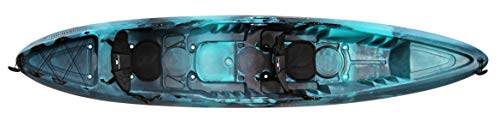
Perception - Rambler 13.5 Recreational Kayak - Sit on Top Tandem Kayak - Storage with Tie Downs - 13.6 ft - Dapper
As an Amazon Associate we earn from qualifying purchases. Product prices and availability are accurate as of the date/time indicated.

INTEX Excursion Pro K2 Inflatable Kayak 2-Person Set with Paddles & Pump | 68309EP - Portable Sit-on Tandem Kayak with Removable Skegs and Two Dry Bags for Gear, 12ft 9in x 3ft
As an Amazon Associate we earn from qualifying purchases. Product prices and availability are accurate as of the date/time indicated.
Prices shown are approximate and for reference only. Prices change often, so please check the current price on Amazon before you buy.
Ratings are editorial assessments based on makers’ published length, capacity, and feature specifications and value at typical prices. Capacity figures include paddlers and all gear; verify the exact model’s limit before loading for a trip.
The Six Tandem Camping Kayaks Reviewed
1. Perception Tribe Parish — Best Overall
The Tribe’s length, capacity, and honest seats make it the sit-on-top parish’s camping reference, a boat two people and two nights can live from. For most lake and slow-river campers, the audit ends in this row.
2. Old Town Parish — Best Touring
Old Town’s sit-inside tandems carry a load across distance with the drier, lower ride the cold and the chop reward. As the touring parish, they share the head.
3. Advanced Elements Parish — Best Inflatable
The convertible inflatable packs into a boot, sets up at the bank, and rearranges for the solo day, a parish no rigid boat can enter. As the small-car parish, it earns its row.
4. Wilderness Systems Parish — Best Comfort
The Pamlico parish’s sliding front seat solves the legroom and rhythm parish more cleverly than any rival. As the comfort parish, it holds its row.
5. Ocean Kayak Parish — Best Family
The Malibu Two’s centre position makes the child amidships a design rather than an improvisation. As the family parish, it holds its place.
6. Lifetime Parish — Best Value
Lifetime’s tandems put the honest essentials, capacity, stability, and a deck that takes a dry bag, at the floor of the sensible range. As the value parish, they complete the table.
Buying Guide: Sum the Whole Load, Sit in It Together, Rehearse It Loaded
Step One: Write Your Crew, Water, and Load
Write the crew’s weights, heights, and experience, the water’s parish, lakes, slow rivers, coast, and its temperature across your season, and the trip’s honest load, item by item with weights, tent to water to the bag of clothes. Sum the load against capacity with the margin this guide demands, and note the transport facts, car, roof, carrying distance, and storage at home. Note also the crew’s future, the child growing, the dog arriving, the solo use intended, because a tandem is a decade purchase and the convertible and family parishes exist for stated futures. This page, honestly written, usually eliminates half the table before a price is compared, which is what a foundation is for.
Step Two: Audit Seats, Storage, and the Roof Parish
For each finalist, audit the seats as a whole-day specification and the legroom with both crew seated, the storage as a system of hatches and dry bags or wells and straps, the hull’s length and stability against your water, and the rudder or skeg parish where your crossings are windy. Compose the price whole: the boat, two properly fitted life jackets, two paddles sized to the paddlers, dry bags for the whole load, a pump and a repair parish for the sit-inside and inflatable boats, and the roof system where one is needed. Refuse a boat whose capacity your step-one sum crowds, whatever its price, and refuse to economise on the jackets, which are the purchase’s senior partner and are bought fitted, in person, for the bodies that will wear them.
Step Three: The Loaded Rehearsal and the Season’s Round
Before the first camping crossing, rehearse the whole system in kind water near a kind shore: load the boat as for the trip, practise the launch, the rhythm, the turn, the landing, and the wet exit and recovery with the boat loaded, wearing the jackets, until every part of it is a memory rather than a hope. Adjust the trim and the seats to the rehearsal’s evidence and write the packing plan on a card that lives in the hatch. Keep the season’s round thereafter, rinse, dry, store out of the sun, inspect the hull, the seats, and the straps at the season’s turn, and refresh the crew’s drill at the season’s start. A tandem so chosen and so rehearsed will carry two campers and their whole parish across a decade of lakes, which is the ambition this guide was written to serve.
How We Selected These Tandem Kayaks
We included only real, named, currently sold tandem kayaks whose makers publish length, capacity, and storage specifications, spanning sit-on-top, sit-inside, inflatable, and family parishes suited to carrying camping loads. Prices are typical retail ranges. Ratings weight honest capacity and loaded handling first, then seats, storage system, transport parish, and value.
Frequently Asked Questions: Tandem Kayaks for Camping
How much camping gear can a tandem kayak really carry?
As much as the arithmetic leaves after the crew, and the arithmetic must be done rather than felt. Take the maker’s stated capacity, subtract both paddlers honestly weighed in their paddling clothes, subtract the water, which is the load campers most often forget and the heaviest parish in the boat, and what remains is the camping allowance, to be spent on the lightest version of the backpacking parish rather than the car camper’s. In practice, a full-size tandem from this table carries two people and a well-chosen one or two night kit with room to spare, provided the kit is the compact kind this site teaches and the dry bags are packed as a system. A boat loaded to its figure or beyond is not a triumph of packing but a safety finding, and the correct response is a lighter kit, a second boat, or a shorter trip, in that order.
Sit-on-top, sit-inside, or inflatable for camping?
By water and by car, in that order. Warm, kind water and a crew that swims, fishes, and launches from beaches belongs to the sit-on-top parish, whose self-draining ease forgives everything except cold and a long wet chop. Cold water, distance, and weather belong to the sit-inside parish, drier, lower, and faster under load, whose crew must learn the exit and carry the pump. The small car, the apartment, and the trip that flies before it paddles belong to the inflatable, whose modern parish performs far beyond its packed size and whose only true taxes are pace and the bank-side ritual. Many households end, across a decade, owning the question’s answer twice, once in each of two parishes, and this guide blesses the progression, provided the first purchase is matched to the first water rather than the imagined one.
Can one person paddle a tandem kayak alone?
Yes, with the trim arranged for it, and the convertible parish in this table is designed to make the arrangement proper, moving a seat to the centre where the solo paddler’s weight belongs. A fixed tandem paddled from the rear seat sits bow-high and wanders, and the field remedies, weight or a water container secured in the front parish to restore the trim, work honestly for the occasional solo day. What a tandem never becomes is a good solo boat by vocation: it is longer, heavier, and more wind-blown than the solo parish, and the camper whose crew has permanently become one should sell the tandem to a new pair of friends and buy the solo boat their life now describes. For the household whose crew changes by the weekend, the convertible is the composed answer, and its premium over a fixed boat is repaid the first time it is paddled alone without an argument with physics.
What safety kit should a camping tandem carry?
The jacket on every body is the first and governing item, properly fitted, worn, and not stowed. Around it, the parish for your waters as the local rules and common prudence compose it: a paddle each and a spare where the distance argues, a bilge pump and sponge in the sit-inside parish, a whistle on the jacket, a light where the law or the dusk requires, a dry bag for the phone and the means of calling help, and the signalling your waters prescribe. File the plan ashore, carry the water and the warmth to survive an unplanned swim and a long wait, and dress every paddler for the water’s temperature rather than the air’s. None of this is a burden in a boat already carrying a camping kit, and all of it together weighs less than the tent. The tandem that carries it is a vessel; the tandem that does not is a toy with a payload, and the water, which cannot read your intentions, treats them exactly alike until the day it does not.
Related guides
- Best Lithium Camping Battery in 2026: 7 Lithium Camping Batteries That Offer Long Runtime, Fast Charging, and Reliable Power for Budget Campers
- Best Budget Sleeping Pad for Side Sleepers in 2026: 6 Best Budget Sleeping Pad for Side Sleepers Picks for Thick Comfort, Warm Sleep, and Reliable Budget Camping
- Best Solar Battery for Camping in 2026: How to Pick a Solar Battery That Powers Your Camp Without Running Out
- Best Camping Quilts in 2026: 7 Camping Quilts That Offer Light Warmth, Packable Comfort, and Reliable Performance for Budget Campers
More from Amazon
Programs that pair well with the guide above. Offers and eligibility are set by Amazon and may change.
Free shipping on eligible items, Prime Video and more. Eligible new members can start with a free trial.
Start a Prime free trialA Prime membership for ages 18-24 with a trial period. Eligibility is set by Amazon.
See Prime for Young AdultsAudiobooks and podcasts to listen to on the go. Eligible new members can start with a free trial.
Try Audible freeAd-free music streaming. Eligible new subscribers can start with a free trial.
Try Music Unlimited freeAs an Amazon Associate we earn from qualifying purchases.

Write Your Review
No reviews yet. Be the first to share your experience!