
What's inside
As an Amazon Associate I earn from qualifying purchases. This post may contain affiliate links at no extra cost to you.
A solar battery bank sounds simple: leave it in the sun, plug in your phone, and keep camping. In practice, the best solar battery bank for camping is the one that charges your devices reliably when the sun is weak, the sky is cloudy, and you are away from a wall outlet for two or three days. Solar charging is slow, panel size matters more than marketing claims, and battery capacity matters more than the solar panel alone.
This guide focuses on solar battery banks that are practical for camping. We compare real, currently sold models across different capacities and prices, explain what milliamp-hours actually mean for phones, headlamps, and small devices, and show how to use solar charging without running out of power at night. Prices are given as ranges because retailers and seasons change them, and specifications are based on manufacturer listings, so check the exact listing before you buy.
Solar charging is slow, so charge at home first. A solar panel on a power bank is best as a top-up during the day, not as your only way to recharge a flat battery. Keep the bank charged before you leave, use the solar panel to extend its life on the trail, and save power by charging one device at a time and turning off features you do not need.
Disclosure: As an affiliate site, Budget-Camper.com may earn a commission from qualifying purchases made through links on this page, at no extra cost to you. Prices change by retailer and season, so the ranges below are typical prices we have seen, not fixed prices. Capacity, solar output, and other specifications are based on manufacturer listings and vary by model and conditions, so check the exact listing before you buy.
Our Top Picks
Best Solar Battery Bank for Camping at a Glance: Comparison Table
Use this table to compare the leading solar battery banks for camping side by side. Capacity, solar panel type, best use, and price matter most, so compare those first, then read the reviews below for the details that matter on a campsite.
| Solar Battery Bank Model | Capacity | Solar Panel | Best Use for Camping | Typical Price Range | Rating |
|---|---|---|---|---|---|
| Anker 625 Solar Power Bank | 10,000mAh | Built-in solar panel | Best overall solar battery bank for camping | $50 – $70 | 4.8 / 5 |
| Blavor Solar Power Bank | 20,000mAh | Built-in solar panel | Best large-capacity solar bank for longer trips | $25 – $35 | 4.6 / 5 |
| Hiluckey Solar Charger | 25,000mAh | Built-in solar panel | Best solar bank for charging several devices | $30 – $40 | 4.6 / 5 |
| Goal Zero Venture 35 Power Bank | 9,600mAh | Pairs with separate solar panel | Best rugged solar-ready bank for backpacking | $50 – $70 | 4.7 / 5 |
| BioLite Charge 80 PD Power Bank | 20,000mAh | Pairs with separate solar panel | Best solar-ready bank for fast USB-C charging | $70 – $90 | 4.7 / 5 |
| Riapow Solar Power Bank | 26,800mAh | Built-in solar panel | Best budget solar bank for weekend camping | $30 – $40 | 4.5 / 5 |
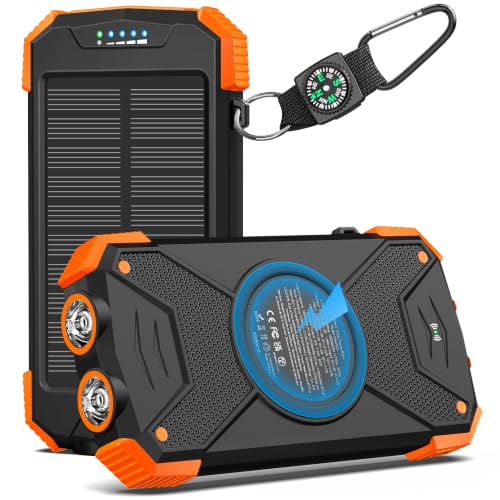
BLAVOR Solar Power Bank 10,000mAh Portable Wireless Charger for Cell Phones | 20W USB-C battery pack, battery bank, IPX5 waterproof, 2 flashlights, camping essentials, hiking gear, emergency solar backup


As an Amazon Associate we earn from qualifying purchases. Product prices and availability are accurate as of the date/time indicated.

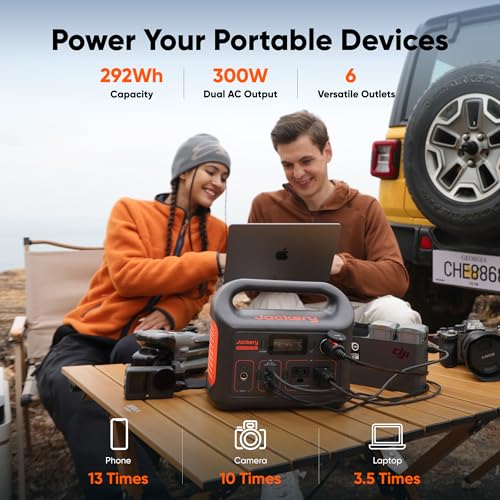
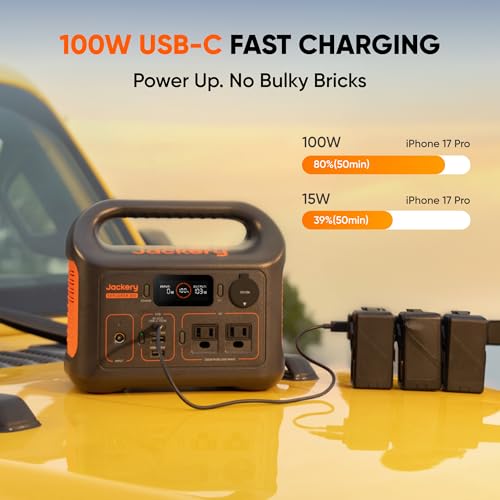
Jackery Explorer 300 Portable Power Station,292Wh | Backup LiFePO4 Battery, Solar Generator for Outdoors, Camping, Travel, Hunting, Blackout (Solar Panel Optional)




As an Amazon Associate we earn from qualifying purchases. Product prices and availability are accurate as of the date/time indicated.

GULLVEN Solar Charger Power Bank 49800mAh with 4 Built-in Cables & 4 Foldable Panels, 22.5W Fast Portable Phone Charger, External Battery Pack with USB-C in/Output & Flashlight for Outdoor Camping


As an Amazon Associate we earn from qualifying purchases. Product prices and availability are accurate as of the date/time indicated.
Prices shown are approximate and for reference only. Prices change often, so please check the current price on Amazon before you buy.
Best Solar Battery Bank for Camping Reviewed for 2026
1. Anker 625 Solar Power Bank: Best Overall Solar Battery Bank for Camping
The Anker 625 Solar Power Bank is our top pick for most campers because it balances capacity, size, and build quality. Its 10,000mAh capacity is enough for about two to three full phone charges in real use, once you allow for conversion losses, and it is compact enough to carry in a day pack without feeling heavy. The built-in solar panel is useful for topping up during the day, but it is not a fast charger, so treat solar as a slow trickle rather than a main power source.
What makes it useful on a campsite is its reliability. Anker power banks are widely used, the USB ports are straightforward, and the unit is built for everyday carry rather than for display. It also has a built-in light, which is useful for finding a tent zipper or a cable in the dark, although it is not a replacement for a headlamp. The main trade-off is capacity: 10,000mAh is enough for a weekend, but it will not run a tablet, a fan, and two phones for several days without a recharge.
At a typical price in the $50 to $70 range, it is a good value for a trusted brand. Choose it if you want a compact, reliable solar bank for weekend camping, and you charge it at home first. Do not buy it expecting the solar panel alone to refill it quickly, because solar charging is slow and depends on direct sun.
2. Blavor Solar Power Bank: Best Large-Capacity Solar Bank for Longer Trips
The Blavor Solar Power Bank is a good choice if you want more capacity for a longer trip. Its 20,000mAh capacity is about double the Anker 625, so it can charge a phone several times, top up a headlamp, and still have power left for a second day. It has a built-in solar panel, a compass, and a flashlight in many listings, which make it useful as a backup tool as well as a charger.
In real camping use, the extra capacity matters more than the solar panel. You will still need to charge it at home first, and solar will add power slowly during the day, but the larger battery gives you a bigger buffer when the weather turns cloudy. The unit is larger and heavier than the Anker 625, so it is better for car camping or a base camp than for ultralight backpacking. Check the exact listing for port types, because some versions have different USB-A and USB-C combinations.
At a typical price in the $25 to $35 range, it is a strong budget option for capacity. Choose it if you want a large solar bank for a low price, you camp for several days, and you do not mind extra weight. It is not the best choice if you need fast USB-C charging or a compact pocket bank.
3. Hiluckey Solar Charger: Best Solar Bank for Charging Several Devices
The Hiluckey Solar Charger is useful when you need to charge more than one device. Its 25,000mAh capacity is the second largest in this guide, and it has multiple USB ports in many listings, so you can charge a phone and a headlamp at the same time. It also has a built-in solar panel and a flashlight, which are useful for camp use.
For family camping or group trips, that extra capacity helps. One person can charge a phone while another charges a lantern or a GPS device, and the bank still has power left for the evening. The trade-off is size and weight: 25,000mAh is heavy for a pocket, so it is better in a tent, a car, or a large pack. Solar charging is still slow, so charge it at home first and use the panel to extend its life, not to refill it from empty.
At a typical price in the $30 to $40 range, it is a good value for a high-capacity solar charger. Choose it if you camp with family, you need to charge several devices, and you want a low-cost large bank. If you need a lighter bank for solo backpacking, the Anker 625 or Goal Zero Venture 35 will be easier to carry.
4. Goal Zero Venture 35 Power Bank: Best Rugged Solar-Ready Bank for Backpacking
The Goal Zero Venture 35 is different from the built-in solar banks above. Its 9,600mAh capacity is smaller, and it does not have a large built-in solar panel. Instead, it is designed to pair with a separate Goal Zero solar panel, such as a Nomad panel, for faster solar charging. That makes it a better choice if you already use Goal Zero solar panels or you want a system that can scale up for longer trips.
Its strength is ruggedness. It is built for outdoor use, it is water resistant in many listings, and it is compact enough for backpacking. The capacity is enough for about two phone charges, so it is best for short trips or as a backup bank rather than as your only power source for a week. If you pair it with a separate panel, solar charging is faster than a small built-in panel, because the separate panel is larger and can be angled toward the sun.
At a typical price in the $50 to $70 range for the bank alone, it is a good choice if you want a rugged, solar-ready system. Choose it if you backpack, you want to add a separate solar panel later, and you value durability over raw capacity. Do not buy it expecting built-in solar to refill it quickly, because that is not its design.
5. BioLite Charge 80 PD Power Bank: Best Solar-Ready Bank for Fast USB-C Charging
The BioLite Charge 80 PD is the best choice in this guide if you need fast USB-C charging. Its 20,000mAh capacity is large enough for several phone charges, and its USB-C Power Delivery output can charge a phone, a tablet, or a small laptop much faster than a basic USB-A port. Like the Goal Zero Venture 35, it is designed to pair with a separate solar panel rather than relying on a small built-in panel, which makes it a better system for longer trips.
For campers who carry USB-C devices, that speed matters. You can top up a phone quickly during a lunch stop, then save the rest of the power for the evening. The bank is larger than the Anker 625, but it is still portable enough for car camping and base camps. Check the exact listing for input and output wattage, because fast charging depends on both the bank and the cable you use.
At a typical price in the $70 to $90 range, it is the most expensive bank in this guide, but it offers the best USB-C performance. Choose it if you use USB-C devices, you want fast charging, and you plan to pair it with a separate solar panel. If you only need to charge a phone slowly overnight, the Blavor or Hiluckey models will cost less.
6. Riapow Solar Power Bank: Best Budget Solar Bank for Weekend Camping
The Riapow Solar Power Bank is a budget option with a large 26,800mAh capacity. That is the largest capacity in this guide, and it gives you the most buffer for a weekend trip. It has a built-in solar panel and multiple USB ports in many listings, so you can charge a phone and a headlamp without carrying two banks.
In practice, its main advantage is capacity for the price. At a typical price in the $30 to $40 range, you get more milliamp-hours per dollar than with the Anker or Goal Zero models. The trade-off is size, weight, and charging speed. It is heavy for backpacking, and its solar panel is small, so solar charging is slow. Charge it at home first, use it as a base-camp bank, and do not expect it to refill quickly from solar alone.
Choose it if you want a low-cost, high-capacity solar bank for car camping or a weekend trip, and you do not mind carrying extra weight. It is not the best choice if you need a compact bank or fast USB-C charging, because the BioLite Charge 80 PD and Anker 625 are better for those needs.
Buying Guide: How to Choose the Best Solar Battery Bank for Camping
The best solar battery bank for camping for you depends on how many devices you carry, how long you stay out, and how much sun you expect. Start with capacity and port type, then compare solar panel size, weight, and ruggedness. A bank that is large enough, charges your devices, and fits your pack is better than a bank with the biggest solar panel on paper.
Capacity: 10,000mAh, 20,000mAh, or 25,000mAh and More
Capacity is measured in milliamp-hours, but real charging is less than the label because of conversion losses. A 10,000mAh bank will usually give about two full phone charges, a 20,000mAh bank will give about four, and a 25,000mAh or 26,800mAh bank will give about five, depending on the phone and the cable. For a weekend trip with one phone and a headlamp, 10,000mAh to 20,000mAh is enough. For a longer trip, a family, or a tablet, choose 20,000mAh or more.
Do not buy the largest bank by default. Larger banks are heavier, they take longer to charge at home, and they are harder to carry on a trail. Choose the smallest capacity that covers your trip with a safety margin, then use solar to extend it.
Solar Charging: Built-In Panel or Separate Panel
Solar charging is slow, and panel size is the main reason. A small built-in panel on a power bank may add only a small amount of charge in a full day of sun, while a larger separate panel can charge a bank much faster. Built-in panels are convenient because they are always with the bank, but they are small and they are often shaded by your pack or tent. Separate panels, such as those that pair with the Goal Zero Venture 35 and BioLite Charge 80 PD, are larger, they can be angled toward the sun, and they can be hung from a pack while you walk.
For most campers, a built-in panel is enough as a top-up, while a separate panel is better if you camp for several days without power. Always charge at home first, place the panel in direct sun, and do not expect solar to refill a flat bank in a few hours.
Ports, Cables, and Device Compatibility
Ports matter because they determine what you can charge and how fast. USB-A is common for headlamps, lanterns, and older phones. USB-C is common for newer phones, tablets, and small laptops, and USB-C Power Delivery can charge faster when both the bank and the device support it. Check the exact listing for port types, input wattage, and output wattage, and bring the right cables. A fast bank will not charge fast with a slow cable, and a USB-C device may need a USB-C to USB-C cable rather than a USB-A to USB-C cable.
For camping, bring one cable per device, keep cables in a dry bag, and test the bank with your devices at home before you leave. That test will show you how many charges you actually get, not just what the label promises.
Weight, Ruggedness, and Weather
Weight and ruggedness matter when you carry a bank on a trail. A 10,000mAh bank is light enough for a day pack, while a 26,800mAh bank is better for a car or a base camp. Water resistance helps in rain, but no solar bank should be left in a puddle or submerged. Keep the bank dry, keep it out of direct heat, and store it in a tent or a dry bag at night.
Solar charging is slow, so charge at home first. That is the most important rule in this guide. A bank that starts full will last much longer than a bank that starts half empty, even if both have solar panels. Use solar during the day to top up, save power at night by turning off Bluetooth and lowering screen brightness, and charge one device at a time when you need to save power.
Price, Brand, and What You Actually Need
Price depends on capacity, brand, and charging speed. A bank in the $25 to $40 range, like the Blavor Solar Power Bank, Hiluckey Solar Charger, and Riapow Solar Power Bank, is a good starting point for weekend camping. A bank in the $50 to $70 range, like the Anker 625 Solar Power Bank and Goal Zero Venture 35, is a good balance if you want a trusted brand and a compact design. A bank in the $70 to $90 range, like the BioLite Charge 80 PD, is best if you want fast USB-C charging and a solar-ready system.
Brand also matters. A bank from a trusted brand in this guide, like Anker, Goal Zero, and BioLite, will be more reliable than an unbranded model with similar specifications on paper. For most campers, the Anker 625 is the best value for a compact solar bank, the Blavor is the best value for large capacity at a low price, and the BioLite Charge 80 PD is the best choice for fast USB-C charging. Do not buy a bank based on solar wattage alone. A bank that is large enough, charges your devices, and fits your trip is worth the investment.
Best Solar Battery Bank for Camping: FAQ
What is the best solar battery bank for camping?
For most campers, the Anker 625 Solar Power Bank is the best overall solar battery bank for camping because it offers a 10,000mAh capacity, a compact design, and reliable charging at a typical price in the $50 to $70 range. If you want large capacity at a low price, the Blavor Solar Power Bank is a good choice at $25 to $35. If you want to charge several devices, the Hiluckey Solar Charger is a practical option at $30 to $40. If you want a rugged solar-ready bank, the Goal Zero Venture 35 is a strong option at $50 to $70. If you want fast USB-C charging, the BioLite Charge 80 PD is a good fit at $70 to $90.
How long does it take to charge a solar battery bank with solar?
How long it takes to charge a solar battery bank with solar depends on panel size, sunlight, and battery capacity, but in general, a small built-in panel is slow and may take a full day or more to add a useful amount of charge. A larger separate panel is faster because it captures more sun. For best results, charge at home first, place the panel in direct sun, and use solar as a top-up rather than as your only charging method.
Are solar battery banks good for camping?
Yes, solar battery banks are good for camping when you use them correctly. They give you a backup power source, they can top up during the day, and they are useful when you are away from a wall outlet. They are not a replacement for a full charge at home, because solar charging is slow. For best results, start with a full bank, use solar during the day, and save power at night.
How do I choose a solar battery bank for camping?
Choose a solar battery bank for camping by starting with capacity and port type, then checking solar panel size, weight, and ruggedness. Pick a bank that covers your trip with a safety margin, bring the right cables, and test it at home before you leave. Always charge at home first, because solar charging is slow, and keep the bank dry and out of direct heat.
FAQ
What is the best solar battery bank for camping?
How long does it take to charge a solar battery bank with solar?
Are solar battery banks good for camping?
How do I choose a solar battery bank for camping?
Related guides
- Best Budget Sleeping Pad for Side Sleepers in 2026: 6 Best Budget Sleeping Pad for Side Sleepers Picks for Thick Comfort, Warm Sleep, and Reliable Budget Camping
- Best Solar Battery for Camping in 2026: How to Pick a Solar Battery That Powers Your Camp Without Running Out
- Best Camping Quilts in 2026: 7 Camping Quilts That Offer Light Warmth, Packable Comfort, and Reliable Performance for Budget Campers
- Best Camp Cot Frame Durability Guide in 2026: Steel, Aluminium, and the Joints That Decide Whether a Cot Lasts Ten Seasons or Two
More from Amazon
Programs that pair well with the guide above. Offers and eligibility are set by Amazon and may change.
Free shipping on eligible items, Prime Video and more. Eligible new members can start with a free trial.
Start a Prime free trialA Prime membership for ages 18-24 with a trial period. Eligibility is set by Amazon.
See Prime for Young AdultsAudiobooks and podcasts to listen to on the go. Eligible new members can start with a free trial.
Try Audible freeAd-free music streaming. Eligible new subscribers can start with a free trial.
Try Music Unlimited freeAs an Amazon Associate we earn from qualifying purchases.

Write Your Review
No reviews yet. Be the first to share your experience!