
What's inside
As an Amazon Associate I earn from qualifying purchases. This post may contain affiliate links at no extra cost to you.
The best camping gear for kayaking is ordinary camping gear that has passed a second, harder audition: it must fit through a hatch, survive being wet as a lifestyle rather than as an accident, and pack into a hull whose storage is measured in odd-shaped liters rather than in a trunk’s forgiving cube. Kayak camping punishes bulk above all sins. The car camper’s four-person dome and cooler-based kitchen are not merely heavy in a kayak, they are geometrically impossible, and the budget camper’s art is assembling a kit that is compact, waterproof by system rather than by hope, and cheap in the way that matters, bought once, correctly, instead of three times ascending. This guide compares six real, currently sold pieces of kayak camping gear across the kit’s main parishes, dry storage, shelter, sleep, and the worn safety gear, graded on packed size, waterproofing honesty, and value, and it opens with the doctrine that organizes everything below: in kayak camping, the dry bag is not an accessory. It is the architecture. Every other choice, the tent’s packed length against the hatch’s mouth, the pad’s roll against the hull’s voids, the food’s packaging, is made inside a system whose first law is that anything that must be dry at camp travels in a sealed bag, inside a hatch that is itself merely water-resistant, because the river always eventually files its claim.
Build the kit’s budget in the right order, because kayak camping’s costs are front-loaded in two places the beginner does not expect. The first is dry storage itself: a set of dry bags in graduated sizes, a large one for the sleeping system, mediums for clothing and food, smalls for the electronics and the day’s needs, is the kit’s foundation and should be bought as deliberately as the tent. The second is the compactness premium on shelter and sleep: a tent that packs to hatch length and a pad that rolls to a loaf are not luxury versions of the car kit, they are the kayak versions, and the budget camper finds them in the backpacking world’s entry tier, where house brands and value lines sell genuine compactness at honest prices. What the budget does not need to buy is a second wardrobe of specialty paddling clothing or a fleet of gadgets: the kayak camper’s own layers, in quick-dry and wool citizens, the kitchen’s smallest stove from the backpacking shelf, and a headlamp serve perfectly. The PFD is the one item where the budget takes no vote at all: it is fitted, approved, worn, and treated as the price of the water’s admission, which it is.
Our Top Picks
Best Camping Gear for Kayaking: Dry Bags, Compact Shelter, and Sleep Systems
Dry Bags: The Architecture of the Whole Kit
Choose dry bags as a system of sizes rather than as a single heroic sack. The sleeping bag and the night’s clothing share the largest bag, twenty to thirty liters, because a dry sleep is the trip’s non-negotiable and its bulk is the hull’s biggest tenant. Food rides its own medium bag, which contains smells and spills as faithfully as it excludes the river. The day bag, a five or ten liter that lives in the cockpit or on the deck, holds the layer, the lunch, the filter, and the phone’s dry case, so shore stops are minutes rather than unpackings. Grade the bags themselves on their closure, the roll-top with a proper buckle being the parish standard, on their material, the coated nylons for lightness inside hatches, the heavy vinyls for deck duty and abrasion, and on their shape, the flatter, oval-based designs packing a hull’s curves kinder than cylinders do. Buy one more bag than the plan requires and let it swallow the miscellaneous, because the last items into a kayak are always the awkward ones, and a system with no slack is a system that leaves something wet.
Tents and Sleep for the Hatch’s Dimensions
The kayak tent is a backpacking tent by another name, and its specifications translate directly: packed length short enough for the hatch’s mouth and the hull’s straight runs, the poles being the usual constraint, weight a secondary virtue since the water carries it, and a footprint small enough for the riverbank’s and the island’s tight clearings. The budget’s honest champions are the value backpacking lines, two-person tents in the three-to-four-pound class that pack to a loaf and pitch anywhere, and the kayak’s gift to the camper is that the ultralight premium is unnecessary, the hull being a beast of burden no backpacker enjoys. The sleep system follows the same translation: an inflatable pad that rolls small, a sleeping bag or quilt that compresses into the big dry bag, and a pillow that is a stuff sack of clothing, since every dedicated luxury must justify its liters to a hull that has already spent them. Test the whole system against the actual boat before the trip, packed, in the driveway, because the hatch’s mouth is a critic no product page can simulate, and the time to discover that the tent poles travel on deck is at home, with tape and a plan, not at the launch with an audience.
The Worn Kit: PFD, Layers, and the Day’s Small Citizens
The paddler’s own gear obeys the water’s rules. The PFD is fitted to the body, Coast Guard-approved, worn from the launch to the take-out, and chosen, where the budget allows, in a paddling design whose cut leaves the shoulders free and whose pockets carry the whistle and the knife. Clothing is the no-cotton doctrine in full: synthetic or wool layers that keep their dignity wet, a rain shell that doubles as the wind’s answer on open water, water shoes or sandals that stay on in a current and protect against the launch’s rocks, and a hat and sun discipline for the exposure a seated paddler collects. The small citizens complete the kit: a water filter that makes the riverbank a tap, a small repair roll for the boat and the pad, a headlamp for the camp’s evenings, and a dry case for the phone that serves as camera, map, and emergency line, each item earning its liters or staying home. Packed so, the kayak camper’s kit is a small, dense, waterproof argument that everything necessary is aboard and nothing aboard is unnecessary, which is the budget’s definition as much as the hull’s.
Best Camping Gear for Kayaking: Quick Comparison
| Kayak Camping Gear Model | Key Specs | Best For | Typical Price Range | Rating |
|---|---|---|---|---|
| Sea to Summit Big River Dry Bag (20-35L class) | Roll-top in class, 420D nylon positioning in line, lash points, oval base | Best camping gear for kayaking foundation | $35 – $55 by size | 4.7 / 5 |
| Naturehike Cloud-Up 2 Tent | 2-person in class, compact packed size positioning, backpacking weight class | Best budget hatch-friendly tent | $110 – $150 | 4.5 / 5 |
| Klymit Static V Sleeping Pad | Inflatable in class, small packed size positioning, budget class | Best budget kayak sleeping pad | $55 – $75 | 4.4 / 5 |
| Earth Pak Dry Bag Set (multi-size) | Roll-top set in class, multiple sizes positioning, phone case included in line | Best dry bag set value | $30 – $50 per set | 4.4 / 5 |
| Onyx MoveVent Dynamic PFD | USCG-approved in class, mesh ventilation positioning, paddling cut | Best budget paddling PFD | $55 – $80 | 4.5 / 5 |
| NRS Tuff Sack Dry Bag class | Heavy vinyl in class, roll-top positioning, deck-duty durability | Best heavy-duty deck bag | $30 – $50 by size | 4.5 / 5 |
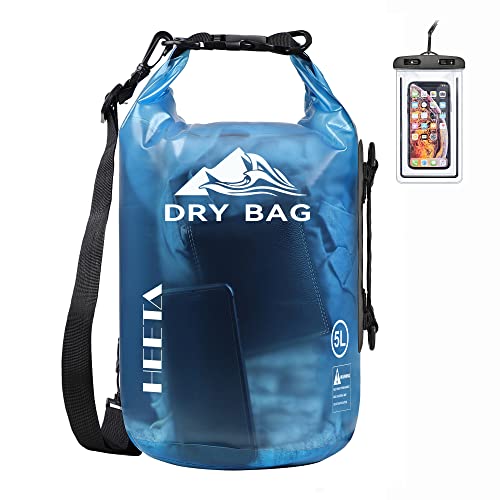
HEETA Dry Bag Waterproof Backpack with Phone Case (Transparent Blue, 5L) | Roll Top Lightweight Dry Storage Bag for Women Men, Travel Boating Kayaking Paddle Board Camping Beach Essentials Accessories
As an Amazon Associate we earn from qualifying purchases. Product prices and availability are accurate as of the date/time indicated.
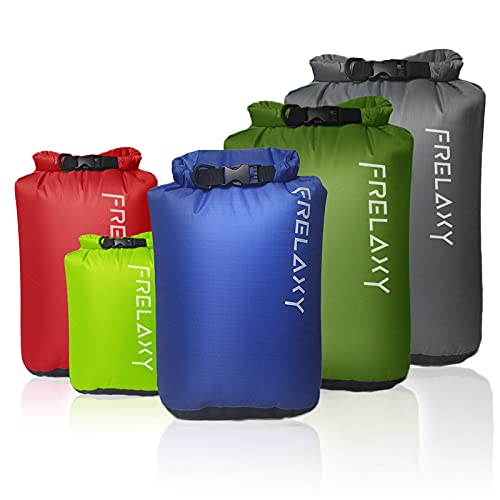
Frelaxy Dry Bag 5 Pack, Ultralight Waterproof Dry Sack for Outdoor Use | Durable material, Waterproof coating, Secure roll top closure, Lightweight, Compact storage, Hiking, camping, kayaking
As an Amazon Associate we earn from qualifying purchases. Product prices and availability are accurate as of the date/time indicated.

Lanedo 80L Dry Bag Large Waterproof Bag Roll-Top Heavy Duty Fishing Duffel Bag with Durable Straps & Handles for Kayaking Paddle boarding Boating Rafting Fishing Canoeing Camping
As an Amazon Associate we earn from qualifying purchases. Product prices and availability are accurate as of the date/time indicated.
Prices shown are approximate and for reference only. Prices change often, so please check the current price on Amazon before you buy.
Dry bag liter ratings and tent packed sizes are makers’ figures; test against your own kayak’s hatches. Prices are typical US street ranges. Ratings are editorial for budget kayak camping, weighing packed size, waterproofing and durability, comfort or safety in role, and value.
The Six Kayak Camping Essentials Reviewed
1. Sea to Summit Big River Dry Bag: Best Foundation Bag
The Big River leads the kit on the virtues the foundation bag lives by: a tough coated nylon that slides into hatches kindly, an oval base that packs a hull’s curves without wasted corners, lash points for deck duty, and a roll-top that seals with the confidence a sleeping bag’s dryness deserves. Bought in the large size for the sleep system and a medium for clothing, it is the recommendation defended first, because the whole trip sleeps on its honesty.
2. Naturehike Cloud-Up 2: Best Budget Hatch Tent
The Cloud-Up 2 is the budget kayak shelter’s standard-bearer: a genuine backpacking tent, two-person, free-standing, packing to a hatch-friendly loaf at a price the car-camping world finds suspicious until the third season of service files its testimony. Its zippers and stakes grade in its tier and are treated kindly. For the kayak camper equipping on a budget, it converts the shelter problem from a research project into a solved line item.
3. Onyx MoveVent Dynamic: Best Budget PFD
The MoveVent serves the safety parish at a budget price with a paddler’s cut, mesh panels that breathe through a summer day’s paddling, and the approval that makes it legal tender on every water in the country. Its fit range and its honest construction shame the bargain-bin vests that share its shelf. Since it will be worn every minute on the water, its comfort is a safety feature, and it is graded as one.
4. NRS Tuff Sack: Best Heavy-Duty Deck Bag
The Tuff Sack is the deck and raft parish’s vinyl workhorse: a heavy material that shrugs off the abrasion of straps, rocks, and a decade of launches, sealing the gear that rides outside the hatches. It is heavier than the nylon class and proud of it. For the food bag, the deck bag, and the kit that camps from rocky shores, it is the durability buy of the dry fleet.
5. Earth Pak Dry Bag Set: Best Set Value
Earth Pak’s graduated set solves the system’s sizing in one purchase, large to small with a phone case in the bargain, at a price that lets the beginner own the architecture outright. Its materials grade a tier below the leaders’. As the first dry fleet, replaced piece by piece across seasons as the camper’s standards rise, it is the budget’s most efficient first move.
6. Klymit Static V: Best Budget Pad
The Static V closes the kit as the sleep system’s value champion: a full inflatable pad that rolls to a water bottle’s neighborhood, insulates honestly for three seasons, and costs what the foam parish charges for a worse night. Its valve and fabric ask ordinary care. In a kayak, where the pad’s packed size decides whether it rides inside or not at all, it has put more budget campers to sleep on more riverbanks than any rival here.
Buying Guide: How to Build a Budget Kayak Camping Kit
Step One: Measure the Boat Before Buying the Gear
Start with the kayak, not the catalog: measure the hatch openings, the hull’s usable runs, and the cockpit’s spare corners, and write the figures where the shopping happens, because every purchase in this parish is a geometry problem wearing a price tag. List the kit by the article’s order, dry architecture first, shelter and sleep second, the worn kit third, the kitchen and small citizens last, and price the whole system before buying any of it, since the budget kayak kit fails by accumulation, each item reasonable, the total a surprise, more often than by any single extravagance. Borrow or rent the big items for the first trip if your circle allows, since one weekend teaches the sizes your second season will actually use, and the budget spent after experience is the only budget that is truly cheap.
Step Two: Buy the Safety and the Dryness at Full Seriousness
Let two categories ignore the budget’s negotiations: the PFD, fitted and approved and worn, bought new from a maker whose approval is printed on the label; and the dry bags that carry the sleep system, where the leaders’ modest premium over the bargain class is the price of the trip’s one non-negotiable, a dry night’s sleep. Everywhere else, the value lines in this table are the correct citizens, and the savings belong in the trip fund, the shuttle, the campsite fees, the second weekend, since the budget camper’s wealth is measured in nights out and not in the kit’s thread count. Check every used purchase, tents and pads especially, by pitching and inflating it at home, because a bargain with a failed seam is a story told in the rain at midnight.
Step Three: Shakedown in the Driveway, Then at the Near Shore
Pack the full kit into the actual kayak at home, every bag in its hatch, the deck load lashed, the day bag in the cockpit, and let the geometry file its objections while the return windows are open. Then float the loaded boat at the nearest calm shore, paddle an hour, make the camp within sight of the car, and let the rehearsal expose the buried item, the missing liter, the pad that wants a different bag. Only then plan the real trip, short, kind water, a take-out that forgives, the float plan left ashore, the weather read, the PFD worn, in the standing order of every paddling article on this site. Run so, budget kayak camping becomes the thing its practitioners keep trying to explain to the car campers: that the river carries the weight, the kit fits because it was chosen to fit, everything aboard is dry because dryness was the design, and the whole expedition cost less than the hotel the highway’s travelers are checking into, within sight of the same sunset, from the wrong side of the glass.
Frequently Asked Questions About Camping Gear for Kayaking
Can I use my regular camping gear for kayak camping?
Some of it, and the hatch decides which. Your sleeping bag, your layers, your headlamp, and your small stove transfer without ceremony, provided they travel in dry bags, since the kayak’s rule is not new gear but dry gear. The car tent usually fails the geometry, too long in its poles, too bulky in its body, and the big foam pad fails it too, which is why this table’s shelter and sleep rows are backpacking-class items. The cooler fails absolutely and is replaced by the food bag and the menu’s redesign toward the shelf-stable and the compact. Audit your existing kit against the boat’s measurements from Step One, keep what fits, and buy only the gaps, because the budget kayak kit is mostly a measurement exercise, and the camper who measures first discovers their garage already owns half the expedition.
How many dry bags do I need for kayak camping?
Four to six, in graduated sizes, for a solo weekend: the large bag for the sleeping system and night clothing, a medium for the rest of the clothing, a medium for food, a small day bag for the cockpit, and one spare for the miscellaneous that every trip generates, with couples and longer trips scaling the food and clothing bags rather than inventing new categories. The system matters more than the count: everything that must be dry is in a bag, bags are labeled or color-coded so the food is never opened in the dark by a hand seeking a headlamp, and closures are rolled to the maker’s full instruction, since a dry bag rolled twice in haste is a damp bag with a buckle. Buy the set or the leaders as the budget’s order in Step Two directs, and let the spare bag be the kit’s cheapest insurance.
What size tent is best for kayak camping?
A two-person backpacking tent for a solo camper who values room, a three-person for a couple, in both cases graded by packed length against your hatches rather than by floor area, since the poles’ length is the usual disqualifier and the tent that packs a few inches shorter is the tent that rides inside. Weight, the backpacker’s obsession, relaxes here, the water being the porter, so the budget’s value lines at three to four pounds are entirely correct and the ultralight premium is money the kayak camper should spend on trips instead. Free-standing designs earn their place on the sandbars and rock shelves where stakes are a rumor. Test the pitch at home and the pack in the driveway shakedown, and the tent will be the kit’s most boring component, which in shelter is the highest praise available.
Is kayak camping safe for beginners on a budget?
Yes, when the budget is spent in the article’s order and the trip is chosen with the humility the water deserves: a fitted, approved PFD worn at all times, calm and familiar water for the first seasons, short distances with a forgiving take-out, a float plan left with someone ashore, weather read before the launch and respected without negotiation, and the loaded boat rehearsed at the near shore before any real trip, as Step Three prescribes. The dangers of kayak camping are rarely equipment failures; they are itinerary ambitions, cold water underestimated, and weather argued with, all of which are free to avoid. The budget camper who buys the safety parish at full seriousness, chooses kind water, and builds distance across seasons joins a pursuit whose entry cost is genuinely low and whose rewards, the campsite reached only by water, the morning launch into empty light, are priced like luxuries and cost like a weekend, which is the whole argument of this site in a single sentence.
Related guides
- Best Weatherproof Sleeping Pad for Families in 2026: Durable, Water-Resistant Camping Pads for Kids and Adults
- Best Small Headlamp for Backpacking in 2026: 7 Small Headlamps That Offer Bright Light, Light Weight, and Reliable Performance for Backpacking
- Best Tent When Tent Is Too Heavy in 2026: Best Tent When Tent Is Too Heavy for Light Packing, Easy Carry, and Simple Camping
- Camping Table in 2026: The Complete Budget Guide to Choosing a Camping Table That Fits Your Chairs, Your Car, and Your Cook Kit, From Coleman and ALPS Mountaineering to KingCamp and Trekology
More from Amazon
Programs that pair well with the guide above. Offers and eligibility are set by Amazon and may change.
Free shipping on eligible items, Prime Video and more. Eligible new members can start with a free trial.
Start a Prime free trialA Prime membership for ages 18-24 with a trial period. Eligibility is set by Amazon.
See Prime for Young AdultsAudiobooks and podcasts to listen to on the go. Eligible new members can start with a free trial.
Try Audible freeAd-free music streaming. Eligible new subscribers can start with a free trial.
Try Music Unlimited freeAs an Amazon Associate we earn from qualifying purchases.

Write Your Review
No reviews yet. Be the first to share your experience!