
What's inside
- Best Lantern Rechargeable Batteries: Cost Per Trip, Honest Runtimes, and Cold Nights
- Best Lantern Rechargeable Batteries: Quick Comparison
- The Six Rechargeable Lantern Options Reviewed
- Buying Guide: How to Switch Your Lanterns to Rechargeable Power
- Frequently Asked Questions About Lantern Rechargeable Batteries
As an Amazon Associate I earn from qualifying purchases. This post may contain affiliate links at no extra cost to you.
The best lantern rechargeable batteries are the purchase that quietly deletes a recurring expense from a camping life. Every budget camper knows the disposable ritual: the lantern dims on the second night, someone drives to the gas station, and a four-pack of alkalines costs nearly what a budget lantern did, a toll paid trip after trip, season after season, for light that fades from the moment it is switched on. The rechargeable alternative is not a gadget splurge. It is arithmetic with a charger. One set of good nickel-metal hydride AAs or a pair of honest 18650 lithium cells, bought once from makers whose names mean something, powers a lantern fleet for years at a per-trip cost measured in pennies of electricity. This guide approaches the keyword the way a camper’s actual gear shelf demands: the lanterns in the wild run on removable AA cells, on 18650s, or on sealed USB packs, so the comparison table grades the leading cells, the charger that serves them all, and the lanterns whose battery systems show how each format behaves in the field. It keeps the safety law of battery camping in view throughout: lithium cells are bought from reputable sellers, carried in cases rather than loose among metal gear, and never, ever charged below freezing, a rule that protects the cell, the tent, and the camper in one sentence.
Start with the three formats as a camper meets them. The AA NiMH cell is the fleet battery: it fits the family lantern, both headlamps, the weather radio, and the kids’ flashlights, it can be swapped by feel in a dark tent, and its low-self-discharge leaders hold their charge across the months between trips, which is the difference between a system and a chore. The 18650 is the enthusiast’s cell, one or two of them driving the high-output lanterns that light a whole camp kitchen, with a brightness plateau alkalines cannot imitate, and a counterfeiting problem in its marketplace that makes the seller as important as the cell. The sealed USB lantern is the convenience format, charged from the car like a phone, excellent as a second lantern, and carrying an expiration date in its chemistry since its pack ages unswappably inside it. None of the three is the answer for every shelf, which is why the buying guide begins with a census of battery doors rather than a brand. What unites the table is the verdict none of them escape: measured across two seasons, every rechargeable format in this article costs a fraction of the disposable habit it replaces, and the camper who switches is not buying batteries anymore. They are buying the last batteries, which is a different and much better purchase.
Our Top Picks
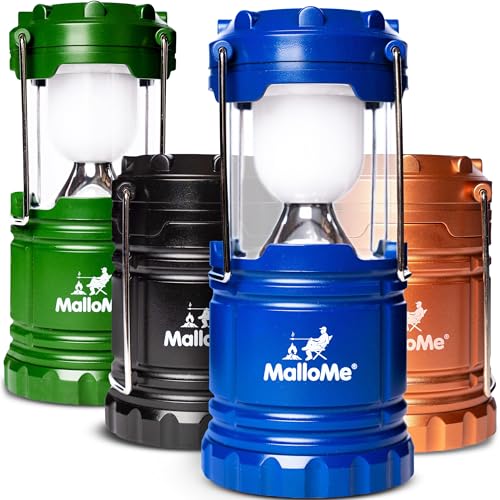 MalloMe Camping Lantern Multicolor 4 Pack Lanterns for4-Pack2 x 2 x 2 inches0.3 poundsCheck on Amazon
Best Lantern Rechargeable Batteries: Cost Per Trip, Honest Runtimes, and Cold Nights
The Disposable Tax, Itemized
Put the old habit on the ledger, because budget camping is a discipline of ledgers. A family lantern on alkalines eats a set every trip or two depending on its appetite and the nights’ length; the headlamps eat their own; the spares bought in anxiety ride home and leak in the drawer by spring, sometimes taking a lantern’s contacts with them. Across a season of six trips the alkaline bill for a modest fleet commonly reaches the price of a complete rechargeable system, charger included, and across three seasons it reaches the price of the lanterns themselves, a bonfire of small money that no single purchase ever felt like. The rechargeable ledger reads differently: the cells’ cost is the system’s cost, the electricity is beneath accounting, and the failure mode changes from the lantern dying at the campsite to the camper forgetting the pre-trip charge, a failure the routine of the buying guide is designed to make rare. This is why the article grades cost per season rather than cost per pack, and why the cheapest cells in the table are not the ones with the smallest number on the blister card.
Runtime Honesty: Plateaus, Fades, and the Low Mode That Matters
Judge a lantern’s power by its curve, not its headline. Alkaline cells fade from the first hour, so a lantern’s brightest mode is a brief acquaintance and its long night is a dimming one. NiMH holds a steadier voltage through most of its charge and then finishes comparatively quickly, which the camper experiences as honest light and a clear signal to swap. A regulated 18650 lantern holds its plateau longest of all, the premium behavior the format’s fans are actually buying. In every format, the mode that decides a trip is not the turbo on the box but the low and medium settings where a lantern spends its evenings, and the cells that serve those modes for the most nights per charge are the table’s leaders. Cold rewrites all of it downward, lithium sagging hardest and forbidden its charger until warmed, NiMH losing less and forgiving more, which is why the winter camper’s kit in this guide leans on the AA fleet and the tent’s warmth as a battery strategy.
One Charger to Rule the Camp Box
The system’s brain is a smart multi-chemistry charger, the four-bay class that charges lithium and NiMH side by side, each bay monitored, each cell finished when it is finished rather than when a timer guesses. It is the purchase that converts a drawer of loose cells into a fleet with a routine: home from the trip, spent cells in the charger; night before the trip, charged cells in the labeled case; the case in the camp box; the camp box by the door. Around that routine the accessories arrange themselves, the plastic cases that keep 18650s from ever touching metal in a bag, the paint dot that marries a set of AAs for life so they age together, the small headlamp that shares the lantern’s cells so one spare set serves two lights. The camper who builds this once will recognize the feeling from other solved problems: a category of trip anxiety simply stops occurring, and the lantern, that oldest piece of camp furniture, becomes as reliable as the stove.
Best Lantern Rechargeable Batteries: Quick Comparison
| Rechargeable Option | Key Specs | Best For | Typical Price Range | Rating |
|---|---|---|---|---|
| IKEA LADDA AA (4-pack) + smart charger | NiMH AA in class, low self-discharge positioning, widely praised value line | Best lantern rechargeable batteries for pure budget value | $8 – $12 per 4-pack; charger $20 – $35 | 4.7 / 5 |
| Panasonic eneloop pro AA (4-pack) | NiMH AA in class, higher capacity positioning, strong cycle life class | Best capacity AA for hungry lanterns | $20 – $28 per 4-pack | 4.7 / 5 |
| Sofirn BLF LT1 lantern (4x 18650 class) | 18650-powered lantern in class, warm-to-cool tint ramping positioning, enthusiast design | Best 18650 lantern benchmark | $55 – $80 with cells by bundle | 4.8 / 5 |
| Fenix CL26R class lantern | Single 18650 in class, compact positioning, trusted outdoor maker | Best compact 18650 lantern | $55 – $70 | 4.6 / 5 |
| XTAR VC4 / VC4SL charger class | Multi-chemistry smart charger in class, USB-powered positioning, per-bay display | Best charger for camp and car | $22 – $35 | 4.6 / 5 |
| Tenergy Centura AA value packs | NiMH AA in class, low self-discharge positioning, bulk pricing in line | Best bulk AA for big fleets | $14 – $24 by count | 4.3 / 5 |
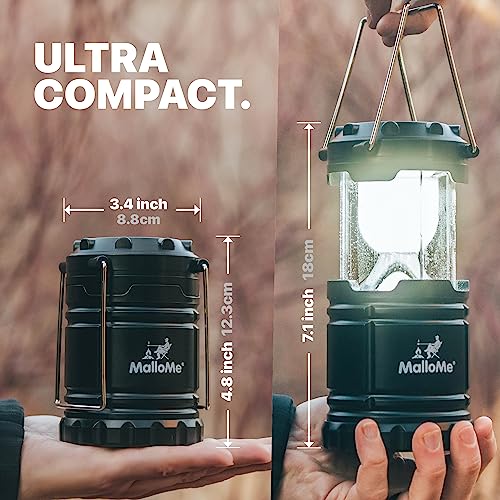
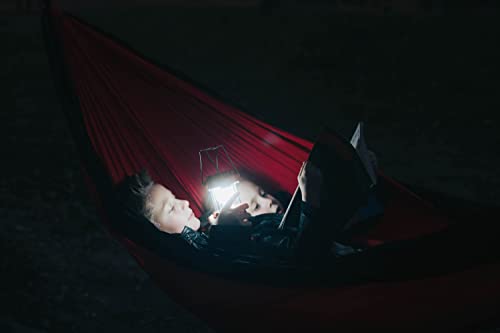
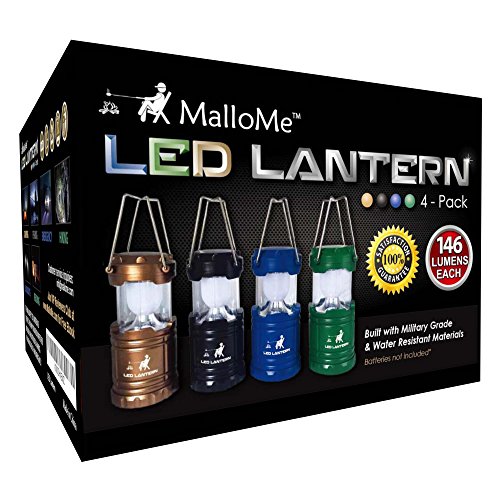
MalloMe Camping Lantern Multicolor 4 Pack Lanterns for Power Outages, Camping Lights for Tent Hanging, Camp Light Tent Lamp Emergency Battery Powered LED Lantern (Rechargeable Batteries Not Included)




As an Amazon Associate we earn from qualifying purchases. Product prices and availability are accurate as of the date/time indicated.

Xerglome Solar Lantern Rechargeable for Camping,Power Outages & Emergencies | 20W, 6000mAh, 3 removable batteries, solar & USB-C rechargeable. Ideal for camping, tent, hiking, RV, fishing, outages.


As an Amazon Associate we earn from qualifying purchases. Product prices and availability are accurate as of the date/time indicated.
Prices shown are approximate and for reference only. Prices change often, so please check the current price on Amazon before you buy.
Capacities and runtimes refer to the makers’ published figures for the class; buy lithium cells from reputable sellers only. Prices are typical US street ranges. Ratings are editorial for budget camping, weighing cost per season, runtime honesty, cold behavior, safety, and system value.
The Six Rechargeable Lantern Options Reviewed
1. Sofirn BLF LT1: Best 18650 Lantern Benchmark
The LT1, designed with a flashlight community’s obsessive input, is what the 18650 format can be: four cells driving days of warm, adjustable light, tint ramping from candlelight to daylight, and a build that treats campers as adults. It leads the table as the proof of the format’s ceiling. Its cells, bought honestly and charged properly, make its per-trip cost a rounding error.
2. IKEA LADDA AA: Best Pure Budget Value
The LADDA line is the budget camper’s open secret: low-self-discharge NiMH cells with a performance reputation far above their price, sold beside the furniture. Paired with any smart charger, they run an AA fleet for years at the lowest entry cost in this table. For the camper switching a whole household off disposables, this is where the arithmetic starts.
3. Panasonic eneloop pro AA: Best Capacity
The eneloop pro trades a measure of its sibling’s legendary cycle count for the highest honest capacity in the AA class, feeding the hungry lanterns and the long winter nights where runtime is the whole question. Its price is the class’s summit. For the primary lantern’s primary set, it is the connoisseur’s AA.
4. Fenix CL26R Class: Best Compact 18650 Lantern
Fenix’s compact lantern puts one honest 18650 in a trusted outdoor build, swappable at midnight, bright enough for the kitchen and small enough for the tent’s loop. It is the format’s everyday citizen against the LT1’s festival scale. For the solo and duo camper, it may be the only lantern on the list they need.
5. XTAR VC4 Class: Best Camp Charger
The XTAR’s USB power is its camping genius: the same charger runs at home from a wall adapter and at the site from the car or the power bank, topping the fleet mid-trip on a long expedition. Its per-bay display keeps the routine honest. Every system in this article assumes a charger of this class at its center.
6. Tenergy Centura AA: Best Bulk Fleet Value
Tenergy’s low-self-discharge packs equip the big fleets, the scout troop, the reunion, the loaner box, at per-cell prices the leaders decline to meet, with performance a half-tier below the LADDA and eneloop standard, stated plainly. For quantity with dignity, it is the standing answer.
Buying Guide: How to Switch Your Lanterns to Rechargeable Power
Step One: Census Every Battery Door You Own
Line up the fleet on the kitchen table and open every compartment: the lanterns, headlamps, flashlights, the radio, the kids’ gear, writing each device’s diet beside it. The majority format wins the system: an AA-majority shelf buys LADDA or eneloop sets and the smart charger; a shelf anchored by a great 18650 lantern buys its reputable cells and the same charger, which speaks both chemistries; the sealed USB lantern stays as the convenience citizen with a power bank assigned. Gift or retire the odd-format stragglers in this step, since every exception is a second system in embryo, and let the disposables leave with them, their long tenancy in the camping budget ended by a single honest afternoon.
Step Two: Buy Matched Sets, Cases, and the Charger Together
Purchase cells in the exact sets the devices eat, a lantern’s four AAs bought together, charged together, and marked together so they live and age as a set, since a mixed set performs at its weakest member’s level. Add the furniture in the same order: the labeled cell case with charged and spent sides, plastic cases for every spare 18650 without exception, and the four-bay smart charger as the system’s brain. Buy lithium only from sellers whose business is batteries, at capacities the physics of the size allows, treating the too-cheap, too capacious listing as the counterfeit it almost always is. The whole conversion, for most households, costs less than one season of the habit it replaces, which is the sentence to remember at the checkout.
Step Three: Install the Routine and Keep the Cold Rules
Make the system a rhythm rather than a resolution: cells charge the night the trip ends, the case is packed charged the night before the next one, and every device is test-lit at the kitchen table before it is trusted to the tent. In cold weather the rules tighten by the text’s law: spare cells sleep in the tent’s warmth or an inside pocket, a dim lantern is warmed before its cells are condemned, and no lithium cell meets a charger below freezing, ever, the warming done in a pocket or the tent until the cell is merely cool. Store the off-season fleet at partial charge for lithium and topped for NiMH, out of the hot garage, with one mid-winter top-up on the calendar. Kept so, the fleet’s second season costs nothing, its third likewise, and the lantern light at a budget campsite becomes what it should always have been: the least interesting, most reliable part of the trip.
Frequently Asked Questions About Lantern Rechargeable Batteries
How long do rechargeable lantern batteries last before wearing out?
Long enough that the calendar, not the trip count, becomes the limit for most campers: quality NiMH cells are rated in the hundreds to over a thousand charge cycles depending on the line, and honest 18650s in the several hundreds, which at a dozen camping trips a year translates to many years of service before capacity fades noticeably. The lifespan’s real thieves are mistreatment rather than use: chronic overcharging on a dumb timer charger, deep storage fully drained, heat in a summer garage, and the mixed-set marriage that works one cell to death for the others. The smart charger and the matched-set discipline of this guide exist to remove exactly those thieves. When a set finally fades, it announces itself honestly, shorter nights at the same settings, and its replacement costs what a few disposable packs once did, which by then the camper will feel as the small, rare expense it is.
Can I leave rechargeable batteries in my lantern between trips?
Yes for the low-self-discharge NiMH fleet, which is one of its founding virtues: charged eneloop or LADDA cells wait in the lantern across a season and answer when called, making them the emergency kit’s citizen as well as the camper’s. Two disciplines apply: check the lantern before the trip rather than trusting the spring’s charge, since a device with any parasitic drain will have spent the waiting months eating the cells; and for storage longer than a season, or in a hot place, take the cells out and keep them in their case in a cool drawer, since heat is the stored battery’s slow enemy in every chemistry. Lithium cells stored in a device deserve the same courtesy plus their own rule, stored at partial charge rather than brim-full. The habit takes a minute twice a year and is the difference between a fleet and a drawer of regrets.
Why does my rechargeable lantern seem dimmer than with fresh alkalines?
Usually it is the voltage curve introducing itself: a fresh alkaline starts near 1.5 volts, briefly brighter in a simple unregulated lantern, while a NiMH cell runs at a nominal 1.2 volts, so the first minutes can favor the disposable before its long fade hands the night to the rechargeable, which holds its level while the alkaline slides past it. In a regulated lantern the difference largely vanishes, the electronics serving the LED a constant diet regardless of the cell’s mood. If the dimness is dramatic or grows across a season, suspect the set rather than the chemistry: a mixed or aging set with one weak cell drags the whole lantern down, which the matched-set rule and an occasional individual check on the smart charger will find. Judge the formats across a whole night and a whole season, the units a camper actually lives in, and the rechargeable’s case makes itself.
Are cheap no-name 18650 batteries safe to use in a lantern?
No, and this is the one answer in the article with no budget sympathy: the no-name 18650 market is flooded with rewrapped rejects and fictitious capacities, cells whose protection, if any, is a printed claim, and a lithium cell’s failure is not a dim lantern but a fire risk in a tent. The savings are an illusion besides, since an honest cell from a major maker or its reputable resellers costs only modestly more and serves for years. Buy the cell the way you would buy a stove’s fuel line: from a seller whose name is the warranty, at a capacity the size can physically hold, protected where the lantern’s manual asks for protection, carried in a case, charged on a smart charger, and retired at the first sign of damage, swelling, or heat. Every other economy in this guide is negotiable. This one is the line the budget camper does not cross, because the cheapest battery is never the one that costs a tent.
Related guides
- Mat Camping in 2026: How to Pick a Mat Camping That Is Comfortable, Light, and Perfect for Your Tent
- Best Weatherproof Sleeping Pad for Families in 2026: Durable, Water-Resistant Camping Pads for Kids and Adults
- Best Small Headlamp for Backpacking in 2026: 7 Small Headlamps That Offer Bright Light, Light Weight, and Reliable Performance for Backpacking
- Best Tent When Tent Is Too Heavy in 2026: Best Tent When Tent Is Too Heavy for Light Packing, Easy Carry, and Simple Camping
More from Amazon
Programs that pair well with the guide above. Offers and eligibility are set by Amazon and may change.
Free shipping on eligible items, Prime Video and more. Eligible new members can start with a free trial.
Start a Prime free trialA Prime membership for ages 18-24 with a trial period. Eligibility is set by Amazon.
See Prime for Young AdultsAudiobooks and podcasts to listen to on the go. Eligible new members can start with a free trial.
Try Audible freeAd-free music streaming. Eligible new subscribers can start with a free trial.
Try Music Unlimited freeAs an Amazon Associate we earn from qualifying purchases.

Write Your Review
No reviews yet. Be the first to share your experience!