
What's inside
As an Amazon Associate I earn from qualifying purchases. This post may contain affiliate links at no extra cost to you.
The best food for kayak camping is chosen under the hull’s three laws: everything must pack into small, awkward spaces through hatches measured in inches; everything must survive water, not as a possibility but as the element the whole trip floats on; and everything must feed a paddler whose day burns calories at the rate of a hiker’s while seated, which is the sport’s quiet arithmetic of hunger. The kayak camper’s menu is therefore a distinct parish from the backpacker’s and the car camper’s: weight matters less than volume, since the boat carries the load, but bulk is taxed by the hatch’s geometry; freshness is possible for a day in a way the trail forbids, yet the cooler is a soft bag and the ice is a rumor by day two; and the trash of every meal must paddle out in the same hull it paddled in, which grades packaging as a moral category and not merely a practical one. This guide builds the menu by course and by day, comparing the real, currently sold meals and staples that kayak campers actually carry, freeze-dried dinners and pouch proteins, bars and breakfasts, graded on calories per packed volume, water-only preparation, hull-proof packaging, and cost, because the budget camper’s river should feed its crew like royalty on a deckhand’s wage.
Plan the calories first, since the appetite will not negotiate later: a full paddling day asks for the backpacker’s parish of intake, commonly planned in the range of two and a half to three and a half thousand calories by appetite and effort, with the menu’s architecture doing the carrying, a dense breakfast, a lunch that never requires the stove, snacks that live in the life jacket’s and the day hatch’s reach, and a dinner that restores both the muscles and the morale. Water is the menu’s silent ingredient: the freeze-dried parish cooks in its pouch with water the camp must carry or treat, so the trip’s water plan and its food plan are one document, and the no-cook majority of the day’s eating is as much a water strategy as a convenience. Packaging is the hull’s law made visible: every item double-bagged or in its maker’s waterproof parish, the dry bag for food treated with the same seriousness as the one for the sleeping bag, since a soaked dinner and a soaked quilt are the same evening. And the wildlife clause governs the whole menu in bear and raccoon country: food stored by the local rule, hung, canistered, or in the hatch of a boat pulled up and closed, with the land manager’s current instruction read before the trip, because a kayak’s hatch is a courtesy to a raccoon and a rumor to a bear, and the menu that ends as a midnight raid feeds no one it was bought for.
Our Top Picks
Best Food for Kayak Camping: Dinners, Lunches, and the Day Hatch
Freeze-Dried Dinners: The Hull’s Banquet
The freeze-dried dinner is the kayak camper’s banquet for a structural reason: its packed volume is a fraction of its served volume, its preparation is boiled water poured into a pouch that then serves as bowl, plate, and trash in one, and its weight lets the boat carry a week’s dinners in a hatch corner. Grade the parish by its honest numbers, the calories per pouch against the paddler’s evening deficit, with the two-serving pouch read as one hungry paddler’s dinner in the field’s universal arithmetic; the sodium, which the day’s sweating partially forgives and the second week does not; and the rehydration’s patience, the ten minutes that separates the good pouches from the crunchy disappointments, doubled at altitude and in the cold. The makers divide by cuisine and by calorie density, and the table’s rows span the parish from the comfort classics to the high-calorie expedition blends. The budget doctrine is to buy the dinners in the multi-pouch and bucket parish where the per-meal price falls, to audition every new flavor at home, where a rejected dinner is a comedy, rather than at the third night’s camp, where it is a morale event with witnesses.
The No-Cook Day: Pouches, Tortillas, and the Lunch That Builds Itself
The paddling day’s eating is no-cook by design, since the stove’s parish is the camp’s and the lunch stop is a gravel bar with twenty minutes of shade. Its architecture is the flat and the pouch: tortillas, which pack to nothing, forgive crushing, and serve as the hull’s bread for a week; foil-pouch proteins, tuna and salmon and chicken, whose flat geometry is a hatch’s native language and whose oil or water is a calorie decision the buyer makes at the shelf; cheese in its hard and waxed parish, which survives days the soft cheeses cannot; cured meats in moderation for the first days; and the condiment packets that turn the architecture into cuisine, the mayonnaise, mustard, hot sauce, and lemon that cost grams and pay in morale. Bars are the day’s mortar, graded by their heat behavior, since the chocolate parish melts into the wrapper’s archaeology by the second afternoon, and by their calorie density against their chew, a tired jaw at mile twenty being a specification the laboratory forgets. Trail mix, mixed at home to the crew’s own recipe at half the branded price, is the snack parish’s budget king, and its container, like everything, is waterproof, resealable, and sized to the day hatch.
Breakfasts, Coffee, and the Morale Budget
Breakfast is the stove’s other office and the day’s launch, and its parish is oatmeal engineered at home, the instant packets’ price halved by the bulk bin’s oats dressed with the buyer’s own nuts, fruit, sugar, and powdered milk in a bag per morning; granola with powdered milk for the no-cook starts; and the first morning’s luxury, the fresh parish, eggs in their carrier and bacon in its precooked form, which the boat’s first day forgives and the budget’s conscience prices as the trip’s cheapest celebration. Coffee is a morale line item and should be budgeted as one without shame: the instant parish’s modern quality, the single-serve pour-over class, or the small press for the basecamp days, each graded by the hull’s space and the crew’s standards, since a paddler’s coffee is not a beverage but a launch sequence. Reserve the menu’s margin for morale explicitly, one dessert, one surprise, one evening’s upgrade hidden in the planner’s hatch, because the best food for kayak camping includes, by design, the item nobody needed and everybody remembers, and its cost is the smallest line in the budget for the largest return in the trip’s retelling.
Best Food for Kayak Camping: Quick Comparison
| Kayak Camping Food | Key Specs | Best For | Typical Price Range | Rating |
|---|---|---|---|---|
| Mountain House freeze-dried meals (classic line) | Just-add-water pouches in class, long shelf life positioning, wide flavor range | Best food for kayak camping dinners overall | $9 – $14 per pouch | 4.7 / 5 |
| Peak Refuel freeze-dried meals | High-protein, high-calorie positioning in class, premium ingredients in line | Best calories per pouch | $13 – $17 per pouch | 4.6 / 5 |
| Backpacker’s Pantry meals | Global cuisine in class, vegetarian options positioning, established line | Best variety | $9 – $15 per pouch | 4.5 / 5 |
| StarKist Tuna Creations pouches | Flat foil pouches in class, flavored varieties positioning, no draining | Best no-cook protein | $1.25 – $2 per pouch | 4.6 / 5 |
| Clif Bar / Larabar energy bars | Dense bars in class, wide availability positioning, heat tolerance varies by line | Best day-hatch snack | $1 – $2 per bar | 4.4 / 5 |
| Good To-Go meals | Chef-driven recipes in class, clean ingredients positioning, dehydrated parish | Best tasting splurge | $13 – $17 per pouch | 4.5 / 5 |
| Homemade oatmeal and trail mix kits (bulk) | DIY parish, bulk-bin ingredients, bag-per-day packing | Best budget breakfasts and snacks | $0.75 – $1.50 per serving | 4.5 / 5 |

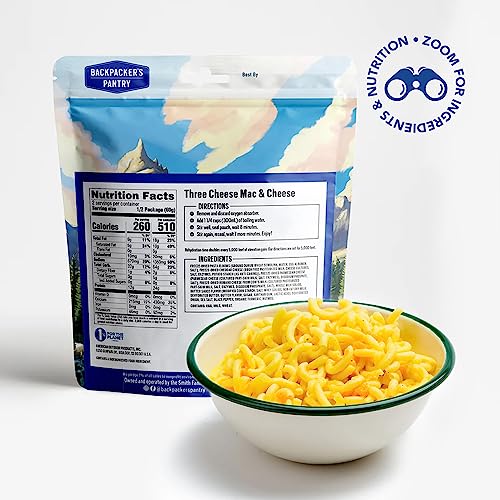
Backpacker's Pantry Three Cheese Mac & Cheese | 1-Pack | 24g Protein | 510 Cal | Vegetarian, Nut Free | Made in the USA | Freeze Dried Meal & Camping Food


As an Amazon Associate we earn from qualifying purchases. Product prices and availability are accurate as of the date/time indicated.

Modoker 21L Waterproof Insulated Kayak Cooler Bag for Fishing and Boating | Behind-Seat SUP Deck Cooler for Drinks, Food and Gear, Designed for Kayaking, Paddleboarding, Camping and Outdoor Trips
As an Amazon Associate we earn from qualifying purchases. Product prices and availability are accurate as of the date/time indicated.

GOOD TO-GO Ridgeline Food Kit | Variety Pack | Camping & Backpacking Food | Just Add Water Backpacking Meals | Good To-Go Dehydrated Meals Taste Better Than Freeze Dried MRE


As an Amazon Associate we earn from qualifying purchases. Product prices and availability are accurate as of the date/time indicated.
Prices shown are approximate and for reference only. Prices change often, so please check the current price on Amazon before you buy.
Calorie counts and preparation refer to the makers’ published nutrition and instructions; read each pouch’s panel for your planning. Prices are typical US street ranges. Ratings are editorial for kayak camping, weighing calories per packed volume, preparation simplicity, packaging durability, taste, and value.
The Seven Kayak Camping Foods Reviewed
1. Mountain House Classics: Best Dinners Overall
Mountain House leads the dinner parish on the virtues a hull rewards: pouches that pack flat and rehydrate forgivingly, flavors tested by a generation of campers into a known quantity, and a shelf life that lets the budget buyer stock the sales. Its sodium is the category’s usual tax. For the kayak camper’s default dinner, it is the recommendation defended first.
2. Peak Refuel: Best Calories per Pouch
Peak Refuel answers the paddler’s arithmetic directly, pouches whose protein and calorie counts read like the day’s deficit rather than its appetizer, at a premium the hard days justify. Its flavors are the hearty parish’s. On the trip’s longest water, it is the dinner that closes the account.
3. StarKist Tuna Creations: Best No-Cook Protein
The flavored tuna pouch is the lunch parish’s champion: flat, indestructible, ready without water, fire, or patience, and varied enough to headline a week’s gravel bars without repeating its act. Its trash packs flatter than it arrived, the hull’s etiquette satisfied. Every kayak galley in this guide’s world carries it by the half dozen.
4. Backpacker’s Pantry: Best Variety
Backpacker’s Pantry serves the crew whose palates mutiny at repetition, a world tour of curries, noodles, and stews with the vegetarian parish properly represented. Its rehydration asks the full patience the label prescribes. On the long trip, variety is morale, and this is its caterer.
5. Good To-Go: Best Tasting Splurge
Good To-Go is the morale budget’s line item made flesh, dehydrated meals whose recipes began in a kitchen rather than a laboratory, priced as the occasional upgrade rather than the nightly parish. One pouch in the middle of the trip is this guide’s standing prescription.
6. Clif and Larabar: Best Day-Hatch Mortar
The bar parish fills the day’s gaps from the life jacket’s pocket, and these two lines divide it by philosophy, the dense engineered fuel and the simple fruit-and-nut, both graded by the heat rule of the text. Bought by the box on sale, they are the snack budget’s foundation.
7. Homemade Oatmeal and Trail Mix: Best Budget System
The bulk-bin system closes the table as the budget camper’s craft: breakfasts and snacks assembled at a third of the branded parish’s price, seasoned to the crew’s own taste, and packed by the day. Its cost is an evening’s pleasant labor. In the budget parish, it is not a compromise but the house specialty.
Buying Guide: How to Build a Kayak Camping Menu on a Budget
Step One: Plan by Days and Calories, Pack by Hatches
Write the menu as a grid, days down and meals across, with the calories totaled per day against the paddling’s honest demand and the first day’s fresh parish entered as its own celebration. Assign every item to its hatch or dry bag as you write, the dinners together, the lunch architecture in its own bag, the day snacks split between the day hatch and the personal parish, so the packing is the plan’s execution rather than its reinterpretation at the launch. Add the margin the river always collects, one extra dinner and a day’s snacks beyond the plan, sealed as the emergency parish and eaten, in the good outcome, as the take-out night’s feast.
Step Two: Buy the Parish in Its Discount Form
Work the budget’s levers in order: the freeze-dried dinners in their multi-packs and seasonal sales, stocked ahead like the pantry they are; the proteins and bars by the box; the breakfasts and snacks from the bulk bins at home; and the fresh parish bought the day before the launch at the market’s own prices. Price the menu per person per day and write it in the trip book, since the number, commonly a fraction of the restaurant parish’s single dinner, is the budget site’s whole argument in one figure, and the crew that sees it becomes the crew that paddles again. Refuse the false economies the hull punishes: the giant cans that cannot be resealed, the glass that cannot be risked, and the bargain pouches whose calories are a rumor, each audited against the panel’s numbers rather than the package’s promises.
Step Three: Pack Waterproof, Paddle the Trash, Feed the Crew
Execute the hull’s law without exception: every food bag double-sealed, the day’s rations accessible without opening the trip’s stores, the wildlife storage arranged by the destination’s rule and read from the land manager before the launch. On the water, run the menu as planned, lunch built on the gravel bar, dinner’s water boiled while the camp rises, the morale item deployed on the evening the planner’s instinct names. Pack every wrapper out in the designated trash bag, compacted as the trip proceeds, since the hull that carried it in is the hull that carries it out and the river’s cleanliness is the parish’s tithe. Debrief the menu in the trip book at home, the hits promoted, the misses struck, the quantities corrected, so the next trip’s grid is this trip’s education, which is how a budget menu becomes, season by season, the best food for kayak camping that its crew has ever eaten, at a price that lets them prove it again.
Frequently Asked Questions About Kayak Camping Food
How much food should I pack for a kayak camping trip?
By the calorie arithmetic of the text rather than by the bag’s appearance: plan each paddler’s day in the range your effort honestly burns, commonly two and a half to three and a half thousand calories for full paddling days, distributed as a dense breakfast, a no-cook lunch, reachable snacks, and a restoring dinner, then add the margin parish, one full extra day’s food sealed against the river’s delays, since the weather day pinned in camp is a day the menu must survive without a store. Volume is the kayak’s own check: lay the whole menu out and pack it through the hatches before the launch day, because a menu that fits on the kitchen table and not through the hatch is a draft, not a plan. Weigh nothing; the boat carries it. Measure everything by the hatch, the day bag, and the appetite of the longest day, and the quantity question answers itself in the grid the buying guide builds.
Can I bring fresh food kayak camping?
Yes, in its parish and its season: the first day, and the second with a soft cooler and the ice’s honest limits, which is the kayak camper’s privilege over the backpacker and should be spent on the morale items, the real eggs and the good cheese, the fruit that bruises if you look at it and is therefore eaten at the first lunch to applause. Beyond the ice’s life, the menu’s fresh parish retires in favor of the hard and the cured, the waxed cheeses, the hard salamis, the tortillas and the produce bred for travel, carrots, cabbage, apples, and onions, which survive a week that lettuce cannot imagine. Pack the fresh parish against the hull’s heat, low and shaded, and let the menu’s grid schedule its consumption in the order of its fragility, so nothing is thrown away and nothing is eaten in mourning. Fresh food is the trip’s first chapter, written brightly and briefly, and the shelf-stable parish that follows it is not a decline but a change of cuisine.
How do I keep food safe from animals while kayak camping?
By the destination’s rule, read from the land manager before the trip, since the correct answer is a local fact: in bear country, the approved canister or the provided locker or the proper hang, executed exactly as the rule prescribes, with the kayak’s hatch counted as no storage at all against a bear; in raccoon and rodent country, which is most riverbanks, the closed hatch of a boat pulled well up, the sealed dry bag, and the camp kept crumb-clean are the working parish, since the raccoon’s genius is for zippers and lapses rather than for fiberglass. Never feed the parish’s wildlife from the menu’s surplus, and keep the scented parish, the toiletries and the trash, in the same storage discipline as the food, since the animal’s nose does not distinguish them. The stakes are the animal’s life as much as the menu’s, the fed raccoon being a doomed one, and the kayak camper’s clean camp is a piece of conservation performed nightly with a dry bag and a conscience.
What are the best no-cook meals for kayak camping?
The architecture of the text’s lunch, extended: the tortilla wraps that carry the tuna and chicken pouches, the hard cheese and cured meat, the nut butters and the hummus in their travel forms; the couscous parish, which hydrates in cold water given time and carries any flavor the packets provide; the overnight oats of the morning, set up the night before in their jar; and the bar-and-mix parish that fills every gap between. The no-cook menu’s virtues compound on the kayak trip: no stove fuel budgeted, no water boiled at the gravel bar, no waiting between the beach and the eating, and no hot pot to wash in the river’s margin, which should never receive the washing anyway. Build the trip’s days on it, reserve the stove for breakfast and dinner’s ceremonies, and the paddler discovers the parish’s secret, that the meal eaten with the river in view and the boats pulled up beside it needs no fire to be the day’s best, only the appetite the morning honestly earned.
Related guides
- Best Weatherproof Sleeping Pad for Families in 2026: Durable, Water-Resistant Camping Pads for Kids and Adults
- Best Small Headlamp for Backpacking in 2026: 7 Small Headlamps That Offer Bright Light, Light Weight, and Reliable Performance for Backpacking
- Best Tent When Tent Is Too Heavy in 2026: Best Tent When Tent Is Too Heavy for Light Packing, Easy Carry, and Simple Camping
- Camping Table in 2026: The Complete Budget Guide to Choosing a Camping Table That Fits Your Chairs, Your Car, and Your Cook Kit, From Coleman and ALPS Mountaineering to KingCamp and Trekology
More from Amazon
Programs that pair well with the guide above. Offers and eligibility are set by Amazon and may change.
Free shipping on eligible items, Prime Video and more. Eligible new members can start with a free trial.
Start a Prime free trialA Prime membership for ages 18-24 with a trial period. Eligibility is set by Amazon.
See Prime for Young AdultsAudiobooks and podcasts to listen to on the go. Eligible new members can start with a free trial.
Try Audible freeAd-free music streaming. Eligible new subscribers can start with a free trial.
Try Music Unlimited freeAs an Amazon Associate we earn from qualifying purchases.

Write Your Review
No reviews yet. Be the first to share your experience!