
What's inside
As an Amazon Associate I earn from qualifying purchases. This post may contain affiliate links at no extra cost to you.
The best battery pack for camping is the one sized to your actual devices, not to a headline, and for most campers that calculation is a relief: a phone or two, a headlamp, a lantern, a watch, and a camera across a weekend add up to a modest parish of watt-hours that a good power bank in the 20,000 milliamp-hour class, or a small power station in the 200 to 300 watt-hour class for the family and the CPAP parish, will cover without drama. The market will try to sell you past your need in both directions, the tiny bank that dies on Saturday morning and the thousand-watt-hour station that rides to a tent site to charge a phone, so this guide begins with the budget itself, teaches the two numbers that matter, capacity in watt-hours and output in watts, and then compares the real, currently sold banks and small stations across the honest parishes: the pocket power bank for the backpacker, the brick bank for the car camper’s weekend, and the small lithium iron phosphate station for the family, the festival, and the medical device whose owner’s camping depends on it. Every parish is graded on honest usable capacity, which is always less than the printed figure, on charging speed in both directions, on weight per watt-hour, and on the cold and storage rules that decide whether the pack you bought in May still holds its promise in October.
Learn the arithmetic once and the category becomes honest. Capacity is energy, measured properly in watt-hours: a bank advertised as 20,000 milliamp-hours at its cells’ voltage holds roughly 74 watt-hours on paper, and delivers perhaps 55 to 65 of them to your devices after conversion losses, cable losses, and the bank’s own electronics have taken their parish, which is not fraud, it is physics, and the makers’ finer print commonly says so. A modern phone’s battery holds roughly 12 to 18 watt-hours, so that bank is honestly a three to four phone-charge citizen, whatever the box’s arithmetic with a smaller, older phone once suggested. Output is the second number, in watts: it decides what the pack can run at all, a bank’s USB parish serving phones and lights at a handful of watts, a small station’s AC outlets serving a laptop, a camera charger, a small fan, or a CPAP in the class of tens of watts, with the station’s surge and continuous ratings read in the maker’s figures and matched to the device’s label. The third figure is the recharge’s, how fast the pack itself refills, from the car on the drive, from the wall at home, from a solar panel in camp, because a pack that takes ten hours to refill is a one-weekend citizen while a fast-charging one resets over lunch. Shop those three, in that order, against a written list of your devices, and the table below becomes a shortlist instead of a seduction.
Our Top Picks
 Portable Power Station 300W MARBERO 237Wh Camping Solar8.15 x 3.9 x 5.83 inches4.6 poundsCheck on Amazon
Best Battery Pack for Camping: Power Banks vs Small Power Stations
The Power Bank Parish: 10,000 to 30,000 mAh for Most Campers
The pocket and brick banks are the budget camper’s natural citizens, and their classes are worth memorizing. The 10,000 milliamp-hour class, roughly 37 watt-hours on paper, is the day hiker’s and the overnight minimalist’s parish, a phone charge and change, a headlamp’s week, at a weight that disappears in a pack’s lid. The 20,000 class is the weekend’s working standard, the three-to-four phone charges of the arithmetic above, enough for a couple’s phones and lights across two nights with a margin for the map app and the midnight lantern. The 30,000 class and above enters the parish where airlines begin to ask questions and pockets begin to sag, and its honest use is the car camp, the group, and the long festival, where its weight is the trunk’s problem. Grade a bank on its ports as you grade its capacity: USB-C with honest fast-charge wattage for the modern phone and the bank’s own refill, a second port for the partner’s phone or the lantern, and a display or honest gauge that tells you the remaining parish in numbers rather than in four optimistic dots. Built-in cables are a genuine convenience with a known tax, since the cable that fails is the bank’s retirement, and the flashlight parish built into many banks is a harmless citizen that occasionally saves a night. The bank that will be loved is the one whose size matches the trip’s arithmetic and whose refill, from the car’s parish on the drive home, is finished before the unpacking is.
The Small Power Station Parish: When AC and Capacity Earn Their Weight
The small power station, in the 200 to 500 watt-hour class, is a different animal wearing a similar name: a battery, an inverter for AC outlets, a DC parish, USB in modern wattages, and a handle, in a box that weighs from a few pounds to the low teens. It earns that weight in specific parishes, and the wise buyer names theirs before paying: the CPAP parish, where a night’s therapy in the class of 30 to 60 watt-hours, multiplied by the trip’s nights and a safety margin, sizes the station almost by prescription, and where the maker’s DC converter for the specific machine commonly stretches the same station across more nights than its AC outlet can; the family and group parish, a half-dozen phones, the lanterns, the camera batteries, and the small fan of a July tent; the work parish, the laptop and the drone and the photographer’s chargers; and the festival and car-camp parish, where the station is the site’s utility and its weight is a non-issue. Its chemistry deserves the buyer’s attention: lithium iron phosphate, LiFePO4, has become the serious parish’s standard for its cycle life in the thousands, its thermal manners, and its tolerance of the partial-charge storage that camping imposes, at a small weight tax against the older lithium chemistries, which survive honestly in the lighter banks and the budget stations. Read the station’s continuous AC rating against your largest device’s label, its solar input against any panel you own, and its recharge speed against your turnaround, and the station stops being a gadget and becomes the appliance it is priced as.
Cold, Heat, Storage, and the Rules That Keep a Pack Honest
Every lithium parish in this guide obeys the same laws, and the camper who learns them once keeps every pack they own. Cold taxes capacity temporarily, a bank at freezing delivering a fraction less of itself and recovering as it warms, which is why the winter camper sleeps with the phone and the bank in the bag’s parish. Charging below freezing is the standing prohibition, repeated here as in every battery article on this site: never charge a lithium pack, bank, or station when its cells are below freezing, because the charging can permanently damage them; warm the pack in the tent, in a jacket, in the sleeping bag, and then charge. Heat is the slower enemy, a pack stored in a summer trunk or a sealed hot car aging on a schedule its owner never sees, so the kit’s home is a temperate room. Storage is the third law: for the off-season, lithium packs keep best at a partial charge, commonly in the class of half, rather than brimmed or empty, with a check and a top-up across a long winter, and LiFePO4 stations commonly publish their own storage guidance in their manuals, which outranks any general rule. Transport has its own parish, chiefly the airlines’: power banks travel in the cabin, never in checked baggage, with capacity limits that the 100 watt-hour line governs for most travelers and larger banks requiring approval, so the flying camper reads their carrier’s current rules and the bank’s own label, which states its watt-hours, before the trip rather than at the gate.
Best Battery Pack for Camping: Quick Comparison
| Camping Battery Pack | Key Specs | Best For | Typical Price Range | Rating |
|---|---|---|---|---|
| Anker 321 / 325 PowerCore class 20,000 | 20,000 mAh class positioning, USB-C and USB-A parish in line, pocket-brick size | Best battery pack for camping overall value | $35 – $55 | 4.6 / 5 |
| Nitecore NB20000 / NB10000 class | Carbon-fiber parish positioning, ultralight per capacity in line, USB-C fast charge | Best backpacking power bank | $60 – $110 by capacity | 4.6 / 5 |
| Anker Solix / 521 PowerHouse class | 256Wh class LiFePO4 positioning, AC and USB-C parish in line, small station | Best small power station | $180 – $260 | 4.6 / 5 |
| Jackery Explorer 240 / 300 class | 240-293Wh class positioning, established station parish in line, solar-ready | Best beginner power station | $200 – $300 by model | 4.5 / 5 |
| BioLite Charge 80 PD class | 20,000 mAh class positioning, USB-C PD in line, camp-maker parish | Best camp-brand bank | $70 – $90 | 4.4 / 5 |
| INIU / budget 20,000-30,000 class | High-capacity budget parish positioning, USB-C in line, friendly pricing | Best budget bank | $20 – $40 by capacity | 4.2 / 5 |

Jackery Explorer 300 Portable Power Station,292Wh | Backup LiFePO4 Battery, Solar Generator for Outdoors, Camping, Travel, Hunting, Blackout (Solar Panel Optional)
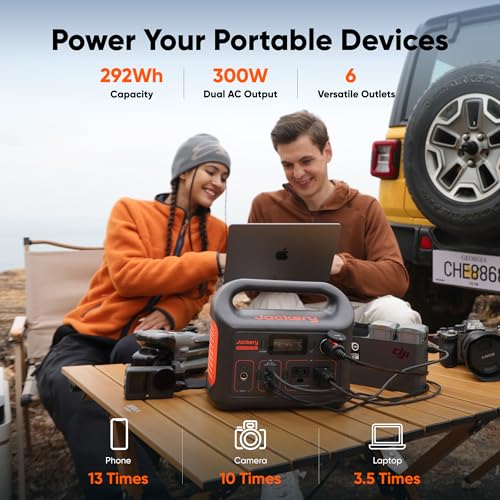


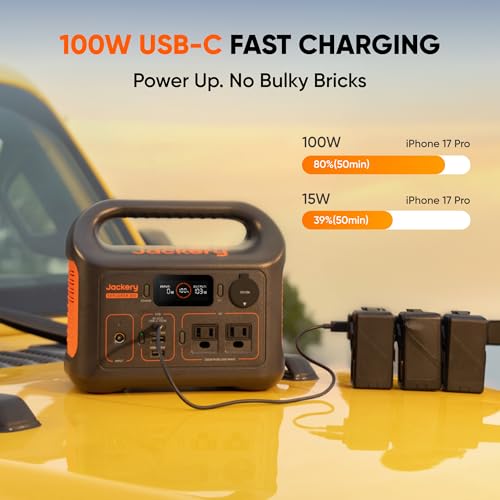


As an Amazon Associate we earn from qualifying purchases. Product prices and availability are accurate as of the date/time indicated.

Portable Power Station 120W, 110V Power Bank with DC AC Outlet | DC 12V, 97.6Wh Portable External Battery Power Pack Generator with USB C Input for Camping Home Van Life Adventure Backup
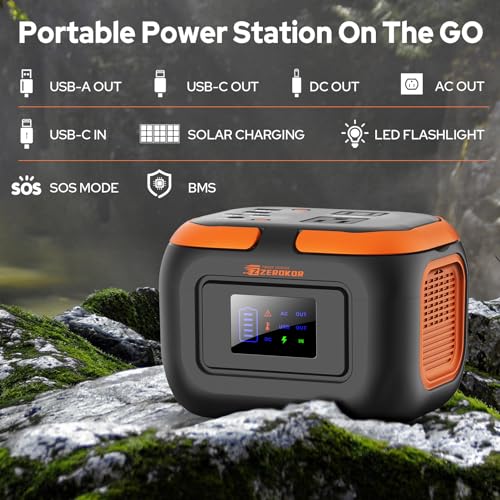
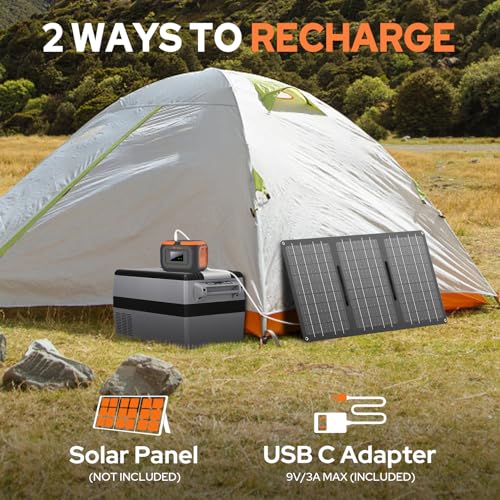


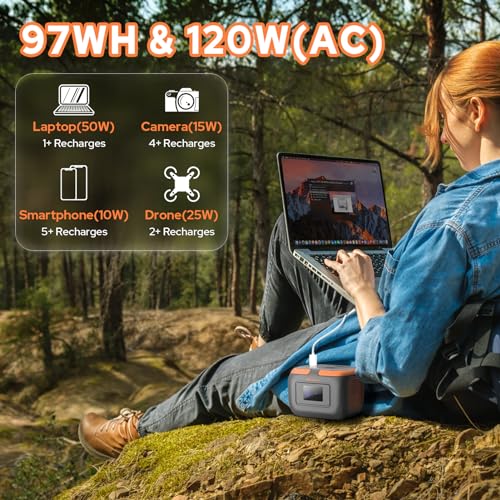
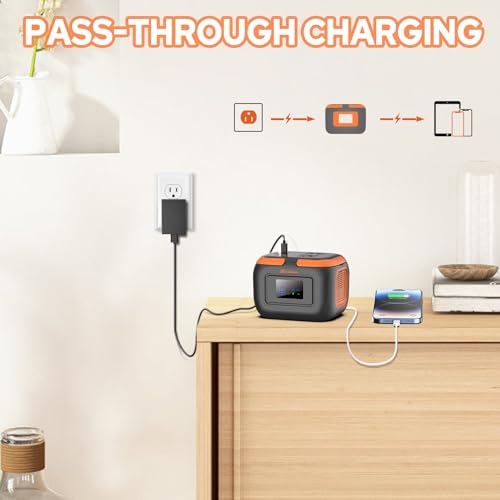


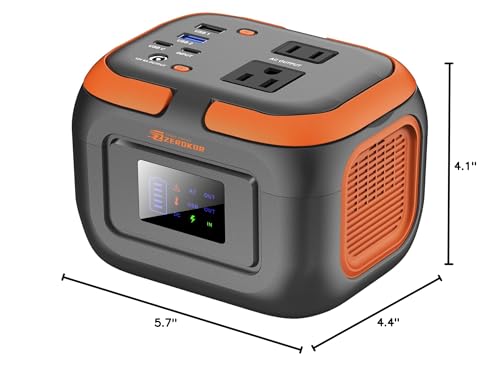
As an Amazon Associate we earn from qualifying purchases. Product prices and availability are accurate as of the date/time indicated.
Portable Power Station 300W MARBERO 237Wh Camping Solar Generator Backup Lithium Battery with Pure Sine Wave 110V AC Outlet, USB C, USB A, DC for Outdoors Camping CPAP Home Blackout Emergency


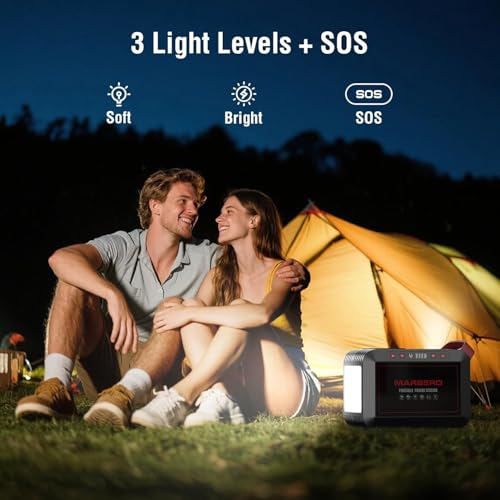


As an Amazon Associate we earn from qualifying purchases. Product prices and availability are accurate as of the date/time indicated.
Prices shown are approximate and for reference only. Prices change often, so please check the current price on Amazon before you buy.
Capacities are the makers’ published figures; usable delivered energy is lower after conversion losses, as described in the text. Watt-hour ratings for air travel appear on each pack’s label. Prices are typical US street ranges. Ratings are editorial for camping, weighing honest usable capacity, recharge speed, weight per watt-hour, build, and value.
The Six Camping Battery Packs Reviewed
1. Anker 20,000 Class: Best Overall Value
Anker’s brick parish leads on the boring virtues that decide a bank’s life: honest capacity, fast refill, ports that serve two campers, and a build that survives the trunk. Its weight is its class’s, confessed. For the weekend couple, it is the recommendation defended first.
2. Nitecore NB Class: Best Backpacking
Nitecore’s carbon parish halves the bank’s weight at a given capacity, a specification the trail feels at every mile, behind honest fast charging. Its price per watt-hour is the ultralight’s tax. Where the pack is carried, it closes the argument by grams.
3. Anker Solix 521 Class: Best Small Station
The Solix parish brings LiFePO4’s cycle life and a modern USB-C parish to the small station class, CPAP weekends and family camps in its natural congregation. Its AC parish is the small class’s, matched to small devices as the text directs. For the station buyer, it is the standing answer.
4. Jackery 240 and 300 Class: Best Beginner Station
Jackery’s small stations are the parish’s friendly face, simple panels, honest gauges, and a solar parish that pairs with its own panels without a seminar. Their chemistry varies by generation, read at purchase. As the first station, they have started more campers than any row here.
5. BioLite Charge Class: Best Camp-Brand Bank
BioLite’s banks are drawn by a camp company, weather-mannered and sized for the lantern and headlamp parish they also sell. Their premium is the brand’s own. In the integrated camp kit, they earn their row nightly.
6. Budget High-Capacity Class: Best Spare
The INIU parish and its kin close the table as the spare and the loaner, capacity at prices that forgive loss, audited by the label’s watt-hours and the first month’s honesty. As the group’s backup bank, they have saved more weekends than their ratings predict.
Buying Guide: How to Choose a Battery Pack for Camping
Step One: Write the Device Budget in Watt-Hours
List the trip’s devices and their nights: each phone at roughly one charge a day in active use, less in the airplane-mode discipline the wise camper adopts; the headlamps and lantern at a few watt-hours a night; the watch and earbuds as rounding errors; the camera, the tablet, and the CPAP at their labels’ figures, the CPAP’s multiplied by its nights and a margin of a third again. Sum the parish in watt-hours, divide any bank’s printed figure by the losses the text teaches, and buy the class that covers the sum with a day’s margin, no more, since capacity beyond the budget is weight and money carried for a parish that never meets. Let the AC question be decided in the same step: if nothing on the list needs a wall outlet’s shape, the bank parish wins on weight and price, and if the CPAP, the laptop, or the chargers demand it, the station is bought with its continuous rating read against the largest label.
Step Two: Audit Ports, Refill Speed, and the Label
Compare the finalists on the working specifications: USB-C wattage out for the phone’s fast charge and in for the pack’s own refill, the refill’s full time being a figure the makers publish and the camper feels on every turnaround; the port count against the household’s simultaneous parish at the evening’s charging hour; the gauge’s honesty, a percentage display being worth real money in camp decisions; and the label’s watt-hour figure, read with your own eyes, since it is the travel document and the truth of the capacity in one number. Confirm the station’s solar input parish against any panel you own or intend, connector and wattage both, and reject any pack, at any price, whose maker will not state its watt-hours, because in this category the unstated figure is a confession.
Step Three: Run the First Trip as a Measurement, and Store It Right
Start the first trip brimmed from the wall, run the camp’s normal parish, and log the end state, what remains after the weekend’s real use, since that figure replaces every estimate in this guide with your own evidence and sizes the second pack, the panel, or the upgrade without a guess. In camp, keep the pack in the tent’s temperate parish, charge the frozen never and the cold only once warmed, and keep ports capped against the dust and damp of the site. At home, store the pack at its partial charge in a temperate room, check it across the off-season, and retire it when its honest capacity has fallen to the parish where trips are planned around its weakness, recycling it through the proper channels rather than the household trash, as its label directs. Kept so, the battery pack becomes the camp’s quiet utility, charged, sufficient, and forgotten until it is needed, which is the whole doctrine of the best battery pack for camping and the reason the right one is chosen by its watt-hours and its owner’s arithmetic, and never by the largest number on its box.
Frequently Asked Questions About Camping Battery Packs
What size battery pack do I need for a weekend of camping?
For the common parish, a couple with two phones, two headlamps, and a lantern, the 20,000 milliamp-hour class bank is the working answer, delivering its honest three to four phone charges across the weekend with the lights’ small parish aboard, provided the phones are used as campers use them, maps and photographs rather than video at full brightness, and the bank starts full. The solo backpacker commonly halves it to the 10,000 class and carries the difference in food. The family, the group, and the festival parish step up to the 30,000 class bank or, where the devices multiply or an AC need exists, to the small station of the next answer. The CPAP camper sizes by the machine, as the text directs, and should test the exact station and machine together at home for a full night before any trip depends on it, since that parish’s arithmetic is a prescription and not an estimate. In every case the log of Step Three replaces these classes with your own figure by the second trip, which is the real answer this question is fishing for.
Can a camping power station run a CPAP all night?
Yes, in the small station parish, sized and configured correctly, and the configuration matters as much as the size. A typical CPAP draws in the class of a few tens of watts, more with its heated humidifier and heated hose at full parish, so a station in the 256 watt-hour class commonly covers a night through its AC outlet with the heater’s parish reduced or off, and commonly covers more, sometimes considerably more, through the machine’s own DC converter where its maker offers one, since the DC parish skips the inverter’s losses entirely. The humidifier’s setting is the largest single variable and the one the owner controls. The doctrine is the home test: run the exact machine, on the exact station, at the settings you will actually use, for a full night at home, and plan the trip on that measured figure with a night’s margin for a multi-night trip, recharging by vehicle or solar as the plan provides. Medical needs outrank camping convenience in every sentence of this answer, so the camper whose therapy is not optional carries the margin, the backup plan, and the physician’s counsel where altitude or remote travel is in the parish, and treats the station as medical equipment that happens to camp.
How long does a camping battery pack take to recharge?
By its class and its input parish, in the makers’ published figures: a modern 20,000 class bank with honest USB-C input commonly refills in the class of a few hours from a wall adapter of matching wattage, and considerably longer from a weak adapter or a laptop’s port, which is why the adapter is part of the system and worth its small parish in the kit. A small station commonly refills in a few hours from the wall, more slowly from a vehicle’s 12-volt parish, and across a day of good sun from a panel of its rated class, the solar figure being the weather’s to give rather than the maker’s to promise. The buying consequence is Step Two’s: read the input wattage and the stated refill time as first-class specifications, since a pack that resets over lunch serves the back-to-back weekend and the road trip’s rhythm, while a slow one demands a planning parish of its own. In camp, the vehicle’s drive, the campground’s outlet, and the panel’s day are the three refills, and the camper who knows their pack’s appetite uses whichever the day offers without surprise.
Can I charge a battery pack with a solar panel at camp?
Yes, and the pairing should be made by the numbers rather than by the photographs: the panel’s rated wattage, in the class of 20 to 30 watts for a bank’s parish and 60 to 100 for a small station’s useful day, against the pack’s stated solar or USB input limits, with the connectors confirmed to marry without a drawer of adapters. Expect the field’s honest fraction of the panel’s rating, as this site’s solar guides teach, a panel angled at the sun through a clear day delivering a bank’s refill or a station’s substantial parish, and a forest canopy or a cloudy day delivering a token, which is why solar is planned as an extender of a pack that started full and never as the sole plan for a device that must work. Keep the pack itself shaded and temperate while the panel bakes, since the battery’s heat parish and the panel’s are opposites, connected by a cable long enough to honor both. Run the pairing once at home on a sunny afternoon before the trip, measure what your panel and your sky actually give your pack, and the camp’s solar parish becomes a known quantity in the log rather than a hope in the trunk.
Related guides
- Mat Camping in 2026: How to Pick a Mat Camping That Is Comfortable, Light, and Perfect for Your Tent
- Best Weatherproof Sleeping Pad for Families in 2026: Durable, Water-Resistant Camping Pads for Kids and Adults
- Best Small Headlamp for Backpacking in 2026: 7 Small Headlamps That Offer Bright Light, Light Weight, and Reliable Performance for Backpacking
- Best Tent When Tent Is Too Heavy in 2026: Best Tent When Tent Is Too Heavy for Light Packing, Easy Carry, and Simple Camping
More from Amazon
Programs that pair well with the guide above. Offers and eligibility are set by Amazon and may change.
Free shipping on eligible items, Prime Video and more. Eligible new members can start with a free trial.
Start a Prime free trialA Prime membership for ages 18-24 with a trial period. Eligibility is set by Amazon.
See Prime for Young AdultsAudiobooks and podcasts to listen to on the go. Eligible new members can start with a free trial.
Try Audible freeAd-free music streaming. Eligible new subscribers can start with a free trial.
Try Music Unlimited freeAs an Amazon Associate we earn from qualifying purchases.

Write Your Review
No reviews yet. Be the first to share your experience!