
What's inside
- What Makes the Best Battery Powered Camping Lanterns Different
- Quick Comparison: Best Battery Powered Camping Lanterns Models
- Detailed Reviews: Best Battery Powered Camping Lanterns Picks
- Buying Guide: How to Choose the Best Battery Powered Camping Lanterns
- Frequently Asked Questions About Best Battery Powered Camping Lanterns
As an Amazon Associate I earn from qualifying purchases. This post may contain affiliate links at no extra cost to you.
The best battery powered camping lanterns have become so good, and so cheap at their honest end, that the lantern is now the easiest purchase in camping to get right and the easiest to overbuy. A lantern’s job is area light: to turn a tent from a nylon cave into a room, a picnic table into a kitchen and a card school, a campsite into a place a child can find their shoes and a cook can find the salt. Modern LED lanterns do that job on rechargeable batteries that sip power for nights on end, in bodies that hang, stand, magnet, and collapse, at prices that start below a family takeaway. The differences that matter are not mysterious. Brightness, honestly measured in lumens and honestly needed in far smaller numbers than the packaging shouts. Runtime at the brightness you will actually use, which is rarely the maximum. The quality of the light itself — its warmth, its evenness, its mercy on the eyes across a table. And the battery system, because a lantern that charges from the same USB ecosystem as your phone and your headlamp is a system, while a lantern with a proprietary hunger is a small, glowing liability.
This guide compares real, currently sold lanterns from Goal Zero, BioLite, Black Diamond, Coleman, and Streamlight, plus the inflatable solar class that budget campers rightly love, across the two battery philosophies the category offers: rechargeable lanterns, USB-fed and frugal, which own the present and most of this table, and replaceable-battery lanterns, running on AA or D cells, which keep a loyal following for their infinite shelf readiness and their freedom from a charging cable at a long camp. Both are battery powered, both belong here, and the buying guide sorts them by trip rather than by tribe. Light discipline frames the whole subject, as it should in the outdoors: a lantern is for your site, used at the brightness the task needs, dimmed or off when it is not needed, shielded from the neighbouring tents whose occupants came for the dark you are politely borrowing, and never left burning in an empty tent, both for the battery and for the elementary reason that unattended electrical devices and nylon deserve a chaperone. Propane and liquid-fuel lanterns are a different, older technology with a combustion safety regime of their own, and they are outside this guide’s battery brief entirely. Buy the lantern in these pages that fits your trips, charge it with the rest of the kit, and enjoy the oldest pleasure in camping, improved: a warm pool of light, friends inside it, and the dark, kept respectfully at the edges, full of stars.
Our Top Picks
 MalloMe Camping Lights LED Lantern Flashlights2 Pack3.7 x 3.4 x 3.7 inches0.36 poundsCheck on Amazon
What Makes the Best Battery Powered Camping Lanterns Different
Lumens: How Much Light a Tent and a Table Actually Need
Lantern brightness is quoted in lumens, and the numbers inflate faster than the need. Settle the scale with your own rooms in mind. A tent being lived in — dressing, reading, finding things, settling children — is fully and pleasantly lit by the output of a lantern in the rough region of 50 to 150 lumens, and most campers, given a dimmer, settle lower still by midnight. A picnic table for cooking and eating wants more, in the region of 150 to 300 lumens hung above it, because the light must reach across a table’s length and into a pan. A whole site, a group kitchen, a festival pitch, is the only common case that reaches for the 500-plus lumen class, and it reaches for it at the cost of the neighbours’ darkness and its own runtime. Against that scale, read every claim with the runtime attached, because the two figures are one bargain: a lantern’s headline lumens are quoted at its maximum setting, where its battery life is shortest, and the same lantern at the setting you will actually use may run ten times longer and still light the tent. The honest specification to hunt, on the maker’s page, is the runtime at a middle setting, and the honest feature to value is a smooth dimmer or several well-spaced levels, because the difference between a lantern and a good lantern is almost never its ceiling. It is its floor: a low setting dim enough for a midnight tent, a nightlight for a frightened child, a glow that lets the site sleep while the owls are admired, is the mark of a lantern designed by someone who camps.
Rechargeable vs Replaceable: The Battery Argument, Settled by Trip
The rechargeable lantern, charged by USB in the current generation’s near-universal pattern, is the default for a reason: its fuel is the power bank and the car socket and the campsite’s USB point that already charge your phone, its running cost across a season is effectively nothing, and its battery, sealed inside, asks for one habit — arrive charged — which the packing routine in the buying guide makes automatic. Its weakness is the long, cold, far-from-sockets trip, where a depleted lantern is a paperweight until the car or the sun can feed it, and where cold weather trims every lithium battery’s enthusiasm. The replaceable-battery lantern answers with shelf logic: a lantern on D or AA cells, alkaline or lithium disposables or rechargeable cells of your own, is ready after a year in a cupboard, refuels in thirty seconds at midnight from a spare set, and shrugs at cold that lithium disposables in particular handle well. Its costs are the cells themselves, bought forever, and the waste stream they become. The mature camp kit, and this guide’s recommendation for anyone beyond the shortest trips, is a small system rather than a single lantern: a rechargeable main lantern for the table and the tent, a tiny replaceable or solar lantern as the spare and the child’s own, and the headlamps that every camper should carry regardless, because the lantern lights the room and the headlamp lights the task, and confusing the two is how batteries die at the exact moment the guylines need finding. Solar lanterns, the inflatable class in this table, charge themselves on a pack or a dashboard across a day and ask nothing of any socket, which makes them the budget traveller’s and the festival camper’s quiet favourites and the emergency kit’s permanent residents.
Light Quality, Build, and the Features That Earn Their Place
Two lanterns of equal lumens can light a table very differently, and the difference is quality. Colour temperature, quoted in kelvins where makers state it, runs from a cold, blue-white that flatters nothing and no one, to the warm white of the better camping lanterns, which renders food, faces, and the pages of a book the way firelight taught us to expect, and which most campers should choose without a second thought. Diffusion is the other half: a frosted globe, a collapsible shade, a design that spreads the LEDs’ points into an even glow, decides whether the lantern is pleasant to sit beside or a small interrogation lamp, and it is judged in ten seconds in a darkened shop or a tent at home, which is where this guide insists a new lantern be tested, on its first night, while returns are still a formality. Build for camping means a stated water resistance fit for rain on a table and dew in a tent, a body that survives the drop from that table onto grass and, in the better classes, onto rock, a hanging loop or hook that fits a tent’s gear loop and a branch, and, in the premium rows, the extras that genuinely earn their price: a USB-out port that turns the lantern into an emergency phone charger, a magnet for the car’s bonnet during a roadside repair, a red mode that preserves the night vision the stars came with. Weight and packed size close the specification for anyone who walks to camp, where the collapsible and inflatable designs earn their existence, while the car camper may happily buy the big lantern whose only journey is from a boot to a table, and whose runtime is measured in weekends.
Quick Comparison: Best Battery Powered Camping Lanterns Models
| Model | Output, Battery and Key Specs | Best For | Typical Price Range | Rating |
|---|---|---|---|---|
| Goal Zero Lighthouse class | Up to around 600 lumens in maker’s top class terms, rechargeable with USB-out in maker’s design, dimming and directional modes, hand-crank backup in class | Best battery powered camping lanterns overall for car camping | $60 – $100 by model | 4.6 / 5 |
| BioLite AlpenGlow class | 250 and 500 lumen classes in maker’s line, rechargeable, warm and colour modes in maker’s design, USB-out in class | Best light quality and features | $60 – $90 by model | 4.5 / 5 |
| Black Diamond Moji and Apollo class | 100 to 250 lumen classes in maker’s line, compact rechargeable and AA models in maker’s range, frosted globe, collapsible hooks in class | Best for backpacking and tent light | $25 – $65 by model | 4.5 / 5 |
| Coleman rechargeable and battery lantern class | Output by model in maker’s terms, rechargeable and D-cell models in maker’s broad range, BatteryGuard positioning in class | Best widely available family value | $25 – $60 by model | 4.3 / 5 |
| Streamlight Siege class | 200 to 540 lumen classes in maker’s line, D-cell powered, stated long runtimes, waterproof and floating positioning in maker’s terms | Best replaceable-battery and emergency lantern | $40 – $65 by model | 4.5 / 5 |
| MPOWERD Luci inflatable solar class | Around 75 lumens in maker’s core class terms, solar rechargeable, inflatable and waterproof, packs flat | Best budget, solar and festival lantern | $20 – $35 by model | 4.4 / 5 |

Lichamp LED Camping Lantern, 4 Pack Battery Powered Flashlight for Power Outages, Portable Collapsible Hanging Light Essential for Home, Outdoor, Emergency Lamp Survival Kit Gear for Hurricane, Gray


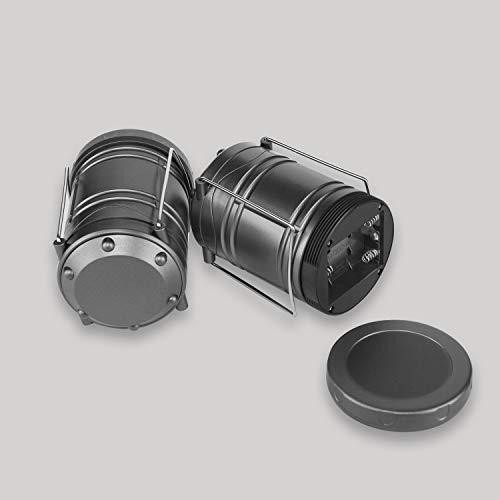
As an Amazon Associate we earn from qualifying purchases. Product prices and availability are accurate as of the date/time indicated.

Lepro LED Camping Lanterns, 4 Pack, Collapsible, IPX4 Water Resistant | Battery powered, 3 AA each (not included). 190 lumens, 360 beam. For emergency, hurricane, storms, outages.
As an Amazon Associate we earn from qualifying purchases. Product prices and availability are accurate as of the date/time indicated.
MalloMe Camping Lights LED Lantern Flashlights, Battery Operated Lamp Tent Lanterns for Power Outages, Camping Essentials Outdoor,Home,Emergency Gear, Hurricane Survival (3 AAA batteries not included)


As an Amazon Associate we earn from qualifying purchases. Product prices and availability are accurate as of the date/time indicated.
Outputs, runtimes, battery types and capacities, charging methods, water resistance ratings, and extra features such as USB-out are each maker’s stated details for the current version, quoted at the settings the makers specify; headline lumen figures are at maximum settings, where runtimes are shortest, and this guide grades the middle settings campers actually use. Prices are typical retail ranges and vary by model, retailer, region, and promotion. Ratings are editorial for camping use: light quality and dimming range, runtime at usable settings, battery system practicality, build and water resistance, carry and hanging design, and value in class.
Detailed Reviews: Best Battery Powered Camping Lanterns Picks
1. Goal Zero Lighthouse Class – Best Overall for Car Camping
The Lighthouse class is the basecamp lantern perfected for the car camper: serious output when the group kitchen needs it, a dimmer that finds the tent’s midnight glow, directional modes that light one side of a table in the maker’s design, a battery big enough to lend the phone a charge through its USB-out, and, in the class’s signature touch, a hand crank that makes a dead lantern a story rather than a darkness. It is too heavy to backpack and does not pretend otherwise. At a drive-to site it is the single lantern that does everything, and it earns the top of this table by being the one its owners stop thinking about, which is the highest praise camping equipment can be paid.
2. BioLite AlpenGlow Class – Best Light Quality
BioLite treats the lantern as a lighting instrument rather than a torch in a jar, and the AlpenGlow class shows it: warm, even, beautifully diffused light, colour and candle-style modes in the maker’s design that turn a tent into a room with an atmosphere, and USB-out in a compact, hangable body. Its two sizes divide the table and the tent between them. It costs more than its lumens argue and less than its evenings justify, and for the camper who reads, cooks, and lingers in the light, it is the connoisseur’s row in a table of workhorses.
3. Black Diamond Moji and Apollo Class – Best for Tents and Backpacking
Black Diamond’s little lanterns are the tent light perfected at the weight a walker will carry: the Moji class’s frosted globe turns a hundred modest lumens into a whole tent’s worth of gentle light, the hooks and collapsible designs across the line hang from any gear loop ever sewn, and the rechargeable and AA versions let the same household standardise on its own battery religion. The Apollo class adds output and features for the basecamp end of walking trips. Nothing here lights a festival. Everything here lights the inside of a tent better, gram for gram, than anything else in the table.
4. Coleman Lantern Class – Best Family Value
Coleman’s battery lanterns are the ones in every general store and half the garages in the country, and the current range’s rechargeable models, with the BatteryGuard thinking in the maker’s line that protects stored cells from parasitic drain, make them a sound family default rather than merely an available one. Output and runtime by model are honest middle-class figures, the prices are friendly, and replacement, if a lantern is ever lost to a river or a toddler, is a errand rather than a research project. For the family equipping from scratch on a budget, a pair of these, one for the tent and one for the table, is a complete answer.
5. Streamlight Siege Class – Best Replaceable-Battery Lantern
The Siege is the D-cell argument at its strongest: a tough, waterproof, in the maker’s terms even floating lantern whose stated runtimes on a set of alkaline D cells are measured in days at useful settings and weeks at its lowest, ready after a year in the emergency cupboard, refuelled from any shop on earth. It is the lantern of storm kits, cabins, scout troops, and long basecamps far from sockets, and its white and red modes cover the night politely. Its weight is the price of its philosophy, paid gladly by the campers who hold it, because a lantern that is always ready is a lantern that is always a lantern.
6. MPOWERD Luci Class – Best Budget and Solar
The Luci inflatable solar lantern is the budget camper’s folk hero: it charges on a dashboard or a pack across the day, inflates into a frosted, waterproof, genuinely pleasant light for the tent, packs flat to nothing, weighs less than the sandwich beside it, and costs less than most lanterns’ replacement batteries. Its output is tent-scale and makes no larger claim. As a first lantern, a child’s lantern, a festival lantern, a spare in every kit, and the emergency light in the kitchen drawer, it has no rival in this table, and a household could light a whole campsite’s tents with a fleet of them for the price of one flagship, which more than a few wise households do.
Buying Guide: How to Choose the Best Battery Powered Camping Lanterns
Size the Light to the Trip and the Tent
Buy from your trips outward. The backpacker buys small and light first — the Moji or Luci class — because every gram is carried and a tent needs little light, and adds nothing until a trip proves the lack. The car camper buys the table first, a mid-to-large lantern with a dimmer for the kitchen and the card game, and a small lantern per tent, because a site lit by one lantern is a site of queues and shadows, and the two-lantern pattern, big at the table and small in each tent, is the arrangement every experienced camp converges on. The family and group camper adds the USB-out question — a lantern that can rescue a phone earns its premium on exactly one evening per season, which is enough — and the emergency-minded household adds a Siege class lantern to the home kit, where its shelf readiness outranks every camping virtue. In all cases, check the maker’s page for the exact model’s runtime table rather than its headline, choose the warmest light the line offers, confirm the charging standard matches the cables the household already carries, and test the lantern on its first night at home, in a dark room and then in the tent on the lawn, through every setting, while it can still go back. A lantern is a ten-second judgement in the dark and a ten-year companion after it, and the order of those two facts is the whole art of buying one.
Charge, Store, and Behave: The Lantern Routine
Make the lantern part of the kit’s standing routine and it will never be the thing that fails. Rechargeables are charged when the kit is unpacked after a trip and checked when it is packed for the next one, stored neither full-flat nor forgotten in a hot car, with their cables living in the lantern’s own bag so the system travels together. Replaceable-battery lanterns are stored with cells removed where the maker’s guidance and a long storage interval suggest it, spares carried in a sealed bag, and disposables recycled rather than binned at home, because a budget that ignores its waste stream is only doing half its arithmetic. In camp, hang the table lantern high enough to light the whole surface and low enough to keep its glare out of seated eyes, keep the tent lantern on its low settings as the evening settles, switch to red modes where the lantern offers them for the midnight exit, and observe the courtesy that makes campsites work: no lantern left blazing in an empty tent, no maximum setting aimed across a neighbour’s pitch, lights low or off at the hour the site agrees, spoken or not, is night. Do that, keep the headlamp on your own head for the tasks and the walks, and the best battery powered camping lanterns become what they are in the camps that run well — invisible infrastructure, a warm room inside a nylon wall, a table the evening gathers around, and a child, years later, who remembers the glow and not the brand, which is precisely the rating this category has always been chasing.
Frequently Asked Questions About Best Battery Powered Camping Lanterns
What are the best battery powered camping lanterns?
The Goal Zero Lighthouse class is the best overall for car camping, the BioLite AlpenGlow class offers the best light quality, Black Diamond’s Moji and Apollo classes are the best tent and backpacking lights, Coleman’s range is the best widely available family value, the Streamlight Siege is the best replaceable-battery and emergency lantern, and the MPOWERD Luci is the best budget and solar pick. Most camps are best served by a pattern rather than a single lantern: one larger dimmable lantern for the table, one small lantern per tent, and a headlamp per person for tasks. Choose by your trips — weight for walkers, runtime and USB-out for car campers, shelf readiness for emergency kits — and by the middle-setting runtime on the maker’s page, not the headline lumens.
How many lumens does a camping lantern really need?
Fewer than the packaging hopes you believe. A tent is fully and pleasantly lit in the region of 50 to 150 lumens, a picnic table for cooking and eating wants roughly 150 to 300 hung above it, and only a group site or a festival pitch reaches for 500 or more. Headline figures are quoted at maximum settings, where runtime is shortest, so the specification that predicts your evenings is the runtime at a middle setting and the quality of the dimmer — including a genuinely low setting for midnight in a tent, which the best lanterns in this guide all provide. Warm, well-diffused light at a modest output feels brighter and kinder than a harsh light at twice the lumens, which is why light quality, not the lumen race, decides the better lanterns in this table.
Rechargeable or replaceable batteries: which lantern is better?
Rechargeable, for most campers, most trips: the USB-fed lantern shares the phone’s charging ecosystem, costs almost nothing to run, and asks only the habit of arriving charged. Replaceable-battery lanterns, the D-cell and AA classes, win where readiness and remoteness rule — the emergency kit that must work after a year in a cupboard, the long basecamp far from sockets, the cold trip where lithium disposable cells shrug and rechargeables sulk — because they refuel in seconds from a spare set carried anywhere. The settled camp kit often holds both: a rechargeable lantern as the main light, a replaceable or solar lantern as the spare and the children’s own. Either way, carry the spare capacity your choice demands, a power bank for the one and spare cells for the other, because a lantern system is its fuel plan, not its globe.
Can a battery powered camping lantern charge my phone?
The larger rechargeable models in this guide can, through a USB-out port in their makers’ designs — the Goal Zero Lighthouse and BioLite AlpenGlow classes among them — and it is a genuinely useful emergency capability: enough, typically, to revive a phone for calls, maps, and the torch walk to the car, rather than to refill it repeatedly. Treat it as the reserve it is, because every phone charge is lantern light spent, and the campers who use it well decide the trade in advance: the lantern’s own job comes first until the phone is the emergency. For trips where phone power is a plan rather than an accident, carry a dedicated power bank and let the lantern light, which is the division of labour both devices were designed for, and keep both charged by the same unpack, charge, pack routine that keeps the whole kit honest.
Related guides
- Best Lithium Battery for Camping in 2026: Lithium Battery for Camping, Lithium Camping Batteries, and Best Camping Batteries
- Best Camping Kayaks Under 500 in 2026: 7 Best Camping Kayaks Under 500 Dollars That Are Stable, Roomy, and Built for Camping
- Best Stove for Kayak Camping in 2026: 7 Best Stoves for Kayak Camping That Are Light, Compact, and Boil Fast
- Best Kayaks for Kayak Camping in 2026: 7 Best Kayaks for Kayak Camping With Clear Paddling, Simple Use, and Easy Use for Kayaks for Kayak Camping
More from Amazon
Programs that pair well with the guide above. Offers and eligibility are set by Amazon and may change.
Free shipping on eligible items, Prime Video and more. Eligible new members can start with a free trial.
Start a Prime free trialA Prime membership for ages 18-24 with a trial period. Eligibility is set by Amazon.
See Prime for Young AdultsAudiobooks and podcasts to listen to on the go. Eligible new members can start with a free trial.
Try Audible freeAd-free music streaming. Eligible new subscribers can start with a free trial.
Try Music Unlimited freeAs an Amazon Associate we earn from qualifying purchases.

Write Your Review
No reviews yet. Be the first to share your experience!