
What's inside
- What Makes the Best Rechargeable and Battery Camping Lantern Different
- Quick Comparison: Best Rechargeable and Battery Camping Lantern Models
- Detailed Reviews: Best Rechargeable and Battery Camping Lantern Picks
- Buying Guide: Choosing the Best Rechargeable and Battery Camping Lantern
- Frequently Asked Questions About Best Rechargeable and Battery Camping Lantern
As an Amazon Associate I earn from qualifying purchases. This post may contain affiliate links at no extra cost to you.
The best rechargeable and battery camping lantern is two lanterns in one honest design: a lantern that recharges by USB for the ordinary trip, topped up from the car, a power bank, or a small solar panel, and that also accepts ordinary replaceable batteries for the long trip, the cold trip, and the trip where the rechargeable cell is found empty at dusk. This guide compares real, currently sold dual-power and rechargeable lanterns from Black Diamond, Goal Zero, BioLite, Coleman, MPOWERD, and Fenix that budget campers actually carry, explains brightness and runtime in the terms that matter inside a real tent, and gives the packing and power routine that keeps camp lit from the first evening to the drive home. Camp safely with light: never use a fuel-burning lantern inside a tent or enclosed shelter, because carbon monoxide kills without smell or warning, keep LED lanterns and their batteries dry and out of fire pits, stoves, and extreme heat, recharge lithium batteries only with the cables and chargers their makers state, on a hard surface and not unattended overnight in a tent, and follow your campsite’s rules on light, quiet hours, and wildlife, storing food away from sleeping areas as the land authority directs, since a lantern that draws a camper’s hands at midnight should never be reaching into a food bag.
A lantern’s specification sheet is written for a laboratory, and a tent is not one, so this guide translates before it compares. Brightness is stated in lumens in the makers’ terms, and a tent needs far fewer than a sales page implies: a small two-person tent is pleasantly and completely lit by the output a modest lantern gives on its middle settings, in the tens of lumens in practical terms, enough to read, dress, find a zip, and play cards, while the headline maximum, hundreds of lumens in the stated figures of the brighter rows here, is a camp-kitchen and group-area setting that drains a battery in a night if it is used as a reading light. Runtime is therefore the specification to read properly, and it is always stated per setting in the makers’ patterns: the same lantern that claims a weekend on low may claim an evening on high, and both claims are honest, so the buyer’s job is to match the setting they will actually sleep by to the nights they will actually camp. The dual-power question is the second translation, and it is this keyword’s whole point. A purely rechargeable lantern is a promise that must be kept by a cable: superb where a car, a power station, or a solar panel in the makers’ stated patterns is part of the trip, and a liability on the fourth night of a walk-in camp in November. A lantern that also takes replaceable cells, AA or AAA in the stated patterns of the hybrid designs in this table, converts that liability into a pocketful of spares, at the cost of a little complexity and the discipline of carrying the spares and rotating them. A purely battery lantern, included here in Coleman’s classic pattern, remains the cold-weather and long-storage answer, since replaceable cells wait patiently in a drawer for years in their stated shelf terms in a way a forgotten rechargeable, self-discharging in a kit box, does not. Rated on honest runtime at tent settings, dual-power flexibility, light quality, and value across years of trips, the lanterns below separate into a clear order.
Prices are typical retail ranges and vary by retailer, region, and promotion. Brightness in stated lumens, runtime per setting, battery type and replaceable cell options, charging patterns, water resistance ratings in the makers’ stated terms, and weights are each maker’s stated details for the current version; runtime figures are the makers’ stated results under their stated conditions and real camps, with cold, age, and mixed settings, will see less, as the buying guide plans for.
Our Top Picks
What Makes the Best Rechargeable and Battery Camping Lantern Different
Brightness, Light Quality, and the Settings You Will Actually Use
Judge a lantern by its middle, because that is where it will live. The useful tent settings are a low glow that preserves the night and a partner’s sleep, a middle that lights the tent’s whole volume for dressing, reading, and the midnight search for a sock, and, in the better designs in the makers’ stated patterns, a warm colour temperature in the stated terms that makes a tent feel like a room rather than an operating theatre, which across a wet three-day trip is a morale specification and not a cosmetic one. A lantern whose steps jump from candle to floodlight, with nothing civilised between, will be run on the wrong step all trip and reviewed for its battery life by an owner who never met its middle, so the dimming pattern, smooth or stepped in the makers’ stated designs, and a lowest setting low enough to leave on for a child or a nervous dog, are first-order buying facts. Light distribution is the second quality: a lantern that throws its light in every direction, with a diffused globe or shade pattern in the maker’s stated design, lights a tent; a lantern with a bright bare panel lights a spot and dazzles the eyes that look toward it, which is why the inflatable solar school in this table, diffused by its whole body, punches so far above its stated lumens inside a tent. Red or amber modes in the makers’ stated patterns deserve their sentence: they preserve night vision for the astronomy and wildlife camper, keep insects less interested than white light in aggregate camp experience, and let a parent check a tent of children without waking it, and a lantern bought for family camping should be bought with one. Maximum brightness, finally, should be bought for the camp’s social geography, the kitchen, the group tarp, the walk to the facilities block, and not for the tent, and a lantern that spends its evenings at a third of its range will return the runtime its maker promised, which is the entire arithmetic of a happy power budget.
Dual Power Explained: Rechargeable Cells, Replaceable Batteries, and Cold
The hybrid lantern’s promise is a choice of fuels, and each fuel has a season. The internal rechargeable cell, charged by USB in the makers’ stated patterns, is the economical and ecological default for the ordinary year: topped up from the car on the drive, from a power bank in the tent, or from a small solar panel in the stated patterns of the solar rows here, it costs nothing per trip and asks only the habit of arriving charged. Replaceable AA or AAA cells in the stated patterns of the hybrid designs are the insurance and the expedition fuel: they wait in a pocket at full strength regardless of when they were bought in their stated shelf terms, they can be bought at a village shop when every cable plan has failed, and in lithium disposable form in their makers’ stated patterns they hold their strength in the cold that saps a rechargeable cell’s runtime on a winter night, which is why the cold-weather camper’s lantern is a dual-power lantern with lithium spares in the bag. The disciplines are two and they are cheap. First, know your exact lantern’s pattern from its maker’s stated terms: which cells it takes, whether it can run while charging, whether its rechargeable pack is removable or fixed in the stated design, because hybrids differ in all three and the differences are trip-shaped. Second, never mix old and new replaceable cells or different types in one lantern, in the battery makers’ stated guidance, since the weak cell is dragged down and can leak, and a lantern’s contacts are a poor place to learn chemistry. A purely battery lantern inverts the same logic honourably, and this guide keeps a Coleman row in the table for the camper whose trips are rare, long, or very cold, and whose lantern must be ready in a drawer in three years’ time at the cost of buying its fuel. Between the schools, the dual-power design is the keyword’s answer and the table’s centre of gravity, because it lets one lantern be both campers.
Hanging, Standing, and Surviving Camp Life
A lantern’s body is its third specification, and camp life examines it nightly. Hanging comes first in a tent: a bail, hook, or carabiner point in the maker’s stated design that lets the lantern live at the tent’s apex loop, aimed down the tent’s length, stable enough not to swing its shadows around at every movement of air, and removable in the dark by a cold hand without a fiddle, since the 3 a.m. facilities walk is the lantern’s most honest examination. Standing comes second at the table and the kitchen: a base stable on an uneven picnic table in the stated design, a body that survives the inevitable knock onto grass and, eventually, onto gravel, and water resistance in the maker’s stated rating terms sufficient for the lantern’s real weather, which is dew, drizzle, and a spilled drink rather than immersion, though the floating and waterproof patterns in the solar school’s stated designs forgive even that. Controls are the third examination and the one showrooms hide: a button or dial that can be found by touch, operated with a glove, and, above all, that shows the lantern’s state without a blinding first press at full power in a sleeping tent, a cruelty the better designs in the makers’ stated patterns answer with memory modes and long-press-off patterns the buyer should test in the shop with their eyes shut, as the tent will test them. Packing closes the examination: a lantern that collapses, deflates, or folds flat in the makers’ stated patterns earns its place in a budget camper’s small kit in a way a rigid lantern of equal light does not, and a lantern whose switch cannot be pressed on inside a packed bag, or that locks in the stated pattern, will never be found dead at dusk by its own hand, which is the most common single cause of lantern darkness in the aggregate record of camping.
Quick Comparison: Best Rechargeable and Battery Camping Lantern Models
| Model | Power, Brightness and Key Specs in Maker’s Terms | Best For | Typical Price Range | Rating |
|---|---|---|---|---|
| Black Diamond Apollo and Moji+ class | Dual-power patterns in maker’s line terms, outputs stated | Best rechargeable and battery camping lantern overall | $30 – $65 by model | 4.6 / 5 |
| Goal Zero Lighthouse 600 and Mini class | Rechargeable lanterns in maker’s line terms, charging patterns stated | Best rechargeable and battery camping lantern for group camp | $40 – $80 by model | 4.4 / 5 |
| BioLite AlpenGlow class | Rechargeable lanterns in maker’s line terms, modes stated | Best rechargeable and battery camping lantern for light quality | $50 – $90 by model | 4.4 / 5 |
| Fenix CL series lantern class | Rechargeable models in maker’s line terms, cell patterns stated | Best rechargeable and battery camping lantern for durability | $35 – $75 by model | 4.5 / 5 |
| MPOWERD Luci Outdoor and Lux class | Solar rechargeable inflatable lanterns in maker’s terms stated | Best rechargeable and battery camping lantern for backpacking | $20 – $45 by model | 4.3 / 5 |
| Coleman Classic and BatteryGuard class | Battery lanterns in maker’s line terms, cell patterns stated | Best battery camping lantern for long storage and cold | $25 – $55 by model | 4.2 / 5 |

Glocusent LED Rechargeable Camping Lantern, Camping Light with 5000mAh | Camping Light with 3 Colors & 5 Brightness, SOS, Rechargeable Lantern for Power Outages Hiking Emergency Max 1500LM


As an Amazon Associate we earn from qualifying purchases. Product prices and availability are accurate as of the date/time indicated.

Lepro 1000LM LED Camping Lantern Rechargeable, 4400mAh, 4 Light Modes | Tent Light, Camping Essentials, Waterproof Lantern Flashlight for Camping, Emergency Light, Power Outages, USB Cable Included
As an Amazon Associate we earn from qualifying purchases. Product prices and availability are accurate as of the date/time indicated.

Lichamp LED Camping Lantern, 4 Pack Battery Powered Flashlight for Power Outages, Portable Collapsible Hanging Light Essential for Home, Outdoor, Emergency Lamp Survival Kit Gear for Hurricane, Gray


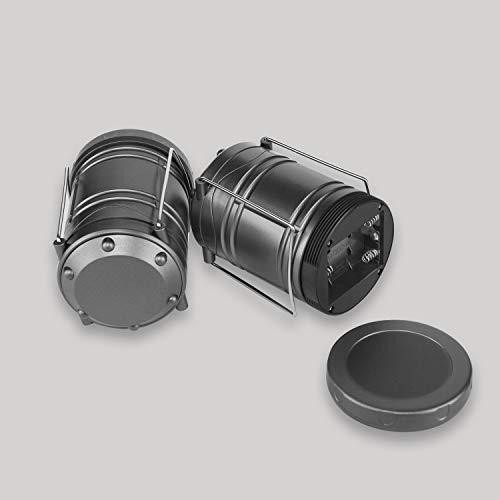
As an Amazon Associate we earn from qualifying purchases. Product prices and availability are accurate as of the date/time indicated.
Stated maximum brightness, runtime per setting, internal cell and replaceable battery patterns, charging inputs and solar patterns, colour modes, water resistance ratings, hanging and base designs, and weights are each maker’s stated details for the current version and model. Price ranges are typical retail ranges and vary by model, retailer, and promotion. Ratings are editorial ratings for budget camping: honest runtime at tent settings in class, dual-power or storage flexibility for the keyword’s brief, light quality and dimming manners, camp durability and controls in the dark, and value across seasons of trips.
Detailed Reviews: Best Rechargeable and Battery Camping Lantern Picks
1. Black Diamond Class – Best Rechargeable and Battery Camping Lantern Overall
Black Diamond’s lantern line leads because it answers the keyword literally: dual-power designs in the maker’s stated patterns that run on an internal rechargeable cell for the ordinary trip and accept ordinary replaceable cells when the trip outlasts the charge, in bodies built for tents, with dimming in the stated patterns that finds the civilised middle this guide insists on and a frosted diffusion that lights a tent rather than a spot. The smaller Moji school in the stated line serves the solo and two-person tent at a price that makes a second lantern, one per tent, a budget decision rather than a luxury. For one lantern to be bought first and regretted never, this is the row.
2. Goal Zero Class – Best for Group Camp and Kitchen Light
Goal Zero’s Lighthouse line is the camp’s ceiling lamp: high stated output for the group tarp and the kitchen, a directional pattern in the maker’s stated design that can light one side or both, and charging flexibility in the stated patterns, USB and the house’s solar ecosystem, with a hand-crank pattern on the models whose stated design includes it as the last-resort input no battery discussion should sneer at. It is larger and dearer than a tent lantern needs to be, and as the one lantern for a family base camp it earns both. Groups that cook, play, and gather after dark will recognise their evenings in this row.
3. BioLite AlpenGlow Class – Best for Light Quality
BioLite’s AlpenGlow line is the aesthete’s lantern with an engineer’s papers: warm and coloured modes in the maker’s stated patterns that make a tent feel inhabited rather than illuminated, a candle-flicker pattern in the stated modes that children and romantics both vote for, and stated outputs and runtimes that hold their own in the serious rows. Its power is rechargeable in the stated design, so the dual-power discipline for its owner is a power bank in the kit, planned as this guide directs. For the camper whose evenings are the point of the trip, this is the light those evenings deserve.
4. Fenix CL Class – Best for Durability
Fenix’s CL lanterns bring a flashlight maker’s build to the tent: robust bodies and stated water resistance in the maker’s terms that shrug off the knocks and weather of years, strong stated outputs with the stepped patterns in the stated designs, and cell patterns in the line’s stated terms that suit the owner who standardises batteries across a kit. They feel like equipment rather than accessories, which their owners regard as the specification. For the camper whose gear is bought once and used hard, in all the months, this row is the long service answer.
5. MPOWERD Luci Class – Best for Backpacking and Solar
The Luci school is the budget backpacker’s marvel: an inflatable, solar-recharging lantern in the maker’s stated design that packs flat to nothing, weighs almost nothing in the stated figures, diffuses its light through its whole body so a tent glows without glare, and refuels itself on a pack’s top through the walking day in its stated pattern. Its output is a tent light’s, honestly, and not a kitchen’s, and its power discipline is the sun’s, which a week of rain will test. As the second lantern in any kit and the first in an ultralight one, it has no equal at its price.
6. Coleman Battery Class – Best for Long Storage and Cold Trips
Coleman’s battery lanterns close the table as the traditional answer, kept honest by the BatteryGuard pattern in the maker’s stated design that disconnects the cells in storage so the lantern in the drawer is alive in three years when the festival, the power cut, or the grandchildren arrive. Output and diffusion in the stated patterns are a family tent’s comfortable middle, and the fuel is a set of ordinary cells bought anywhere. For rare trips, cold trips, and the household emergency kit, this school remains not the past of camping light but one of its permanent answers.
Buying Guide: Choosing the Best Rechargeable and Battery Camping Lantern
Budget Your Light Like Your Food: Nights, Settings, and Spares
Plan the power before the purchase, on the back of the trip plan. Count the nights, name the settings the evenings will actually use, tent middle for an hour or two, low for the night hours where a lantern sleeps on, kitchen high for the cooking hour on group trips, and set that budget against the maker’s stated runtime for those settings, with a third taken off the total for cold, age, and optimism, because a lantern budget with no margin is a darkness appointment. Choose the power system that covers the budget with the trip’s own geography: dual-power with replaceable spares where nights outnumber charging chances, rechargeable with a power bank sized in its stated capacity terms where a car or a panel is in the plan, solar as a genuine contributor where the days are long and the panel rides in the sun, and never as the only plan in a winter forest. Carry the spares as a system: replaceable cells in a case, of one type and age, in the battery makers’ stated pattern; the charging cable that belongs to the lantern, not a similar one; and a headlamp per camper in the household’s stated kit, because a lantern lights a tent and a headlamp lights a path, and the camper who tries to make either do the other’s job in the dark invents the trip’s injury. Test the whole budget at home before the season: charge fully, run the lantern on the tent setting across an evening, and learn its real manners, its button, its memory, its lowest step, in the warm, so that the tent’s first night is a performance and not a rehearsal.
Buy One Good Lantern, Then a Second Small One
The budget pattern that serves real camps is a pair, not a flagship: one good lantern from the table’s top rows for the tent or the kitchen’s main light, and one small, cheap, packable lantern, the Luci pattern or a Moji-class light in the makers’ stated lines, for the second tent, the facilities walk, the child’s bunk, and the night the main lantern is dropped, drained, or lent to the neighbours whose own lantern just died, an event as certain across a camping life as rain. Two lights also solve the household geometry no single lantern can: a tent and a kitchen are two places, a parent and a child are two journeys in the night, and a group around a table and a sleeper in a tent want different brightness at the same hour. Standardise where you can, one cable pattern, one replaceable cell size across the kit in the makers’ stated terms, so spares, cables, and habits interchange, and label the lanterns and their cables with the owner’s name in camp fashion, because lanterns migrate between tents at festivals with the reliability of socks. Buy the pair across a season if the budget asks, main lantern first, and let the second be the trip’s souvenir money spent on the thing that will actually be used on every trip after. A camper with two modest lanterns and a power budget is richer, in the only currency a dark campsite honours, than a camper with one magnificent lantern and a hope.
Maintain the Power and Retire Batteries on Evidence
A lantern’s life is decided in the kit box between trips. Store it by its power’s rules: a rechargeable lantern stored partly charged rather than full or empty, in the battery guidance its maker states, in a cool dry place, and topped up on a season’s rhythm, a note in the calendar with the tent’s own airing, because a rechargeable cell forgotten for two years in a hot garage is a lantern bought twice. Replaceable cells come out for long storage in the patterns the makers state for their designs, and live in their case with the lantern’s kit, dated in pencil, rotated so the oldest set is used first. Inspect before the season rather than at the site: switch, dimmer, and modes run through their patterns, the body and globe read for cracks, the contacts for the corrosion that damp storage writes, and a full charge and an evening’s test burn as the verdict. Retire cells on evidence in their makers’ stated terms, a rechargeable that returns half its youth’s runtime, a disposable that leaks or swells, each removed and recycled through the local stated programme and never carried as a spare on the argument that some light is better than none, because a failed cell in the cold is none, with weight. Keep the lantern itself until its light, not its fashion, fails, since the models in this table are years-long equipment. Run that discipline, a budgeted power plan, a pair of lanterns, and a stored charge, and the best rechargeable and battery camping lantern becomes the camp’s quiet certainty: a tent that glows when the zip closes, a kitchen that works after dark, and a walk to the facilities block that is a pleasure under the stars instead of a negotiation with them.
Frequently Asked Questions About Best Rechargeable and Battery Camping Lantern
What is the best rechargeable and battery camping lantern?
Black Diamond’s dual-power class is the best all-round answer because it runs both fuels the keyword names, an internal rechargeable cell for ordinary trips and ordinary replaceable cells when the trip outlasts the charge, with tent-friendly dimming and diffusion. Goal Zero leads for group and kitchen light, Fenix for durability, BioLite for light quality, MPOWERD’s Luci for backpacking and solar, and Coleman’s battery class for long storage and cold. In every case, judge a lantern by its stated runtime at the middle setting you will actually sleep by, not by its maximum lumens, and plan the trip’s power, spares, cable, and a headlamp each, as one system.
How many lumens do I need in a camping lantern?
Far fewer in the tent than the box implies. A small tent is fully and pleasantly lit by a lantern’s middle settings, in the modest tens of lumens in practical effect, enough to read, dress, and find things without dazzling a tentmate, and the best lanterns in this table earn their ratings on how good that middle is, warm, diffused, and finely dimmable in their makers’ stated patterns, rather than on their maximum. Buy the high maximum for the camp’s shared spaces, the kitchen and the group tarp, where a few hundred stated lumens serve a table of people, and for the walk to the facilities. A lantern run at a third of its range all evening also returns its maker’s promised runtime, which is the arithmetic that actually lights the third night.
Are rechargeable or battery lanterns better for camping?
Each wins its own trip, which is why this guide’s centre of gravity is the dual-power design that refuses the choice. Rechargeable lanterns cost nothing per trip, pair with cars, power banks, and solar panels in their makers’ stated patterns, and suit the frequent camper whose charging habit is a routine. Replaceable-battery lanterns wait at full strength for years, refuel at any village shop, and, with lithium cells in their makers’ stated patterns, hold their strength in winter cold that shortens a rechargeable cell’s night. The dual-power lantern takes the rechargeable default for the ordinary year and the pocket of spares for the long, cold, or cable-less trip, and the purely battery Coleman pattern remains the right answer for the rare-trip drawer and the emergency kit. Choose by your calendar, and carry the other fuel as your spare.
How do I make a camping lantern’s battery last a whole trip?
By spending light like a budget, which is mostly habit. Run the lantern at the lowest setting that does the job, tent middle for activity and the lowest glow for sleeping hours, and reserve high for the kitchen hour. Arrive fully charged, having tested the lantern’s real runtime at home, and carry the trip’s margin as a system: replaceable spare cells for a dual-power lantern, a power bank sized in its stated terms for a rechargeable one, a solar top-up riding in the day’s sun where the pattern suits. Keep the lantern and its spares warm in cold weather, in the tent’s inner pocket rather than against the cold groundsheet, since cold is a runtime tax every chemistry pays. Switch off by day without exception, hang the lantern rather than leaving it in a sun-baked tent’s heat, and let headlamps do the walking so the lantern’s charge is spent only on the tent. Planned so, a modest lantern lights a long trip with charge to spare for the drive home.
Related guides
- Best Battery Powered AC for Camping in 2026: Zero Breeze and EcoFlow Wave Graded on the Honest Arithmetic of Watt-Hours, a Small Parish Cooled, and the Fan’s Parish Confessed
- Best Battery Powered Camping Lights in 2026: 6 Top Battery Powered Camping Lights, Camping Lights, and Easy Use
- Best Affordable Camping Expedition Kayaks in 2026: Affordable Camping Expedition Kayaks
- Best 6 Volt Rechargeable Lantern Battery in 2026: 6 Volt Rechargeable Lantern Battery
More from Amazon
Programs that pair well with the guide above. Offers and eligibility are set by Amazon and may change.
Free shipping on eligible items, Prime Video and more. Eligible new members can start with a free trial.
Start a Prime free trialA Prime membership for ages 18-24 with a trial period. Eligibility is set by Amazon.
See Prime for Young AdultsAudiobooks and podcasts to listen to on the go. Eligible new members can start with a free trial.
Try Audible freeAd-free music streaming. Eligible new subscribers can start with a free trial.
Try Music Unlimited freeAs an Amazon Associate we earn from qualifying purchases.

Write Your Review
No reviews yet. Be the first to share your experience!