
What's inside
As an Amazon Associate I earn from qualifying purchases. This post may contain affiliate links at no extra cost to you.
Finding the best lithium camping battery is about weight, capacity, and safety, not just about buying the largest battery on the market. A lithium camping battery can power phones, laptops, lights, fans, and small fridges, and it should be light enough to carry, safe enough to use in a tent or a camper, and easy to recharge from solar, a car, or a wall outlet. A battery that is too heavy will stay at home, while a battery that is too small will run out before your trip ends.
For most campers, the best lithium camping battery is a LiFePO4 power station with 200Wh to 300Wh of capacity, a weight under 10 pounds, and a USB-C output for a laptop, or a small 20000mAh power bank for phones if you travel light. This guide compares six real, currently sold lithium camping batteries, from an affordable BLAVOR Solar Charger to a premium Renogy 12V 100Ah LiFePO4 battery, so you can see how price, capacity, chemistry, output, and weight change as you move up the range.
At Budget-Camper.com, we focus on camping gear that works well without a premium price. Always check your devices, your trip length, and your charging options before you buy a battery, because a phone charger cannot power a fridge, and a large battery cannot be recharged quickly from a small solar panel. A battery cannot make camping safe on its own, and no gear can replace planning, water, a first-aid kit, and telling someone where you are going.
Our Top Picks
Why the Best Lithium Camping Battery Needs LiFePO4 and a Good BMS
A lithium camping battery should use LiFePO4 chemistry when it is a larger power station or a 12V battery, because LiFePO4 is safer and lasts longer than standard lithium-ion. A LiFePO4 battery can handle 3,000 to 4,000 charge cycles, while a lithium-ion power bank usually handles about 500 cycles. LiFePO4 is also more stable in heat and less likely to overheat, which matters when a battery sits in a hot tent or a car.
A battery management system, or BMS, is also important. A BMS protects a lithium battery from overcharging, over-discharging, over-current, and short circuits. A battery without a good BMS can be damaged by charging it too far or draining it too low, and it can lose capacity faster. Most reputable power stations and LiFePO4 batteries include a BMS, but a very cheap power bank may not have the same protection.
Weight is the third factor. A 20000mAh power bank weighs under a pound and fits in a pocket, while a 256Wh power station weighs about 7 to 8 pounds and needs a handle, and a 100Ah 12V battery weighs about 26 pounds and needs a vehicle. Choose a battery you will actually carry, not just the largest one you can afford.
Best Lithium Camping Battery Comparison Table
Use this table to compare six real, currently sold lithium camping batteries at a glance. Capacity, chemistry, output, weight, and cycles are manufacturer-listed values for the standard configurations. Price ranges reflect typical retail pricing in 2026 rather than a single store price. Ratings summarize typical retailer user feedback for capacity, charging speed, portability, build quality, and value.
| Lithium Camping Battery | Capacity | Chemistry | Max Output | Weight | Cycles | Typical Price Range | Rating |
|---|---|---|---|---|---|---|---|
| BLAVOR Solar Charger 20000mAh | 20000mAh, 74Wh | Lithium-ion | 18W | About 0.9 lb | About 500 | $20-$30 | 4.5 / 5 |
| Anker PowerCore 10000 Redux | 10000mAh, 37Wh | Lithium-ion | 12W | About 0.4 lb | About 500 | $25-$30 | 4.6 / 5 |
| Goal Zero Yeti 200X | 187Wh | Lithium-ion | 120W AC | About 5.0 lb | About 500 | $180-$220 | 4.6 / 5 |
| EcoFlow River 2 | 256Wh | LiFePO4 | 300W AC | About 7.7 lb | About 3000 | $200-$250 | 4.6 / 5 |
| Jackery Explorer 300 Plus | 288Wh | LiFePO4 | 300W AC | About 7.8 lb | About 3000 | $250-$300 | 4.7 / 5 |
| Renogy 12V 100Ah LiFePO4 | 1280Wh | LiFePO4 | 100A, 12V DC | About 26 lb | About 4000 | $280-$320 | 4.7 / 5 |

MARSRIVA Portable Power Station, 512Wh LiFePO4 Solar Generator, 600W AC Output, 1200W Mars-Boost, 1.5H Fast Charge, UPS Battery Backup with 100W USB-C for Home, Camping, Emergency, MP6 Plus
As an Amazon Associate we earn from qualifying purchases. Product prices and availability are accurate as of the date/time indicated.

12V 300AH Deep Cycle LiFePO4 Lithium Battery(Self-Heating & APP Monitoring) | Low/High Temp Cut off, Built-in 200A BMS,Perfect for RV, Camping, Off-Grid Applications, etc.
As an Amazon Associate we earn from qualifying purchases. Product prices and availability are accurate as of the date/time indicated.
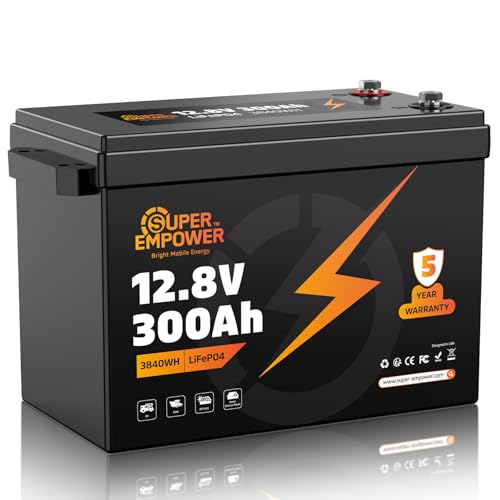
12V 300Ah LiFePO4 Lithium Battery, Deep Cycle for RV, Marine & Solar | 3840Wh Capacity, 200A BMS, Low-Temp Cutoff for RV, Camping, Trolling Motors & Off-Grid Solar Storage
As an Amazon Associate we earn from qualifying purchases. Product prices and availability are accurate as of the date/time indicated.
Prices shown are approximate and for reference only. Prices change often, so please check the current price on Amazon before you buy.
Best Lithium Camping Battery Reviews for 2026
1. BLAVOR Solar Charger 20000mAh Best Lithium Camping Battery
The BLAVOR Solar Charger 20000mAh is a lithium-ion power bank with a capacity of 20000mAh, about 74Wh, a maximum output of 18W, a weight of about 0.9 pounds, and about 500 cycles, priced in the range of $20 to $30. It has a built-in solar panel, a flashlight, and a rugged, water-resistant design for camping.
In use, the BLAVOR charger is practical because its solar panel can trickle charge it in sunlight, its 20000mAh capacity can charge a phone about four to five times, and its 0.9-pound weight is easy to carry in a backpack. Its limitation is clear: its built-in solar panel is slow and cannot fully recharge it in a day, and its 18W output cannot charge a laptop well. It suits a user who wants the cheapest battery in this table, for phones at a campsite, at a low price.
2. Anker PowerCore 10000 Redux Best Lithium Camping Battery
The Anker PowerCore 10000 Redux is a lithium-ion power bank with a capacity of 10000mAh, about 37Wh, a maximum output of 12W, a weight of about 0.4 pounds, and about 500 cycles, priced in the range of $25 to $30. It has a compact, pocket-sized design, two USB-A ports, and an Anker build that is known for reliability.
For a light camping trip, the PowerCore 10000 Redux is useful because its 0.4-pound weight is the lightest in this table, its two ports can charge a phone and a headlamp, and its 10000mAh capacity can charge a phone about two to three times. Its price is a step up from the BLAVOR charger, which reflects its Anker build and its compact design. It is best for a user who wants a very light power bank, for phones, at a low price.
3. Goal Zero Yeti 200X Best Lithium Camping Battery
The Goal Zero Yeti 200X is a lithium-ion power station with a capacity of 187Wh, a maximum AC output of 120W, a weight of about 5.0 pounds, and about 500 cycles, priced in the range of $180 to $220. It has a compact design, a USB-C output, an AC outlet, and a Goal Zero build that is known for portable power.
In a car camping setup, the Yeti 200X is a strong choice because its 187Wh capacity can charge a laptop once and a phone several times, its 5.0-pound weight is lighter than a larger power station, and its AC outlet can power a small light or a laptop charger. Its price is higher than the Anker power banks, which reflects its AC output and its larger capacity. It suits a user who wants a small power station, for a laptop and phones, at a mid-range price.
4. EcoFlow River 2 Best Lithium Camping Battery
The EcoFlow River 2 is a LiFePO4 power station with a capacity of 256Wh, a maximum AC output of 300W, a weight of about 7.7 pounds, and about 3,000 cycles, priced in the range of $200 to $250. It has a fast wall charging time of about an hour, a USB-C output of 100W, and an EcoFlow build that is known for power stations.
For a weekend camping trip, the River 2 is useful because its 256Wh capacity can charge a laptop several times, its AC outlet can power a small fridge or a fan, and its LiFePO4 battery can last for 3,000 cycles. Its price is higher than the Goal Zero Yeti 200X, which reflects its larger capacity, its LiFePO4 chemistry, and its faster charging. It is best for a user who wants a durable power station, for a laptop and a small fridge, at a mid-range price.
5. Jackery Explorer 300 Plus Best Lithium Camping Battery
The Jackery Explorer 300 Plus is a LiFePO4 power station with a capacity of 288Wh, a maximum AC output of 300W, a weight of about 7.8 pounds, and about 3,000 cycles, priced in the range of $250 to $300. It has a compact design, a USB-C output, and a Jackery build that is known for portable power.
In a camping setup, the Explorer 300 Plus is a solid choice because its 288Wh capacity is larger than the EcoFlow River 2, its LiFePO4 battery is durable, and its 7.8-pound weight is still portable by hand. Its price is higher than the River 2, which reflects its larger capacity and its Jackery build. It suits a user who wants a premium power station, for camping, with a focus on capacity and portability.
6. Renogy 12V 100Ah LiFePO4 Best Lithium Camping Battery
The Renogy 12V 100Ah LiFePO4 is a LiFePO4 battery with a capacity of 1280Wh, a maximum output of 100A at 12V DC, a weight of about 26 pounds, and about 4,000 cycles, priced in the range of $280 to $320. It has a large capacity, a long cycle life, and a Renogy build that is known for solar and batteries.
For a camper van or a trailer, the Renogy 100Ah is a top choice because its 1280Wh capacity can power a fridge for a day or more, its 4,000 cycles is the longest in this table, and its 12V output can power DC lights, fans, and a fridge directly. Its price is the highest in this table, but its capacity, cycle life, and Renogy build make it a good choice for a user who wants the best battery in this comparison for camping. It is best for a user who wants a large, long-life battery, for a camper van, with a focus on capacity.
Buying Guide: How to Choose the Best Lithium Camping Battery in 2026
Start with your devices, your trip length, and how you will recharge, not with a single specification. If you only need phones for a weekend, a 20000mAh power bank is enough. If you need a laptop and a fridge for several days, a 256Wh to 288Wh power station, or a 100Ah LiFePO4 battery with solar, is better. Check the wattage of each device before you buy, because a fridge that uses 50W will drain a 256Wh station in about 5 hours.
Capacity, Chemistry, and Cycles for Lithium Camping Batteries
Capacity is measured in Wh for power stations and in mAh for power banks. A 74Wh bank can charge a phone several times, while a 1280Wh battery can run a fridge for a day. Chemistry matters for life and safety: LiFePO4 usually lasts 3,000 to 4,000 cycles, while lithium-ion usually lasts about 500 cycles. A fact not in the table is that you should also check the battery’s usable capacity, because some batteries reserve part of their capacity to protect the cells, so a 256Wh station may deliver slightly less than 256Wh to your devices, and a battery with a good BMS will protect that reserve.
Output, Ports, and Solar Charging for Camping Batteries
Output decides what you can run. USB-C at 65W or 100W can charge most laptops, while USB-A at 12W or 18W is mainly for phones. An AC outlet is needed for a laptop charger, a small fridge, or a CPAP with an AC adapter. Solar charging matters for multi-day trips: a station with a 100W solar input can recharge from a 100W panel in a few hours of sun, while a power bank with a small built-in panel will only trickle charge. Match the panel to the station’s input voltage and wattage.
Weight, Size, and Safety for Lithium Batteries
Weight decides whether you will carry a battery. A 0.4-pound bank fits in a pocket, a 7 to 8-pound station needs a handle and a car, and a 26-pound battery belongs in a camper van. Store lithium batteries in a cool, dry place, away from direct sun and open flames, and never puncture, crush, or short-circuit them. If a battery swells, gets very hot, or smells strange, stop using it and follow the maker’s safety guidance.
Budget Guide for the Best Lithium Camping Battery
A battery in the $20-$30 range can provide a good phone charger if it is a BLAVOR or Anker model, while a battery in the $180-$250 range often provides a small power station with AC output. A battery in the $250-$320 range, such as the Jackery Explorer 300 Plus or Renogy 12V 100Ah, is for a user who wants more capacity or a long-life van battery. The budget pick in this comparison is the BLAVOR Solar Charger 20000mAh, at $20-$30, because it is the cheapest model in the table and still offers a capacity of 20000mAh, a solar panel, a flashlight, and a weight of about 0.9 pounds that is enough for phones at a campsite. For most campers, a simple power bank will help more than a large LiFePO4 battery, because it is light, cheap, and easy to carry. Spend the saving on a good solar panel, a USB-C cable, or a dry bag for your electronics.
Frequently Asked Questions About the Best Lithium Camping Battery
What is the best lithium camping battery in 2026?
For the best lithium camping battery in 2026, the BLAVOR Solar Charger 20000mAh is often the best budget choice because it offers a capacity of 20000mAh, a solar panel, and a price of $20 to $30. A useful extra fact is that you should also check the battery’s usable capacity, because some batteries reserve part of their capacity to protect the cells, so a 256Wh station may deliver slightly less than 256Wh to your devices, and a battery with a good BMS will protect that reserve. Choose based on your devices, your trip length, and whether you need AC output.
How long will a 256Wh power station last while camping?
How long a 256Wh power station will last while camping depends on what you power. It can charge a phone about 15 times, a laptop about 3 to 4 times, and a small 50W fridge for about 5 hours. A useful extra fact is that a fridge cycles on and off, so it may last longer than a simple wattage calculation suggests, while a laptop that is gaming will drain a station much faster than a laptop that is only browsing. For a weekend, a 256Wh station is usually enough for phones, lights, and a laptop.
Can I charge a lithium camping battery with a solar panel?
Can you charge a lithium camping battery with a solar panel depends on the battery’s solar input and the panel’s wattage. A power station with a 100W solar input can recharge from a 100W panel in a few hours of direct sun, while a power bank with a small built-in panel will only trickle charge. A useful extra fact is that a solar panel should be in direct sun, not shade, and you should check the station’s manual for its input voltage, because a panel with the wrong voltage can damage the battery. For a multi-day trip, a 100W folding panel is usually a good match for a 256Wh to 288Wh station.
Is LiFePO4 better than lithium-ion for camping?
Is LiFePO4 better than lithium-ion for camping depends on size and use. LiFePO4 is safer, lasts 3,000 to 4,000 cycles, and can be discharged deeper than lithium-ion, but it is heavier and more expensive for the same capacity. A useful extra fact is that LiFePO4 is less likely to overheat, which matters in a hot tent or car, and it holds its voltage better under load. For a power station or a van battery, LiFePO4 is usually better, while for a small pocket power bank, lithium-ion is usually enough.
Related guides
- Best Camping Stove for Budget Camping in 2026: Affordable Two-Burner and Single-Burner Camping Stoves
- Camping Chair in 2026: How to Choose a Comfortable, Durable Chair That Fits Your Car, Your Body, and Your Campsite
- Water Filter: 6 Best Water Filter Picks for Camping in 2026
- Best Sleeping Bag in 2026: 7 Sleeping Bags That Offer Warmth, Comfort, and Reliable Performance for Camping
More from Amazon
Programs that pair well with the guide above. Offers and eligibility are set by Amazon and may change.
Free shipping on eligible items, Prime Video and more. Eligible new members can start with a free trial.
Start a Prime free trialA Prime membership for ages 18-24 with a trial period. Eligibility is set by Amazon.
See Prime for Young AdultsAudiobooks and podcasts to listen to on the go. Eligible new members can start with a free trial.
Try Audible freeAd-free music streaming. Eligible new subscribers can start with a free trial.
Try Music Unlimited freeAs an Amazon Associate we earn from qualifying purchases.


Write Your Review
No reviews yet. Be the first to share your experience!