
What's inside
As an Amazon Associate I earn from qualifying purchases. This post may contain affiliate links at no extra cost to you.
A lithium battery changes what a campsite can do. It runs lights, a fridge, a fan, a phone charger, and a small inverter for hours, without the noise, fumes, and fuel of a generator. It also weighs far less than a lead-acid battery of the same usable capacity, and it can be discharged much deeper without the same damage.
That last point is the one most buyers miss. A 100Ah lead-acid battery should not be run below about 50% charge if you want it to last. A 100Ah LiFePO4 battery can be used to about 80% depth of discharge, and often more, which means you get roughly twice the usable energy from the same nominal rating. A 100Ah LiFePO4 battery at 12.8V stores about 1,280 watt-hours, and most of that is actually available to you.
Our top pick is the Battle Born 100Ah LiFePO4. It stores 1,280 watt-hours, it is rated for 3,000 cycles in the figures used in this guide, and it is the most widely supported 100Ah LiFePO4 battery for RV and camping use. It is not the cheapest battery here. The Renogy 100Ah stores the same 1,280 watt-hours for roughly half the price. Battle Born leads because of its build, its battery management system, and its support, not because it stores more energy.
The ratings below are editorial assessments based on capacity, chemistry, cycle rating, and value. They are not customer-star averages. Prices are typical retail ranges, not fixed prices, and they vary by retailer.
Our Top Picks
Best Lithium Batteries for Camping Compared
| Model | Capacity | Chemistry | Rated cycles | Typical price range | Rating |
|---|---|---|---|---|---|
| Battle Born 100Ah LiFePO4 | 1,280 Wh | LiFePO4 | 3,000 | $800–$900 | 4.8 / 5 |
| Renogy 100Ah LiFePO4 | 1,280 Wh | LiFePO4 | 4,000 | $400–$500 | 4.7 / 5 |
| Dakota Lithium 100Ah | 1,280 Wh | LiFePO4 | 2,000 | $700–$800 | 4.6 / 5 |
| Lion Energy Safari UT 1300 | 1,344 Wh | LiFePO4 | 3,500 | $800–$900 | 4.5 / 5 |
| Weize 100Ah LiFePO4 | 1,280 Wh | LiFePO4 | 2,000 | $300–$400 | 4.4 / 5 |
| Lossigy 100Ah LiFePO4 | 1,280 Wh | LiFePO4 | 4,000 | $200–$300 | 4.3 / 5 |

GOLDENMATE 12V 20Ah LiFePO4 Lithium Battery, IP67 Waterproof, Lightweight | 5000+ Deep Cycles, Built-in BMS, Premium Lithium Iron Phosphate Cell, Ideal for Solar, Marine, Fishfinder, Camping, Off-grid
As an Amazon Associate we earn from qualifying purchases. Product prices and availability are accurate as of the date/time indicated.

Energizer Ultimate Lithium AA Batteries (24 Pack), AA Lithium Batteries | Double A Batteries, Long-Lasting Power, for Flashlights, Remote Controls, Electronics, Cameras, Toys, Reliable Performance
As an Amazon Associate we earn from qualifying purchases. Product prices and availability are accurate as of the date/time indicated.
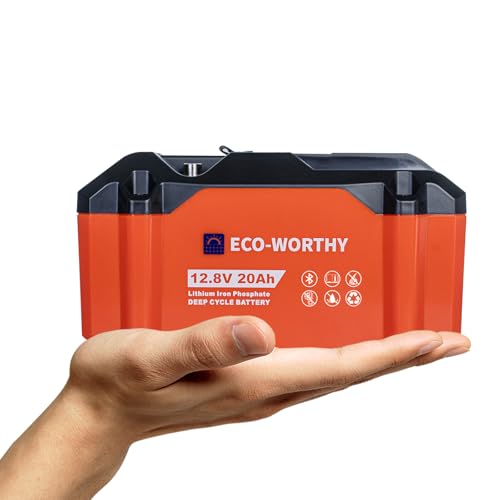
ECO-WORTHY Portable 12V Lithium Battery, 12.8V 20Ah Lithium Iron Phosphate DEEP CYCLE BATTERY, Built-in BMS, 4000+ Cycles, Perfect for Outdoor Camping Fishing RV Marine Trolling Motor Fishfinder
As an Amazon Associate we earn from qualifying purchases. Product prices and availability are accurate as of the date/time indicated.
Prices shown are approximate and for reference only. Prices change often, so please check the current price on Amazon before you buy.
Best Lithium Batteries for Camping Reviews
1. Battle Born 100Ah LiFePO4: Best Overall
Battle Born is the default recommendation for a reason. The 100Ah battery is a drop-in replacement for a Group 31 lead-acid battery, it stores 1,280 watt-hours, and it includes a built-in battery management system that protects against over-charging, over-discharging, over-current, and short circuits. That BMS is the part you do not see, and it is the part that decides whether a lithium battery lasts for years or fails early.
In practical terms, one Battle Born 100Ah will run a 12V fridge, lights, and phone charging for a weekend, and it will run a small inverter for a laptop or a fan without the voltage sag you get from a tired lead-acid battery. Two in parallel give you 2,560 watt-hours, which is enough for a longer trip or a larger fridge, and Battle Born supports series and parallel configurations for 12V, 24V, and 48V systems.
The price is the main objection. At $800 to $900, it costs about twice as much as the Renogy 100Ah with the same capacity, and about four times as much as the Lossigy. You are paying for the BMS, the cell quality, the warranty support, and the large user base that has already tested the battery in RVs, vans, and boats. If you want the lowest risk and you plan to keep the battery for many years, that premium is reasonable. If you want the lowest price, it is not.
2. Renogy 100Ah LiFePO4: Best Value 100Ah Battery
Renogy is the value pick in this guide, and it is a close second to Battle Born. The 100Ah battery also stores 1,280 watt-hours, it is also LiFePO4, and it is rated for 4,000 cycles in the figures used here, more than the Battle Born figure of 3,000. It costs $400 to $500, roughly half the price of the Battle Born.
That price gap matters on a budget camping build. The money saved on one battery can pay for a solar panel, a charge controller, or a better inverter. Renogy also sells a complete ecosystem: solar panels, charge controllers, inverters, and monitoring, all designed to work together. If you are building a solar setup from scratch, buying the battery and the solar gear from the same brand simplifies wiring and support.
The compromise is support and brand history. Renogy is a large, well-known solar brand, but it does not have the same RV-focused support reputation as Battle Born. For most campers, that will not matter. The battery itself is a solid 100Ah LiFePO4 unit with a built-in BMS, and it does the same job as the Battle Born for most loads.
3. Dakota Lithium 100Ah: Best for Cold-Weather and Heavy Use
Dakota Lithium is known for batteries built for harsh use, including marine, RV, and off-grid applications. The 100Ah battery stores 1,280 watt-hours, it is LiFePO4, and it is rated for 2,000 cycles in the figures used here. It costs $700 to $800, between the Renogy and the Battle Born.
What sets Dakota apart is not capacity, which is the same as the other 100Ah batteries here, but the build and the warranty. Dakota batteries are built with a focus on vibration resistance and long life in rough conditions, and the company is known for standing behind its batteries. That matters if your battery lives in a trailer that bounces down a dirt road, or in a boat that gets wet and cold.
For a typical car camper who drives to a paved campsite, the Dakota is more battery than you need. For a camper who tows a trailer over rough roads, or who uses the battery in a boat as well as a camper, the tougher build is worth the premium over the Renogy.
4. Lion Energy Safari UT 1300: Best Slightly Larger Capacity
The Lion Energy Safari UT 1300 is the only battery in this guide that stores more than 1,280 watt-hours. It is rated at 105Ah, which works out to 1,344 watt-hours at 12.8V, and it is rated for 3,500 cycles. It costs $800 to $900, the same range as the Battle Born.
The extra 64 watt-hours is not a large difference on its own. It is about 5% more energy, enough for an extra hour of lights or an extra phone charge, not an extra day of fridge use. The real reason to choose the Safari UT 1300 is its form factor and its built-in features. It is designed as a drop-in replacement for a lead-acid battery, and it includes a built-in BMS with protection against over-charge, over-discharge, and short circuits.
Lion Energy also sells the Safari UT 1300 as part of a portable power system, which makes it a good choice if you want a battery that can move between a camper, a home backup setup, and a portable power station. If you only need a single 100Ah battery for a camper, the Renogy gives you almost the same capacity for less money.
5. Weize 100Ah LiFePO4: Best Budget Name-Brand Option
Weize is a budget brand that has become popular for DIY solar and camping builds. The 100Ah LiFePO4 battery stores 1,280 watt-hours, it is rated for 2,000 cycles, and it costs $300 to $400. That is less than half the price of the Battle Born, and about $100 less than the Renogy.
For a budget camper, that price is the whole argument. A Weize 100Ah battery plus a 100W solar panel and a basic charge controller can be built for less than the cost of a single Battle Born battery alone. If you are building a first solar setup and you want to learn how it works before spending more, Weize is a reasonable starting point.
The compromise is the same as with any budget battery: the BMS, the cell matching, and the long-term support are not as proven as Battle Born or Renogy. That does not mean the battery will fail. It means you should size your system conservatively, do not run it to empty every night, and check the voltage and temperature regularly, especially in the first few months.
6. Lossigy 100Ah LiFePO4: Best Lowest-Price 100Ah Battery
Lossigy is the cheapest 100Ah LiFePO4 battery in this guide, at $200 to $300, and it is rated for 4,000 cycles in the figures used here. It stores 1,280 watt-hours, it is LiFePO4, and it includes a built-in BMS. On paper, it offers the same capacity as the Battle Born for about a quarter of the price.
That price gap should make you careful, not dismissive. Lossigy batteries are popular in DIY builds because they are cheap, and many owners report good results. They are also a newer, less established brand than Battle Born, Renogy, or Dakota, and the support and warranty are less proven. If you buy one, buy it from a reputable seller, test it when it arrives, and do not use it for a critical load like a medical device or a fridge full of food on a long trip until you have tested it for a few cycles at home.
For a budget camper who understands the trade-off, Lossigy is a way to get into LiFePO4 for the price of a good lead-acid battery. For a camper who wants the lowest risk, spend more on the Renogy or the Battle Born.
Best Lithium Batteries for Camping Buying Guide
Start with how much energy you use, then choose the chemistry, then choose the size. A good lithium battery for camping should be LiFePO4, should store at least 500 watt-hours for a weekend trip, and should have a built-in BMS. Every battery in the table meets those tests. The differences are in capacity, cycle rating, price, and support.
How much capacity do you need
Work it out in watt-hours, not amp-hours. A 12V fridge uses about 30 to 50 watts when it is running, but it cycles on and off, so it might use 300 to 600 watt-hours in a day. Lights use 10 to 20 watts. A phone charge uses about 10 watt-hours. A laptop charge uses 50 to 70 watt-hours.
For a weekend with a fridge, lights, and phones, a single 100Ah LiFePO4 battery at 1,280 watt-hours is a good starting point. For a longer trip, or for a larger fridge, add a second battery in parallel or add solar. A 100W solar panel in good sun produces about 400 to 500 watt-hours a day, which can keep a single 100Ah battery topped up for a fridge and lights.
Do not buy a battery by amp-hours alone. A 100Ah lead-acid battery and a 100Ah LiFePO4 battery have the same nominal rating, but the LiFePO4 battery gives you about twice the usable energy because it can be discharged deeper. That is why a 100Ah LiFePO4 battery can replace a 200Ah lead-acid battery in many camping setups.
LiFePO4 or lithium-ion
LiFePO4 is the right chemistry for camping. It is more stable than other lithium-ion chemistries, it lasts for more cycles, and it does not have the same thermal runaway risk. It is also heavier than some lithium-ion batteries for the same energy, but for a camper, the safety and cycle life matter more than a few pounds.
All six batteries in this guide are LiFePO4. Do not buy a lithium-ion battery that is not LiFePO4 for a camper unless you understand the chemistry, the BMS, and the charging requirements. The price difference is not worth the risk.
BMS, charging, and cold weather
A battery management system protects the battery from over-charging, over-discharging, over-current, and short circuits. Every battery in this guide has a built-in BMS, but not all BMS units are equal. A good BMS will also protect against low-temperature charging, which can damage a LiFePO4 battery.
LiFePO4 batteries should not be charged below freezing. Most BMS units will stop charging if the temperature is too low, but some budget batteries do not have that protection. If you camp in cold weather, keep the battery inside the camper or in an insulated box, and do not charge it until it has warmed up. Discharging in cold weather is less of a problem than charging in cold weather, but the capacity will be lower when the battery is cold.
Charge a LiFePO4 battery with a charger or solar controller that has a LiFePO4 setting. A lead-acid charger can over-charge a lithium battery, or it can under-charge it and leave capacity unused. If you are adding solar, use a charge controller with a LiFePO4 profile, and set the voltage correctly for your battery.
Weight, size, and budget
A 100Ah LiFePO4 battery weighs about 24 to 31 lb, depending on the brand. That is about half the weight of a 100Ah lead-acid battery, and about a quarter of the weight of a 200Ah lead-acid battery with the same usable energy. That weight saving matters in a small camper, a van, or a trailer with a limited payload.
For budget camping, the Renogy 100Ah is the best balance of price and proven performance. The Weize and Lossigy are cheaper, but they are less proven. The Battle Born is the best choice if you want the lowest risk and the best support. The Dakota is the best choice if you need a tougher battery for rough roads or marine use. The Lion Energy Safari UT 1300 is the best choice if you want a little more capacity and a portable power option.
Best Lithium Batteries for Camping FAQ
What is the best lithium battery for camping?
The best lithium battery for camping for most campers is the Battle Born 100Ah LiFePO4. It stores 1,280 watt-hours, it is rated for 3,000 cycles, and it has a built-in BMS and a strong support reputation. The best value is the Renogy 100Ah LiFePO4, which stores the same 1,280 watt-hours for $400 to $500.
How long will a 100Ah lithium battery last camping?
A 100Ah LiFePO4 battery stores about 1,280 watt-hours. A 12V fridge might use 300 to 600 watt-hours a day, lights might use 50 to 100 watt-hours, and phones might use 20 to 30 watt-hours. For a weekend with a fridge, lights, and phones, one 100Ah battery is usually enough. For a longer trip, add solar or a second battery.
Is LiFePO4 better than lead-acid for camping?
Yes, for most camping use. A LiFePO4 battery can be discharged deeper, it lasts for more cycles, it weighs less for the same usable energy, and it holds its voltage better under load. A 100Ah LiFePO4 battery gives you about twice the usable energy of a 100Ah lead-acid battery. The main drawback is price: LiFePO4 costs more up front, although it often costs less over its lifetime because it lasts longer.
Can I charge a lithium battery with solar while camping?
Yes. Use a solar panel and a charge controller with a LiFePO4 setting. A 100W panel in good sun produces about 400 to 500 watt-hours a day, which can keep a single 100Ah battery topped up for a fridge and lights. Do not charge a LiFePO4 battery below freezing unless the BMS has low-temperature charging protection. Keep the battery warm, and charge it after it has warmed up.
FAQ
What is the best lithium battery for camping?
How long will a 100Ah lithium battery last camping?
Is LiFePO4 better than lead-acid for camping?
Can I charge a lithium battery with solar while camping?
Related guides
- Best Tent When Tent Is Too Heavy in 2026: Best Tent When Tent Is Too Heavy for Light Packing, Easy Carry, and Simple Camping
- Camping Table in 2026: The Complete Budget Guide to Choosing a Camping Table That Fits Your Chairs, Your Car, and Your Cook Kit, From Coleman and ALPS Mountaineering to KingCamp and Trekology
- Best Camping Stove for Budget Camping in 2026: Affordable Two-Burner and Single-Burner Camping Stoves
- Camping Chair in 2026: How to Choose a Comfortable, Durable Chair That Fits Your Car, Your Body, and Your Campsite
More from Amazon
Programs that pair well with the guide above. Offers and eligibility are set by Amazon and may change.
Free shipping on eligible items, Prime Video and more. Eligible new members can start with a free trial.
Start a Prime free trialA Prime membership for ages 18-24 with a trial period. Eligibility is set by Amazon.
See Prime for Young AdultsAudiobooks and podcasts to listen to on the go. Eligible new members can start with a free trial.
Try Audible freeAd-free music streaming. Eligible new subscribers can start with a free trial.
Try Music Unlimited freeAs an Amazon Associate we earn from qualifying purchases.

Write Your Review
No reviews yet. Be the first to share your experience!