
What's inside
As an Amazon Associate I earn from qualifying purchases. This post may contain affiliate links at no extra cost to you.
The best battery for solar camping is not a product first. It is an arithmetic problem with a product at the end of it, and campers who solve the arithmetic buy once, while campers who shop first buy twice, the second time at a trailhead town’s prices. Solar camping means your battery lives on a cycle: it spends the night powering lights, phones, a fan, perhaps a 12-volt fridge, and it spends the day drinking from a solar panel whose real output, in real weather, at a real campsite’s angles, will be a fraction of the number printed on its box. A battery too small for the night’s loads is a nightly anxiety. A battery too large for the panel is a debt that deepens daily, because a panel that cannot refill what the night spends is not a solar system, it is a countdown. This guide teaches the sizing first, then compares six real, currently sold batteries and power stations across the two great families of the category, the all-in-one portable power station and the bare lithium iron phosphate battery for a build-your-own system, because which family you belong to matters more than which model you pick.
The chemistry question, at least, has settled. Lithium iron phosphate, LiFePO4, owns solar camping in 2026 for reasons that are not fashion: it delivers thousands of charge cycles where lead acid delivered hundreds, it gives up nearly all of its rated capacity in usable energy where a lead acid battery should only be drawn to half, it weighs a fraction as much, and it holds its voltage steadily across the discharge, which 12-volt fridges and lights visibly prefer. Every product in this table is LiFePO4, and the buying guide will not waste your time relitigating the chemistry. Your decisions are capacity, form, solar input, and price, in that order.
Our Top Picks
Best Battery for Solar Camping: The Sizing That Comes Before the Shopping
Watt-Hours Are the Only Honest Currency
Batteries in this category are sold in two dialects, and fluency in both prevents the classic mistake. Bare batteries are rated in amp-hours at a voltage, almost always 12.8 volts for LiFePO4, so a 100 amp-hour battery stores about 1,280 watt-hours. Power stations are rated directly in watt-hours. Convert everything to watt-hours and the whole market becomes one comparable shelf. Then count your night’s spending in the same currency: a phone charge is roughly 15 watt-hours, a lantern a few watt-hours an evening, a laptop 50 to 80 per charge, a fan 5 to 15 watts per hour it runs, and the heavyweight of camp loads, a 12-volt compressor fridge, drawing on the order of 30 to 60 watts while its compressor runs and cycling through the day and night for a total that commonly lands in the few hundreds of watt-hours per day, varying with weather, settings, and how often the lid opens. Add your loads, multiply by the nights of autonomy you want, one for a solar trip where tomorrow’s sun is reliable, two where it is not, and the sum is the battery you need, with the LiFePO4 advantage that nearly all of it is truly spendable.
The Panel Must Refill the Day’s Spending, With a Margin for the Sky
A solar panel’s rating is its output in laboratory sunlight, and a campsite is not a laboratory. Between the angle you can achieve on a folding panel propped on a camp chair, the hours of true peak sun even a fine day provides, heat, cable losses, and the charge controller’s efficiency, a prudent planner expects a panel to harvest, across a good day, on the order of four to six times its rated watts in watt-hours, so a 100-watt panel yields roughly 400 to 600 watt-hours on a good day and far less under trees or cloud. Your daily harvest must exceed your daily spend by a margin, a third again is a sane target, or the battery’s state of charge walks downward day by day until the fridge warms on night four. This is why this table lists each product’s maximum solar input with the same prominence as its capacity: a large battery with a small solar input is a cistern with a straw for a river, and on a stationary basecamp it will fail more certainly than a modest battery drinking from a generous panel.
Power Station or Bare Battery: The Fork in the Whole Category
A portable power station wraps the battery in everything a camper needs to use it: an inverter for AC outlets, USB ports, a solar charge controller with MPPT, a display, and handles, at a price per watt-hour that reflects all that integration. A bare LiFePO4 battery is only storage, cheaper per watt-hour by a wide margin, and it asks you to supply the rest: a solar charge controller, wiring, fusing, and the outlets or inverter your loads require, which suits a van build, a trailer, or a basecamp system that lives in one place and grows over seasons. Neither is the advanced choice and neither the beginner’s. The station is the choice for the camper who moves, who wants the battery in the tent, the car, and the home emergency shelf across a year. The bare battery is the choice for the camper who builds, who will add a second battery in parallel next season and who counts cost per cycle across a decade. Know which camper you are before the table, because the table cannot tell you.
Best Battery for Solar Camping: Quick Comparison
| Battery Model | Key Specs | Best For | Typical Price Range | Rating |
|---|---|---|---|---|
| EcoFlow RIVER 3 Plus | Power station, 286Wh class (expandable in this line class), solar input up to 220W class, fast AC charging, LiFePO4 | Best small station for light camps | $190 – $270 | 4.4 / 5 |
| BLUETTI EB3A | Power station, 268Wh, solar input up to 200W class, very fast AC charging, LiFePO4, UPS feature | Best fast-charging compact station | $180 – $260 | 4.4 / 5 |
| Jackery Explorer 1000 v2 | Power station, 1070Wh class, solar input up to 400W class in this line class, LiFePO4 | Best family and fridge station | $450 – $650 | 4.6 / 5 |
| EcoFlow DELTA 3 | Power station, 1024Wh class, solar input up to 500W class, very fast AC charging, LiFePO4 | Best large station for solar refill speed | $550 – $750 | 4.7 / 5 |
| LiTime 12V 100Ah LiFePO4 Battery | Bare battery, about 1280Wh, built-in BMS, parallel and series capable per maker, low price per Wh | Best value bare battery for DIY systems | $220 – $300 | 4.5 / 5 |
| Battle Born 12V 100Ah LiFePO4 (BB10012) | Bare battery, about 1280Wh, built-in BMS, US support and long warranty in this line class | Best supported bare battery | $750 – $900 | 4.6 / 5 |
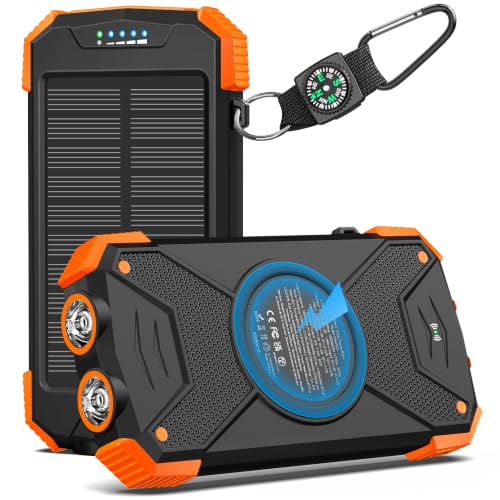
BLAVOR Solar Power Bank 10,000mAh Portable Wireless Charger for Cell Phones | 20W USB-C battery pack, battery bank, IPX5 waterproof, 2 flashlights, camping essentials, hiking gear, emergency solar backup


As an Amazon Associate we earn from qualifying purchases. Product prices and availability are accurate as of the date/time indicated.

SUNAPEX 12V Solar Battery Charger Trickle Maintainer Kit for Car | Prevents Overcharging with Smart Controller | Waterproof Portable Solar Panel Kit | Fits 12V Batteries for Boats, RVs & More
As an Amazon Associate we earn from qualifying purchases. Product prices and availability are accurate as of the date/time indicated.

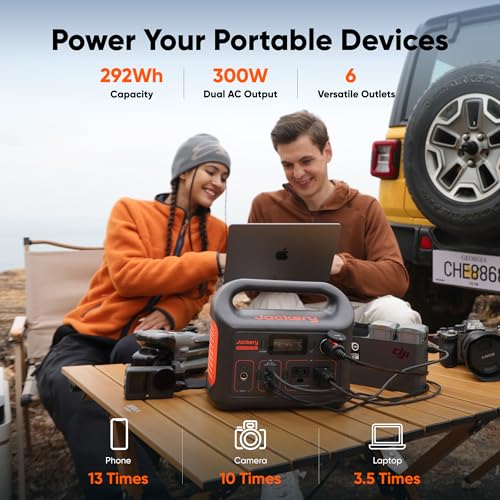
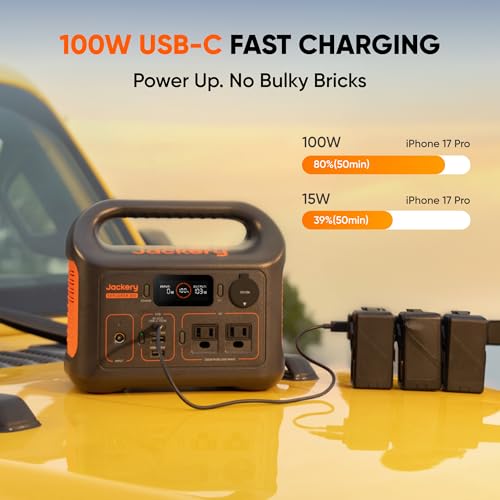
Jackery Explorer 300 Portable Power Station,292Wh | Backup LiFePO4 Battery, Solar Generator for Outdoors, Camping, Travel, Hunting, Blackout (Solar Panel Optional)




As an Amazon Associate we earn from qualifying purchases. Product prices and availability are accurate as of the date/time indicated.
Prices shown are approximate and for reference only. Prices change often, so please check the current price on Amazon before you buy.
Capacities and solar input limits summarize manufacturers’ published figures for current models; solar input varies by version and panel configuration. Ratings are editorial, weighing capacity, solar input, cycle life, usability, support, and value at typical prices.
The Six Best Batteries for Solar Camping Reviewed
1. EcoFlow DELTA 3: Best Large Station for Solar
The DELTA 3 leads this guide because it respects the refill half of the solar equation as few stations do: a solar input in the 500-watt class means a basecamp’s folding array can genuinely replace a fridge’s daily appetite by early afternoon, and its kilowatt-hour of LiFePO4 storage carries the night with margin. Around that core it is a complete modern station, fast to charge from a wall when the trip allows, expandable in its ecosystem, and built for the home-emergency second life that justifies a large station’s price across a year. It is more battery than a tent camper needs and exactly the battery a family basecamp or a small trailer, run on solar, has been waiting for.
2. Jackery Explorer 1000 v2: Best Family Station
Jackery’s thousand-class station is the category’s friendly default: a kilowatt-hour in a package one person carries, solar input generous enough for a 200 to 400 watt array, and an interface a family can operate without a manual or a meeting. Its solar input trails the EcoFlow’s, which matters at a shaded or northern camp, and its ecosystem is its own. For the family whose loads are the fridge, the lights, the phones, and the occasional air pump, and whose panel is a pair of folding hundreds on the grass, it is the balanced answer, and its rating reflects a decade of the brand’s stations surviving real camps.
3. Battle Born BB10012: Best Supported Bare Battery
Battle Born is what a bare battery costs when it is built and supported like equipment: a 100 amp-hour LiFePO4 with a serious internal management system, a long warranty, and a support line answered by people who can discuss your van’s wiring diagram. Its price per watt-hour is the table’s highest by a factor that will make a budget reader blink, and its buyers pay it for the decade view: thousands of cycles, a company that will exist to honor the warranty, and a battery that becomes the foundation of a system rather than its consumable. In a permanent build, foundation is the right thing to overbuy, and Battle Born is the foundation most often chosen.
4. LiTime 100Ah LiFePO4: Best Value Bare Battery
LiTime has redrawn the DIY system’s economics: the same nominal 1,280 watt-hours as the Battle Born at a third of the price class, with a built-in management system, published parallel and series capability, and a growing record in exactly the van, trailer, and basecamp builds this guide serves. The honest trade is support and pedigree, a younger brand, a warranty you hope is a formality, and specifications to verify against your build’s demands. For the budget camper building a system whose other components are chosen with the same care, it is the value summit of the entire article, and the battery that has put real solar capacity within reach of the site this guide is written for.
5. BLUETTI EB3A: Best Fast-Charging Compact
The EB3A is the small station for the camper whose solar is opportunistic: a few hours of panel at lunch, a wall outlet at the trailhead café, a car charge on the drive, because its AC charging is so fast that a short stop genuinely refills it, and its solar input, at the 200-watt class, is generous for its size. Its 268 watt-hours serve the light camp completely, phones, lights, camera batteries, a fan through the night, and no fridge, a boundary this guide states in the review because it is the one its buyers most need to hear. Within that boundary, it is the cleverest small station in the table.
6. EcoFlow RIVER 3 Plus: Best Small Station to Grow
The River 3 Plus answers the small station’s oldest regret, outgrowing it, with expandability in its line: start at its base capacity for the light camp, add EcoFlow’s extra battery when the fridge arrives, and keep one interface, one charger, one habit. Its solar input punches above its class, its charging is quick, and its size keeps it in the car for the unplanned night as readily as the planned trip. For the camper at the beginning of the solar road, unsure how far down it they will travel, it is the station that does not punish either answer, and that mercy is a design achievement.
Buying Guide: How to Choose the Best Battery for Solar Camping
Step One: Audit a Real Day’s Loads
List everything you intend to power on your fullest camp day, with each item’s watts and hours, using the figures in this guide’s sizing section for the loads you cannot measure, and total them in watt-hours. Be honest about the fridge if one is coming, because it will dominate the arithmetic and pretending otherwise is how 300-watt-hour stations get bought for 600-watt-hour appetites. Add the autonomy you need, a day for reliable sun, two for the mountains and the coast, and let the total name your capacity class: under 300 watt-hours for the light camp, 500 to 1100 for the fridge family, a bare battery bank beyond that. The audit takes twenty minutes with a notebook and it is the highest-value twenty minutes in the entire purchase, because every later step merely shops for the number it produces.
Step Two: Pair the Panel to the Battery, Not to the Budget
Choose the solar array from the battery and the loads, not from what remains in the wallet. The array’s daily harvest, estimated by this guide’s prudent rule of four to six times its rated watts in watt-hours on a good day, must exceed the daily spend by about a third, and the battery’s maximum solar input must accept the array you intend, which eliminates pairings the catalogs happily sell: the large station whose input caps below your array’s output, wasting panel you paid for, and the small station whose input is fine but whose capacity cannot hold a day’s harvest. For a bare battery system, the same pairing runs through the charge controller, whose rating you size to the array with headroom. Buy panel and battery as one system on one page of the notebook, because that is what they will be at the campsite.
Step Three: Respect the Cold, the Cable, and the System’s Second Life
LiFePO4 batteries must not be charged below freezing, a protection their management systems enforce by refusing the charge, which surprises the winter camper whose panel is producing beautifully into a battery that will not drink. Plan for it: keep the battery in the vehicle’s or tent’s relative warmth, choose a model with low-temperature protection or self-heating if winter solar is your season, and never attempt to defeat the protection. Attend to the unglamorous wiring, the correct gauge for the run between panel and battery, quality connectors, and a fused, tidy installation in a DIY build, because losses and faults live in cables, not in spec sheets. Finally, count the second life in the value: a station that serves home outages and a battery bank that serves the trailer for a decade are cheaper per year than their stickers suggest, and the camper who buys for the decade, in either family, is the one this guide has been describing all along.
Frequently Asked Questions About Batteries for Solar Camping
What size battery do I need for solar camping?
The size your own load audit produces, which for the common camps lands in three familiar places. A light camp of phones, lights, a fan, and camera batteries spends roughly 100 to 250 watt-hours a day and is served completely by a 268 to 300 watt-hour station with a 100 to 200 watt panel. A family camp adding a 12-volt fridge spends roughly 400 to 700 watt-hours a day and wants a kilowatt-hour class station or a 100 amp-hour bare battery, with 200 to 400 watts of panel to refill it. A heavy camp with laptops, a larger fridge, and medical devices such as a CPAP, whose draw you should measure on your own machine across a night, moves into multiple kilowatt-hours and should be designed as a system, battery bank, generous array, and autonomy for a sunless day, rather than bought as a product. When in doubt between two sizes, buy the larger battery and the larger panel input, because solar campers almost never regret capacity, and almost always, eventually, regret its absence.
Can I charge a power station and use it at the same time?
Most modern stations in this guide support pass-through use, charging from solar while powering loads, and at a sunny basecamp that is exactly how they will spend their days, the panel feeding the fridge through the battery while the battery’s level holds or climbs. Two cautions keep the practice healthy. Heat is the first: charging and discharging together in a hot tent is the hardest work a station does, so give it shade and air while it works. Arithmetic is the second: if the loads exceed the solar input, the battery is still draining, only more slowly, and the display’s net figure, not the presence of a plugged-in panel, is the truth about your evening. Used with those understandings, pass-through is not a compromise. It is the solar camp’s normal state, and the stations here are built for it.
How long will a LiFePO4 camping battery last?
In cycles, far longer than the habits it replaces: LiFePO4 batteries in this class are commonly rated for several thousand charge cycles to a defined remaining capacity, commonly 80 percent, which at a cycle a day across a camping season is a decade or more of service, and at a full-time van life’s daily cycling still runs to years. Calendar life and treatment write the footnotes. Heat is the chemistry’s enemy, so a battery stored in a cool place, at a partial charge for long off-seasons as its maker directs, will outlast one baked in a vehicle. The practical consequence for value is the one this guide’s bare battery reviews draw: cost per cycle, not cost per purchase, is the honest price of storage, and by that measure even the premium Battle Born is inexpensive and the budget LiTime is remarkable, provided each is sized and charged within its published limits.
Will a solar panel charge my battery on a cloudy day?
Yes, and less, in proportions worth planning around. Under a bright overcast a panel may deliver a third to a half of its clear-sky output, and under heavy cloud or in a shaded forest site, a tenth or less, which is why this guide’s sizing builds a margin for the good days and an autonomy reserve for the bad ones rather than pretending the sky is a utility. The camper’s responses to a grey forecast are behavioral before they are technological: chase the sun with a folding panel’s placement through the day, tilt it toward what light there is, trim the loads, the fridge a degree warmer, the devices charged from the vehicle on the drive, and let the battery’s reserve do the job it was bought for. A system sized by this guide’s arithmetic rides out two grey days and recovers on the third. A system sized to its panel’s box rating fails on the first, and blames the weather for a planning decision, which is the most common and most preventable disappointment in solar camping.
Related guides
- Best Inflatable Kayak for Camping in 2026: 6 Best Inflatable Kayak for Camping Picks for Easy Paddling, Packable Gear, and Reliable Water Use
- Best Portable Camping Battery Pack in 2026: How to Pick a Portable Camping Battery Pack That Powers Your Phone, Lights, and Camping Gear All Trip
- Best Touring Kayak for Camping in 2026: Best Touring Kayak for Camping
- Best Camping Battery Pack in 2026: 6 Power Banks With at Least 10,000mAh, USB-C Power Delivery, and a Price Range, for Camping
More from Amazon
Programs that pair well with the guide above. Offers and eligibility are set by Amazon and may change.
Free shipping on eligible items, Prime Video and more. Eligible new members can start with a free trial.
Start a Prime free trialA Prime membership for ages 18-24 with a trial period. Eligibility is set by Amazon.
See Prime for Young AdultsAudiobooks and podcasts to listen to on the go. Eligible new members can start with a free trial.
Try Audible freeAd-free music streaming. Eligible new subscribers can start with a free trial.
Try Music Unlimited freeAs an Amazon Associate we earn from qualifying purchases.

Write Your Review
No reviews yet. Be the first to share your experience!