
What's inside
As an Amazon Associate I earn from qualifying purchases. This post may contain affiliate links at no extra cost to you.
The best camping lithium battery has quietly rewritten the campervan, the trailer, and the serious basecamp, because the lithium iron phosphate cell — LiFePO4, the chemistry every serious row in this table shares — does three things the old lead-acid battery never could: it gives up nearly all of its rated capacity without injury, where lead-acid surrenders half of its own to keep itself alive; it weighs a third as much for the same usable energy, which in a camper is payload returned to the water, the food, and the passengers; and it cycles in the thousands rather than the hundreds, which converts the battery from a consumable into a decade’s infrastructure. This guide grades the real, currently sold 12-volt LiFePO4 camping batteries on the camper’s specification sheet: honest capacity first — the amp-hour figure at the battery’s actual discharge, from makers who publish their test manners, because the parish’s budget end has attracted capacity claims that belong to fiction — the battery management system second, since the BMS is the battery’s governor and its quality is the product: its low-temperature charge protection above all, because lithium cells charged below freezing are damaged permanently and silently, and the BMS that refuses the charge in the cold is the difference between a battery and a future paperweight; the discharge’s muscle third — the continuous amps the inverter and the 12-volt citizens will actually draw, which fences the single-battery systems from the parallelled banks; and the ownership’s arithmetic last: the price per usable watt-hour today and per cycle across the decade, where the budget rows of this table have collapsed the flagship’s historic premium into a genuine argument. The frame around the purchase is this site’s energy doctrine entire: the battery is one citizen of a system — the charger that speaks lithium’s profile, the solar or DC-DC charging that feeds it, the loads’ ledger that sizes it — and it is bought as a system or it is bought twice.
The cold doctrine deserves its founding paragraphs, because it is the lithium parish’s one true hazard and it is a hazard of ignorance rather than of chemistry. A LiFePO4 battery discharges happily in deep cold — giving less of itself, like every battery, but working — while charging below 0°C drives lithium plating inside the cells, a permanent and invisible confiscation of capacity and, in the extreme, of safety. The defences are graded as the table’s dividing line: the BMS with low-temperature cut-off, which simply refuses the frozen charge and is the minimum specification for any battery that will winter in a van; the self-heating citizens, which warm themselves from the charger before accepting its current, for the four-season parish; and the camper’s own liturgy — the battery in the van’s insulated heart rather than the frozen exterior locker, the charge deferred to the day’s warmth — which costs nothing and which this guide teaches as the doctrine it is. The second doctrine is the charger’s: lithium wants its own charging profile, and while many LiFePO4 batteries tolerate a lead-acid charger’s manners at a cost to their fullness and their years, the lithium-profile charger — in the shore charger, the solar controller’s setting, and the DC-DC charger that guards the alternator’s marriage — is graded as part of the battery’s true price, because the battery starved by its charger will be blamed for its own underfeeding in every review its owner writes.
The sizing frame completes the founding text, in the watt-hour ledger this site’s battery guides all share: the camp’s citizens listed with their appetites — the fridge, the parish’s anchor load, drinking its daily watt-hours in summer’s heat; the lights, the fans, the pumps, the devices — totalled against the battery’s usable store, which for lithium is mercifully close to its nameplate, and the days of autonomy the itinerary demands between charges. The single 100Ah citizen — some 1,280 watt-hours on its label — is the parish’s standard unit because it serves the weekend’s fridge-and-lights camp exactly; the parallelled pairs serve the week’s; and the battery bought a size beyond the ledger is payload and money spent on a margin the solar panel would have provided more cheaply, which is the budget doctrine’s usual arithmetic in a new parish. With the chemistry, the cold, and the ledger all stated, the table grades the decade’s batteries.
Our Top Picks
What Makes the Best Camping Lithium Battery
The BMS: Low-Temperature Protection Is the Licence
Grade the battery by its governor: the BMS must protect against the parish’s whole charge sheet — over-charge, over-discharge, over-current, short circuit — and, for any battery that will see a frost, against the frozen charge, by cut-off at minimum and by self-heating at the flagship’s standard. The BMS’s current rating fences the system: a 100-amp BMS serves the modest inverter and the 12-volt parish; the hungrier inverter wants the 200-amp citizens or the parallelled bank whose governors share the load. A battery whose maker will not publish its BMS’s provisions is graded as a battery without them, because in this parish the unpublished specification is the absent one, and the cold does not accept marketing as a defence.
Honest Amp-Hours and the Cycle Ledger
Buy capacity from the makers whose figures the community’s testers have verified across years — the parish’s serious houses, budget and flagship alike, whose 100Ah batteries contain a hundred amp-hours — and treat the anonymous battery at half the price and twice the promise as the fiction it has repeatedly proven to be. Then grade the purchase on the decade’s arithmetic: the cycle life at the depth you will actually use (lithium’s thousands of cycles at the camper’s ordinary depths), which converts the flagship’s premium into a per-cycle figure the budget rows now match or beat — the honest revolution of the last few years, and the reason this table’s ordering is not simply its price list reversed. The warranty’s years and the maker’s address are part of the same ledger: a ten-year promise from a house that will exist to honour it is a specification; from a vapour, it is a decoration.
Form, Terminals, and the Bank’s Future
The battery is graded as furniture and as a system: the Group 24 and Group 31 footprints that drop into the camper’s existing boxes and trays, the terminals that take the system’s lugs without a blacksmith, the weight one person can place in the van’s heart without a hoist — lithium’s third-of-lead gift, felt most at the installation — and the parallel and series provisions the makers publish, because the bank that cannot grow is a ceiling disguised as a battery. Bluetooth monitoring, the parish’s modern convenience, is graded as a genuine instrument where offered: the battery that reports its own state of charge ends the voltage-guessing era, and the camper who has watched a fridge’s night from the bunk will not return to the dark.
Quick Comparison: Camping Lithium Batteries Compared
| Lithium Battery | Capacity / Best For | Key Specs | Typical Price Range | Rating |
|---|---|---|---|---|
| LiTime 100Ah LiFePO4 class | 100Ah — best camping lithium battery for value | 100A BMS class, low-temp variants as published | $220 – $300 | 4.6 / 5 |
| Battle Born BB10012 | 100Ah — best flagship and support | 100A continuous class, US support, long warranty as published | $800 – $950 | 4.7 / 5 |
| Renogy 100Ah LiFePO4 class | 100Ah — best system ecosystem | Bluetooth variants, charger/controller ecosystem as published | $300 – $420 | 4.4 / 5 |
| Redodo 100Ah class | 100Ah — best budget | 100A BMS class as published | $190 – $260 | 4.3 / 5 |
| Dakota Lithium 12V 100Ah class | 100Ah — best cold and warranty | Long warranty class, cold-cranking heritage as published | $700 – $900 | 4.5 / 5 |
| Eco-Worthy 100Ah class | 100Ah — best rock-bottom system price | Basic BMS class as published; verify low-temp provision by model | $180 – $250 | 4.0 / 5 |

Portable Power Station 500W, 519.48Wh/140400mAh Solar Generator Backup | Lithium Battery Pack Power Supply with 2 AC Outlets, PD 60W USB-C Power Bank for Outdoor RV Camping, Home Outage, Emergency
As an Amazon Associate we earn from qualifying purchases. Product prices and availability are accurate as of the date/time indicated.

HOWEASY Portable Power Station,120W(240W Peak) Solar Generator | 88Wh Lithium Battery Power with 110V AC Outlet/DC/USB/LED Light for Outdoor Camping Trip Hunting Emergency


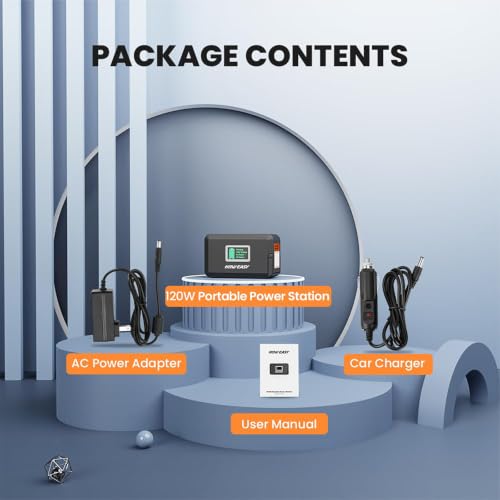
As an Amazon Associate we earn from qualifying purchases. Product prices and availability are accurate as of the date/time indicated.

12.8V 300Ah Self-Heating LiFePO4 Lithium Battery with APP Monitoring | 200A BMS, Rechargeable 3840Wh Energy Battery for Trolling Motor, RV, Marine, Solar, Camping, Backup Power, Off-Grid, etc.
As an Amazon Associate we earn from qualifying purchases. Product prices and availability are accurate as of the date/time indicated.
Ratings are editorial assessments for camping and campervan use, based on the makers’ published capacities, BMS provisions, and warranties, and value at typical prices. Verify the low-temperature charge protection of the exact model for winter use. Prices are typical retail ranges for single batteries.
The Six Camping Lithium Batteries Reviewed
1. Battle Born BB10012 — Best Flagship and Support
Battle Born is the parish’s establishment: the battery the professional converters build around, with a BMS of proven manners, a decade-class warranty answered by a company that answers, and a decade of the community’s hardest use as its testimony. Its price is the flagship’s — three budget citizens for one of these — and its grade is struck in the open knowledge that what the premium buys is certainty: of capacity, of cold behaviour, of the voice on the phone in year seven. For the van that is a home, it remains the recommendation this guide writes first.
2. LiTime 100Ah — Best Value
LiTime is the revolution’s own brand: honest capacity verified by the parish’s testers, a BMS with the low-temperature provisions available in its named variants, and a price that made the lithium conversion a weekend decision rather than a savings plan. Its support is the internet’s rather than the telephone’s, which its price announces; its batteries, across an enormous installed base, have held their promises. For the budget camper converting from lead, it is the value summit and the row most readers of this guide will correctly buy.
3. Dakota Lithium — Best Cold and Warranty
Dakota’s parish is the ice: born in the fishing north, with warranties among the longest in the table and a cold-country reputation its dual-purpose citizens carry into the camping sizes. Its prices are the flagship parish’s; its argument is the winter van and the decade’s certainty in one purchase. The four-season camper whose battery must winter without supervision will find its premium the cheapest line in the conversion.
4. Renogy 100Ah — Best System Ecosystem
Renogy sells the conversion as a system — battery, solar, controllers, chargers, monitors from one house with one support address — and its batteries, in their Bluetooth-monitored variants, are the ecosystem’s competent citizens. The battery alone sits a grade below the leaders on the pure ledger; the system buyer’s arithmetic, where one manual governs the whole electrical parish, is its own argument and often the correct one for the first-time converter.
5. Redodo 100Ah — Best Budget
Redodo’s citizens undercut even the value leader with capacity the testers have found honest and a BMS of the standard provisions — the low-temperature question to be verified on the exact model, as the table’s headnote insists for the whole budget parish. As the second battery of a bank, the trailer’s conversion, and the budget’s floor done properly, it has earned its row; the support is the price’s dialect, and the buyer fluent in forums will be at home.
6. Eco-Worthy 100Ah — Best Rock-Bottom System Price
Eco-Worthy’s batteries arrive in the solar kits that have electrified a generation of sheds, trailers, and budget vans: functional LiFePO4 at the system’s friendliest prices, with the provisions varying by model in ways the buyer must read rather than assume — the low-temperature protection above all. Bought with its exact model’s sheet open, it is the floor’s honest citizen; bought on the headline alone, it is the parish’s tuition. Its grade records both truths at once.
Buying Guide: Converting to Lithium, Once and Properly
Step One: Run the Ledger and Choose the Bank
Total the camp’s daily watt-hours from the loads’ own labels and the parish’s experience — the fridge’s day, the lights’ evening, the fan’s night, the devices’ charges — and size the bank for the autonomy your itineraries actually contain: the weekend’s two nights, the festival’s four, with the solar or driving recharge entered as a citizen rather than a hope. Choose the single battery or the parallelled pair by the total and by the inverter’s appetite against the BMS’s current, and verify the exact model’s low-temperature provision against your coldest camp before the order, in writing, on the maker’s page.
Step Two: Convert the Chargers With the Battery
Budget the conversion whole: the shore charger with a lithium profile, the solar controller set or replaced for lithium’s voltages, the DC-DC charger between the alternator and the bank (the direct alternator connection that lead tolerated can abuse both the lithium bank and the alternator itself), and the monitor that reports the state of charge in percent rather than in the voltage’s riddles. Install with the parish’s electrical manners — fuses at the battery, cables sized to the runs, terminals torqued — or have the conversion inspected by the professional whose trade it is, because a 100Ah lithium bank is a serious store of energy and deserves a serious hour of installation.
Step Three: Keep the Battery’s Decade
Hold the lithium liturgies, which are mercifully few: charge it fully and use it deeply without the lead-era anxieties, since the chemistry prefers the middle of its range for storage and the whole of it for service; never let a charger bully it below freezing — the BMS is the guard, the insulated home is the policy; store it at a partial charge for the long sleeps per the maker’s word; and log its seasons in the van’s notebook, because a battery with a decade’s service ahead of it rewards the keeper who treats it as infrastructure. So ledged, converted, and kept, the chosen battery performs the only service that matters: the fridge hums through the third night, the lights do not dim their confession, and the camp’s electricity stops being a ration — which is the conversion’s whole promise, kept.
How We Selected These Camping Lithium Batteries
We included only real, named, currently sold 12V LiFePO4 batteries whose makers publish capacities, BMS provisions, and warranties, spanning the flagship, value, cold, ecosystem, and budget classes. Prices are typical retail ranges for single 100Ah-class batteries. Grades weight verified capacity, low-temperature protection, and maker support above headline price.
Frequently Asked Questions About Camping Lithium Batteries
Can I just swap a lithium battery for my old lead-acid one?
The battery will physically fit and will work after a fashion — and the fashion is where the conversion’s honesty lives, because three of the old system’s citizens were married to lead’s manners: the charger, whose lead profile will typically underfill the lithium (leaving capacity you paid for permanently unharvested) and may hold it at voltages its years dislike; the alternator, whose direct connection can draw currents from a hungry lithium bank that abuse the alternator and the bank alike, which is why the DC-DC charger is the conversion’s standard citizen; and the battery monitor, whose voltage-based guesses are meaningless against lithium’s flat discharge curve. The correct conversion is therefore the battery plus the chargers’ settings or replacements, as the buying guide budgets — still one of the best-value upgrades in camping, but a system purchase, and the camper who converts it whole converts once.
Why can’t lithium batteries be charged below freezing?
Because of what the cold does to the charge’s chemistry: below 0°C, the lithium ions arriving at the cell’s anode cannot intercalate — settle into the graphite’s structure — at the rate the charger delivers them, and instead plate onto the surface as metallic lithium, a permanent loss of the cell’s working lithium and, accumulated, a growth that can compromise the cell’s safety. Discharging in the cold carries no such mechanism, which is why the doctrine is asymmetric: use the battery in the frost freely, charge it only when it has warmed or when its own defences — the BMS cut-off that refuses, the self-heating that prepares — have done their work. The practical liturgies follow: the battery housed in the van’s insulated interior, the morning’s charge deferred until the day’s driving or sun has warmed its home, and the winter buyer specifying the protection by name. It is the parish’s one rule with a chemistry degree, and it is absolute.
How long will a 100Ah lithium battery run my camping fridge?
Longer than the lead battery it replaces by roughly double, and the arithmetic is the parish’s standard: a modern 12-volt compressor fridge in summer service drinks, in the community’s long experience, in the region of 300 to 600 watt-hours across a day, varying with the heat, the door’s traffic, and the setting’s ambition; the 100Ah lithium’s usable store is close to its full 1,280 watt-hours — against the lead battery’s honest half — so the fridge alone rides for two to four days, and the fridge with the lights, the fan, and the devices for the weekend the battery was bought for. The solar panel’s daily harvest then stretches the same bank toward the indefinite, which is why the ledger in the buying guide sizes the battery for the autonomy between charges rather than for the whole trip. Your fridge’s own label and one measured weekend will refine the figure to your camp’s truth within a trip.
Is the cheapest lithium battery a false economy?
Sometimes — and the parish has learned to tell the two cheap batteries apart, because they look identical in the listings: the honest budget citizen, from the houses this table names, whose capacity the testers verify, whose BMS provisions are published and present, and whose maker can be found next year; and the fiction, whose amp-hours exist only in its title, whose BMS is a rumour, and whose seller is a weather event. The discriminating instruments are all in this guide: the published specifications, the community’s independent tests, the warranty’s terms and the house behind them, and the price’s own testimony — a 100Ah LiFePO4 contains a floor’s worth of cells and electronics, and the listing at half the floor’s price is not a bargain but a confession. Bought from the honest end, the budget lithium battery is the best value in modern camping; bought from the other, it is the most expensive, at any price, because it will be bought twice.
Related guides
- Best Lithium Battery for Camping in 2026: Lithium Battery for Camping, Lithium Camping Batteries, and Best Camping Batteries
- Best Camping Kayaks Under 500 in 2026: 7 Best Camping Kayaks Under 500 Dollars That Are Stable, Roomy, and Built for Camping
- Best Stove for Kayak Camping in 2026: 7 Best Stoves for Kayak Camping That Are Light, Compact, and Boil Fast
- Best Kayaks for Kayak Camping in 2026: 7 Best Kayaks for Kayak Camping With Clear Paddling, Simple Use, and Easy Use for Kayaks for Kayak Camping
More from Amazon
Programs that pair well with the guide above. Offers and eligibility are set by Amazon and may change.
Free shipping on eligible items, Prime Video and more. Eligible new members can start with a free trial.
Start a Prime free trialA Prime membership for ages 18-24 with a trial period. Eligibility is set by Amazon.
See Prime for Young AdultsAudiobooks and podcasts to listen to on the go. Eligible new members can start with a free trial.
Try Audible freeAd-free music streaming. Eligible new subscribers can start with a free trial.
Try Music Unlimited freeAs an Amazon Associate we earn from qualifying purchases.

Write Your Review
No reviews yet. Be the first to share your experience!