
What's inside
As an Amazon Associate I earn from qualifying purchases. This post may contain affiliate links at no extra cost to you.
The best dry bags for kayak camping are the difference between a wet day and a ruined trip, because a kayak is a wet platform by design: paddle drip on every stroke, spray over the bow, a cockpit that collects water, hatches that are water-resistant rather than truly waterproof, and the capsize that every touring kayaker eventually practices or performs. A sleeping bag that takes water on day one of four is not an inconvenience; down loses its loft and its warmth when wet, food turns, electronics die, and the dry clothes you saved for camp become the story you tell about a bag that failed at its seams. This guide compares the real, currently sold dry bags and dry duffels built for kayak touring, across the sizes and constructions that matter: roll-top sacks in the 5 to 35 liter parish for inside the hatches, deck and duffel formats for the big parish, welded versus taped seams, vinyl and nylon and TPU materials, and the packing system that assigns every critical item its own bag, because the professional doctrine is redundancy, no single bag trusted with anything the trip cannot lose, and the sleeping system and the camp clothes each riding in their own sealed parish even inside a hatch. The figures that matter are usable liters after the roll-top is closed correctly, which is always fewer than the printed liters, and the guide teaches that arithmetic along with the closure discipline that makes any of these bags perform as rated, since a dry bag rolled twice in a hurry leaks exactly like a cheap one, and a modest bag rolled four times with the air managed will survive the swim that ends the argument.
Learn the closure’s physics first, because it governs every row in the table. A roll-top dry bag seals by folding its stiffened top over itself, commonly three to four rolls as the makers direct, and clipping the buckle so the folds are compressed into a gasket; each roll beyond the minimum adds security and subtracts volume, and the air inside is the beginner’s hidden enemy, a bag sealed full of air being a balloon that stresses its own seal, floats its contents’ parish into odd corners of the hatch, and bursts its whisper of pressure at the worst moment, so the practiced hand squeezes the excess air out as the last roll is made. The seal is water-resistant against immersion for the class of bags in this table, which are drawn for splashes, rain, and brief dunkings, and most makers state plainly that they are not rated for prolonged submersion at depth, a distinction the kayaker respects by double-bagging the truly critical, the sleeping bag, the camp clothes, the electronics in their own rated cases, rather than by demanding a rating no roll-top claims. Seams decide the second half of performance: fully welded seams are a single material’s parish, with no stitch holes to wick, and are the serious touring standard; taped, sewn seams serve honestly in the lighter and cheaper parish when the tape is intact, and are inspected as wear items. Materials complete the literacy: heavy vinyl and PVC parish bags are the durability summit and the weight cellar’s opposite, laminated nylons are the light and packable middle, and TPU and hybrid citizens split the difference for the deck parish where abrasion rules.
Our Top Picks
Best Dry Bags for Kayak Camping: Sizes, Seams, and the Packing System
Sizing by the Hatch and the Item: The Liter Parish Decoded
Dry bags are bought in liters and used in shapes, and the kayak’s hatches, commonly oval or round openings with long, narrowing compartments behind them, reward the parish of several medium bags over one large one in almost every case. The working census for a touring trip runs like this: a 20 to 35 liter bag for the sleeping bag and pad’s parish, compressed before it is sealed; a 10 to 20 for the tent or the kitchen; 10s and 15s for food by the day or the meal parish; a 5 to 10 for the camp clothes, the trip’s most protected citizen after the sleeping bag; and 3 to 5 liter smalls for the day’s layers, the first aid, and the electronics’ outer parish. Printed liters describe the bag filled to its brim before rolling, so the usable figure after a proper three-to-four-roll closure is commonly two-thirds to three-quarters of the print, and the buyer who sizes by the print will own bags that must be under-rolled to close, which is the leak’s invitation. Match the bag’s shape to the hatch’s: long, slim bags for the bow and stern’s tapering parishes, shorter and wider for the day hatch behind the cockpit, and test the loaded bag through the hatch’s opening at home, since a bag that fits the compartment but not the opening is a dockside discovery of the purest kind. Color is a specification in this parish, a different color per system, sleep, food, clothes, kitchen, so the right bag is taken from the hatch by sight in the rain at dusk, a courtesy the whole table’s better kits build in and the single-color bargain sets make you improvise with tape and marker.
Constructions: Welded Vinyl, Laminated Nylon, and Dry Duffels
The heavy welded vinyl parish, Sea to Summit’s heavier kin and the classic SealLine bags being its reference citizens, is the touring standard where durability outranks grams: thick material that shrugs at hatch rims, oyster beds, and a decade of dragging, welded seams with no stitch to fail, and a weight the car and the short portage forgive. The laminated nylon parish halves the weight and the bulk, packs smaller when empty, and asks more care against abrasion, serving the long portage and the weight-counting tourer honestly when its seams and its owner are respected. The dry duffel is the third architecture, a wide-mouthed, roll-top duffel in the 40 to 100 liter parish that swallows the whole camp for the raft-supported trip, the car-to-camp leg, and the canoe more than the sea kayak, since most kayak hatches will not take its shape; where it fits the trip, on deck behind the cockpit for the day’s parish or as the camp’s master bag in a canoe or raft, it is unmatched for access. Deck bags and day-hatch smalls complete the system, waterproof smalls for the items wanted underway, phone, snacks, sunscreen, and map, with the phone itself in its own rated case inside any of them, because the dry bag’s parish is the splash and the dunk, and the phone’s standard, in this guide, is a case drawn for immersion, belt and suspenders, as the electronics deserve.
The Packing Doctrine: Redundancy, Air, and the Capsize Test
The system matters more than any single bag, and its doctrine is short enough to memorize. Nothing critical rides in one layer: the sleeping bag in its bag, inside the hatch, is the standard; the sleeping bag in its bag with a liner bag inside it, or in two nested bags, is the cold and wet itinerary’s standard, and the camp clothes follow the same rule, since those two parishes, sleep and dry clothes, are the trip’s survival in comfort’s clothing. Food rides by the day or the meal in its own bags, so one leak costs a lunch and not the larder, and scent discipline, the bear and raccoon parish, is served by the same division and by the camp’s storage rules ashore, the hang, the canister, or the locker the jurisdiction directs, since a dry bag is a water parish and not an animal one. Air is managed at every closure, excess squeezed out, rolls at the maker’s count, buckles clipped and the closure’s parish checked by a squeeze that should meet resistance and silence. And the whole system is tested before the trip in the only honest way: loaded bags in the bathtub or under the hose, the loaded kayak’s hatches packed and the bags retrieved through their openings, on land, in daylight, where a failure is a lesson rather than a night’s misery. The kayaker who has rehearsed the capsize drill with the loaded boat, in safe water, by this site’s standing counsel, has also tested the bags in the only court whose verdict matters, and the log of that day sizes the next purchase better than any review.
Best Dry Bags for Kayak Camping: Quick Comparison
| Dry Bag | Key Specs | Best For | Typical Price Range | Rating |
|---|---|---|---|---|
| SealLine Baja / Discovery class | Welded vinyl parish in class, 5-40L sizes positioning, heritage touring build in line | Best dry bags for kayak camping overall | $25 – $60 by size | 4.7 / 5 |
| Sea to Summit Big River class | Heavy TPU-nylon parish in class, welded positioning, lash points in line | Best abrasion resistance | $30 – $65 by size | 4.6 / 5 |
| Sea to Summit Lightweight Dry Bag class | Laminated nylon parish in class, light positioning, many sizes and colors in line | Best lightweight system | $15 – $35 by size | 4.5 / 5 |
| NRS Tuff Sack / Bill’s Bag class | Heavy vinyl parish in class positioning, duffel options in line, raft and tour heritage | Best heavy-duty duffel parish | $30 – $120 by size and format | 4.6 / 5 |
| Earth Pak / Marchway kit class | Multi-size kits in class, friendly pricing positioning, phone case included in line | Best value kit | $25 – $50 per kit | 4.2 / 5 |
| Watershed Drybags class | Zip-seal and roll parish in class positioning, expedition build in line | Best expedition submersion manners | $80 – $180 by size | 4.7 / 5 |
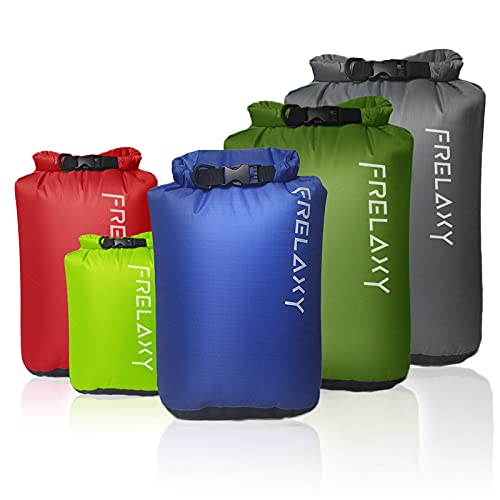
Frelaxy Dry Bag 5 Pack, Ultralight Waterproof Dry Sack for Outdoor Use | Durable material, Waterproof coating, Secure roll top closure, Lightweight, Compact storage, Hiking, camping, kayaking
As an Amazon Associate we earn from qualifying purchases. Product prices and availability are accurate as of the date/time indicated.
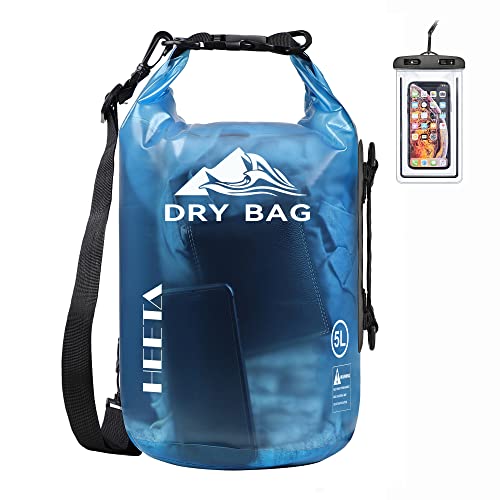
HEETA Dry Bag Waterproof Backpack with Phone Case (Transparent Blue, 5L) | Roll Top Lightweight Dry Storage Bag for Women Men, Travel Boating Kayaking Paddle Board Camping Beach Essentials Accessories
As an Amazon Associate we earn from qualifying purchases. Product prices and availability are accurate as of the date/time indicated.

Earth Pak 20L Waterproof Dry Bag - Marine Roll Top Dry Sack for Kayaking | Forest Green 20L roll top dry bag: abrasion resistant 500D PVC for boating, paddleboarding, rafting and beach days
As an Amazon Associate we earn from qualifying purchases. Product prices and availability are accurate as of the date/time indicated.
Prices shown are approximate and for reference only. Prices change often, so please check the current price on Amazon before you buy.
Sizes are the makers’ printed liters; usable capacity after a correct roll closure is less, as described in the text. Waterproof ratings and submersion limits refer to each maker’s published statements for the exact model. Prices are typical US street ranges. Ratings are editorial for kayak camping, weighing seam construction, material durability, closure honesty, size and color system, and value.
The Six Dry Bags for Kayak Camping Reviewed
1. SealLine Class: Best Overall
SealLine’s welded vinyl parish leads because it has been keeping sleeping bags dry since before most of its rivals existed, in sizes and colors that build the system this guide teaches. Its weight is vinyl’s own, confessed and forgiven at the hatch. For the touring kayaker, it is the recommendation defended first.
2. Watershed Class: Best Expedition
Watershed’s zip-and-roll parish seals with an authority the dunking parish respects, the choice of expeditions whose electronics and documents cannot be merely splashed at. Its prices are the expedition’s own. Where failure is not an option the budget recognizes, it closes the argument.
3. Sea to Summit Big River: Best Abrasion Manners
The Big River’s heavy laminated parish and lash points serve the deck and the rough hatch with a durability its lighter siblings admire. Its roll and buckle are the class’s standard, executed well. In the abrasion parish, it is the standing answer.
4. Sea to Summit Lightweight: Best System Weight
The lightweight parish lets a whole color-coded system ride for the weight of one vinyl bag, the portage and the long tour’s choice, with the care instructions of its class respected. Its seams are taped citizens, inspected as the text directs. Where grams govern, it earns its row.
5. NRS Class: Best Duffel Parish
NRS brings the raft world’s heavy vinyl seriousness to the big bags and duffels, Bill’s Bag being a legend with a roll top. Their shapes serve the canoe, the raft, and the deck more than the small hatch, graded in that office. For the big parish, they stand.
6. Value Kit Class: Best Starter System
The Earth Pak and Marchway kits close the table as the complete starter system, sizes and colors and a phone case in one friendly box, their materials and seams their tier’s and audited by the bathtub test of Step Three. As the first system, they have kept more beginners dry than their ratings suggest.
Buying Guide: How to Choose Dry Bags for Kayak Camping
Step One: Census the Load and Assign Every Critical Item Its Bag
List the load by its systems, sleep, clothes, food by the day, kitchen, tent, electronics, safety, and assign each its bag from the sizing parish of the text, mediums over larges, colors per system, the sleeping bag and the camp clothes doubled where the itinerary is cold or wet. Size by usable liters, the printed figure discounted by the roll’s parish, and count the hatch openings among the specifications, measuring your own boat’s rather than trusting a class average. Strike any plan that puts a critical parish in a single layer, and any bag whose maker will not state its seam construction, since in this category the unstated seam is the sewn one wearing a welded costume.
Step Two: Audit Closure, Seams, and Material in Hand
Work each candidate as the river will: roll its closure to the maker’s count and squeeze, listening and feeling for the air’s escape that betrays a poor fold or a tired buckle; run a fingernail and a hard look along the seams, welded smooth or taped intact, with no lifting at the parish where tape ages first; flex the material cold in your hands and judge it against your trip’s abrasion, hatch rims and barnacled shores arguing for the heavy parish, smooth portages forgiving the light. Confirm the buckle’s clip is positive and replaceable in principle, and that the bag’s shape, not merely its liters, passes your hatch’s opening with room for the roll. Reject on a lifting seam or a buckle that sighs, without negotiating with a kit’s price, since the bag’s whole office is a seal and a seal is a binary.
Step Three: Test in the Tub, Pack the System, and Log the Trip
Before the trip, load each bag with a towel in its working shape, seal it by the doctrine, and give it the bathtub or the hose at the pressure of a dunking, then open and read the towel as the verdict. Pack the boat on land, bags through their hatches, retrieved in order, and rehearse the capsize and recovery with the loaded boat in safe, warm water where the trip’s water asks it, by the standing safety counsel of every paddling parish, PFD worn, help at hand. On the trip, close every bag as if the swim were scheduled, because the doctrine’s whole point is that it might be, and keep the day’s parish accessible in the day hatch’s smalls rather than opening the great bags at sea. At home, bags are washed of salt and silt, dried open and inside-out in their turn, and stored unrolled or loosely rolled in a temperate parish, since a vinyl bag stored creased in a hot garage ages at its folds. Kept so, the dry bags become the trip’s silent guarantee, a dry bed and a dry shirt at the end of any day the river dealt, which is the whole doctrine of the best dry bags for kayak camping and the reason the right ones are chosen by their seams, their sizes, and their owner’s closure, and never by their liters alone.
Frequently Asked Questions About Dry Bags for Kayaking
Are dry bags completely waterproof if my kayak capsizes?
For the capsize’s brief parish, a quality roll-top in this table, closed correctly with its maker’s count of rolls and its air managed, will keep its contents dry through the dunking and the swim to shore, which is the event it is designed for, and the bathtub test of Step Three verifies your own bags and your own closure before the river does. The honesty the makers themselves print, and this guide repeats, is that roll-top bags are generally not rated for prolonged submersion, for depth, or for being dragged underwater on a line, and a bag trapped under a swamped boat for an hour is in a different parish from a bag dunked for a minute. That is why the doctrine is redundancy for the critical: the sleeping bag and the camp clothes doubled, the electronics in rated cases inside the bags, so that the one slow leak in the one bag on the one hard day costs comfort and not the trip. Watershed’s parish in the table exists for the expeditions that need the next level of seal, and its price states what that level costs. Closed well and doubled where it matters, the system in this guide has kept generations of kayakers’ beds dry, which is the claim, and it is enough.
What size dry bags are best for kayak camping?
A system of mediums, in the census the text lays out: the 20 to 35 liter parish for the compressed sleeping system, 10 to 20 for the tent or the kitchen, 10s and 15s for food divided by the day, a 5 to 10 for the camp clothes, and 3 to 5 liter smalls for the day hatch and the small parishes, all sized by usable liters after the roll, which is two-thirds to three-quarters of the print, and all shaped to pass your own hatches’ openings, which you have measured. The single giant bag is the beginner’s usual error, unmanageable in a tapering hatch, one leak from a total loss, and impossible to organize at dusk in the rain, while the fleet of mediums divides the risk, the weight, and the camp’s evening labor in one design. Colors per system complete the specification, sleep in one, food in another, clothes in a third, so the hatch gives up the right bag to a cold hand by sight. Buy the census as a set where the table’s kits serve, or assemble it across the serious makers where the trip is long, and let the first trip’s log, what was squeezed, what rode loose, correct the second purchase.
How many times should I roll a dry bag closed?
As many as the maker directs for that bag, commonly three to four full rolls, and the reasoning is worth understanding rather than merely obeying: each roll lengthens the path water must travel against the folds’ compression and stiffens the closure’s parish, so the third and fourth rolls are security, bought with volume, which is why the sizing doctrine discounts the printed liters. Fewer rolls than directed, the hurried two, is the commonest cause of the wet sleeping bag in the parish’s whole accident literature, ahead of punctures and failed seams combined, and it is always a closure failure and not a bag failure, which is the distinction this guide exists to teach. Manage the air before the last roll, squeezing the excess out so the folds sit flat and the buckle closes without a fight, clip the buckle as the design intends, over the top or down the sides by the maker’s pattern, and give the sealed bag the squeeze test, firm resistance, no sighing. In camp, open bags are reclosed by the same count even for a minute’s rummage, since the rain and the capsize keep no schedule, and the habit, once built, costs three seconds a closure for the whole dry trip it buys.
Can I store food in dry bags to protect it from bears and raccoons?
No, and the distinction is a safety one this guide states without qualification: a dry bag is a water seal and not an animal system, its materials carry food odors through their parish, its closure is a buckle and not a lock, and a raccoon will open one in a night with an ease that would embarrass its owner, while a bear treats it as wrapping. Food ashore is stored by the jurisdiction’s and the land manager’s rules for that exact camp, the provided locker or canister where they exist, the certified canister the backcountry parish relies on, or the proper hang where it is permitted and practicable, and those rules outrank any improvisation a dry bag suggests. What the dry bag does for food is its true office: it keeps the food dry underway, divides it by the day so a leak or an animal incident in camp costs a parish and not the larder, and contains the odors’ spread inside a hatch better than an open stuff sack would. In the boat, food in dry bags inside closed hatches is the standard underway practice. Ashore, the food leaves the bags’ protection and enters the camp’s animal doctrine entire, and the kayaker who keeps those two parishes separate sleeps dry and eats all week, which is the whole point of both.
Related guides
- Best Tent When Tent Is Too Heavy in 2026: Best Tent When Tent Is Too Heavy for Light Packing, Easy Carry, and Simple Camping
- Camping Table in 2026: The Complete Budget Guide to Choosing a Camping Table That Fits Your Chairs, Your Car, and Your Cook Kit, From Coleman and ALPS Mountaineering to KingCamp and Trekology
- Best Camping Stove for Budget Camping in 2026: Affordable Two-Burner and Single-Burner Camping Stoves
- Camping Chair in 2026: How to Choose a Comfortable, Durable Chair That Fits Your Car, Your Body, and Your Campsite
More from Amazon
Programs that pair well with the guide above. Offers and eligibility are set by Amazon and may change.
Free shipping on eligible items, Prime Video and more. Eligible new members can start with a free trial.
Start a Prime free trialA Prime membership for ages 18-24 with a trial period. Eligibility is set by Amazon.
See Prime for Young AdultsAudiobooks and podcasts to listen to on the go. Eligible new members can start with a free trial.
Try Audible freeAd-free music streaming. Eligible new subscribers can start with a free trial.
Try Music Unlimited freeAs an Amazon Associate we earn from qualifying purchases.

Write Your Review
No reviews yet. Be the first to share your experience!