
What's inside
As an Amazon Associate I earn from qualifying purchases. This post may contain affiliate links at no extra cost to you.
The best lantern rechargeable batteries decision sounds like a small purchase and behaves like a system one, because a camping lantern is only ever as good as the cells inside it on the third night of a trip. This keyword deserves a translation before the table: the lanterns campers own are powered in three ways, by removable rechargeable cells, most seriously the 18650 lithium cell and the humble AA in nickel-metal hydride, by built-in rechargeable packs charged over USB, and by disposable batteries whose ongoing cost and landfill afterlife are the budget camper’s quiet tax. So this guide compares the real, currently sold rechargeable power options, the cells, the chargers, and the benchmark lanterns whose built-in systems set the standard, graded for the budget camper’s actual tests: cost per season of camping, runtime honesty, cold-weather behavior, safety, and the discipline of a power kit that works for the lantern, the headlamp, and the flashlight as one parish. The throughline is the budget gospel this site preaches in every category: buy the rechargeable system once, sized to the gear you own, and stop renting your light from the disposable battery rack at the gas station, one overpriced four-pack at a time.
Understand the chemistries as three citizens with different characters. The 18650 lithium-ion cell is the lantern world’s serious power: high capacity in a small cylinder, a flat discharge that keeps a lantern bright rather than fading by degrees, rechargeability measured in hundreds of cycles, and a demand for respect, bought from reputable makers, charged on a proper charger, never carried loose in a pocket with keys, because its energy density is the whole point and the whole caution. The AA NiMH rechargeable, the eneloop parish, is the democrat: it fits the lanterns, headlamps, radios, and remotes of an entire household, leaks nothing, survives the drawer, and asks only a smart charger and a place in the pre-trip routine. The built-in USB pack is the convenience candidate, no cells to manage and a phone’s cable to charge it, with the lantern itself as a single point of failure whose battery ages on the lantern’s schedule. Cold grades them all without mercy: lithium chemistries sag in the frost and must never be charged below freezing, a rule this site states wherever batteries and tents meet, while NiMH loses capacity more gracefully and forgives the winter car camp better. The table follows, read against your own lantern fleet’s battery doors.
Our Top Picks
Best Lantern Rechargeable Batteries: 18650 vs AA NiMH vs Built-In
The 18650 Parish: Serious Cells, Serious Rules
Grade an 18650 purchase on its maker before its numbers, because this cell size is the most counterfeited object in the battery world and the capacity printed on a no-name wrapper is a genre of fiction. The honest cells come from the major manufacturers and their reputable resellers, carry capacities in the physically plausible range for the size, and are sold as protected or unprotected with the distinction explained: the protected cell carries a small circuit guarding against over-discharge and shorts, the right choice for lanterns and casual use, while unprotected cells serve the flashlight hobby’s special purposes and its expertise. Match the cell to the lantern’s manual, flat top or button top as the contacts demand, and charge on a real charger that terminates properly and shows its work, the four-bay smart charger being the parish’s standard furniture. Handled so, a set of quality 18650s powers a lantern fleet for years at a per-night cost that rounds to nothing, which is the budget camper’s definition of a solved problem.
The AA NiMH Parish: One Battery for the Whole Camp
The AA rechargeable’s argument is universality. The lantern takes them, the headlamp takes them, the weather radio and the kid’s flashlight and the camp speaker’s remote take them, and a single charger and a labeled case of charged cells becomes the whole camp’s power department, spares interchangeable in the dark by feel. The eneloop class’s low self-discharge is its signature virtue: charged in spring, still ready in autumn, which makes it the emergency kit’s citizen as well as the camper’s. Its limits are honest ones, lower capacity per cell than lithium and a lantern that dims as the cells fade rather than holding a plateau, and the buying guide’s system advice accounts for both: carry cells in matched sets, rotate them, and let the lantern count per trip, not hope, decide how many sets travel. For the family fleet of mixed AA gear, this parish is not the compromise. It is the architecture.
Built-In USB Lanterns: The Benchmark and the Caveat
The built-in lanterns earn their rows as the standard the cell systems are judged against: charge from the car or the power bank, no doors, no cells, no charger to forget, with runtimes that the better makers state honestly by mode. Their caveat is actuarial: the pack inside ages with every cycle and every hot garage summer, it cannot be swapped at a dark campsite, and the lantern’s life is the battery’s life, which for a budget purchase should be weighed against a cell lantern whose power is renewed for the price of a pizza every few years. The wise fleet is commonly a marriage, a built-in lantern as the table’s convenience and a cell lantern as the trip’s workhorse, and this guide’s table is built to equip both halves. What no parish survives is the disposable habit: a season of alkaline four-packs costs a real lantern, leaks in the drawer besides, and is the one option this comparison exists to retire.
Best Lantern Rechargeable Batteries: Quick Comparison
| Rechargeable Power Option | Key Specs | Best For | Typical Price Range | Rating |
|---|---|---|---|---|
| Panasonic eneloop AA (4-pack) + smart charger | NiMH AA in class, low self-discharge positioning, up to ~2000 mAh class per cell | Best lantern rechargeable batteries overall for AA lanterns | $18 – $28 per 4-pack; charger $20 – $35 | 4.8 / 5 |
| Protected 18650 cells, major-maker class (2-pack) | Li-ion 18650 in class, protected circuit positioning, ~3000-3500 mAh class | Best for 18650 lanterns and flashlights | $16 – $26 per pair | 4.7 / 5 |
| Nitecore / XTAR 4-bay smart charger class | Multi-chemistry charger in class, per-bay display positioning, Li-ion and NiMH | Best charger for a mixed fleet | $25 – $45 | 4.7 / 5 |
| Goal Zero Lighthouse 600 class lantern | Built-in USB rechargeable in class, hand-crank backup positioning, high output | Best built-in benchmark lantern | $60 – $80 | 4.5 / 5 |
| Black Diamond Apollo / Moji class lanterns | AA or rechargeable variants in line, compact positioning, trusted maker | Best cell-powered lantern benchmark | $30 – $65 by model | 4.5 / 5 |
| EBL AA rechargeable value packs | NiMH AA in class, high-count value positioning, charger bundles in line | Best bulk value for big families | $16 – $30 by count | 4.3 / 5 |
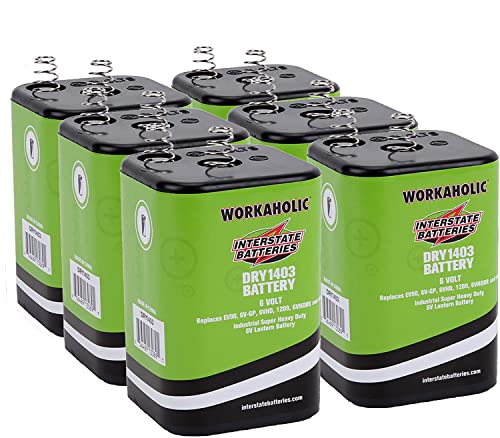
Interstate Batteries 6V HD Lantern Flashlight Battery (6-Pack) 6 Volt 7000 mAH Square Shape Beam Light (Spring Terminals) Camping, Hiking, Household, Lamps, Outdoors (DRY1403)
As an Amazon Associate we earn from qualifying purchases. Product prices and availability are accurate as of the date/time indicated.
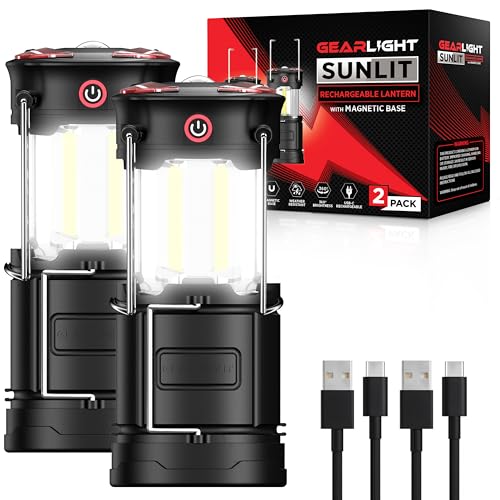
GearLight Rechargeable Camping Lantern - 2 Portable LED Lanterns with Magnetic Base and Foldable Hook for Emergency Use or Campsites, Essential Hurricane Survival Kit - Black


As an Amazon Associate we earn from qualifying purchases. Product prices and availability are accurate as of the date/time indicated.

Lepro 1000LM LED Camping Lantern Rechargeable, 4400mAh, 4 Light Modes | Tent Light, Camping Essentials, Waterproof Lantern Flashlight for Camping, Emergency Light, Power Outages, USB Cable Included
As an Amazon Associate we earn from qualifying purchases. Product prices and availability are accurate as of the date/time indicated.
Prices shown are approximate and for reference only. Prices change often, so please check the current price on Amazon before you buy.
Capacities refer to the makers’ published figures for the class; buy cells from reputable sellers, as counterfeits are common. Prices are typical US street ranges. Ratings are editorial for budget camping, weighing cost per season, runtime honesty, safety, cold behavior, and system value.
The Six Rechargeable Lantern Power Options Reviewed
1. Panasonic eneloop AA: Best Overall System
The eneloop leads the table as it leads the world’s drawer of rechargeable AAs: capacities that survive their advertised cycles, self-discharge so slow the charged set waits a season without complaint, and a consistency that makes runtime predictable, which is the camper’s real luxury. Paired with a smart charger, it is the AA fleet’s foundation. For most lantern owners, this purchase ends the battery question.
2. Protected 18650 Cells: Best for Serious Lanterns
The major-maker protected 18650s power the high-output lantern parish at its full brightness for its full night, hundreds of cycles deep, at a per-trip cost beneath notice. Their grade carries the parish’s rules in its pocket: reputable sellers only, proper charger, no loose carry, no charging below freezing. For the 18650 lantern owner, they are not an option but the specification.
3. Nitecore / XTAR 4-Bay Charger Class: Best Mixed-Fleet Charger
The smart four-bay charger is the system’s brain: both chemistries charged correctly side by side, each bay’s progress displayed, termination handled by electronics rather than by the camper’s memory. It converts a drawer of cells into a managed fleet. Every multi-device camp should own exactly one, and this class is where to buy it.
4. Goal Zero Lighthouse 600 Class: Best Built-In Benchmark
The Lighthouse represents the built-in parish at its strongest: serious output, USB charging, and a hand crank whose existence redeems the format’s dead-battery cliff for the emergency-minded. Its price is the premium parish’s. As the convenience half of a two-lantern fleet, it sets the standard the others are measured by.
5. Black Diamond Lantern Class: Best Cell-Powered Benchmark
Black Diamond’s lanterns show why the cell format endures: compact, trustworthy light whose power the owner renews with fresh cells at midnight in the rain, in AA or rechargeable variants across the line. They are the workhorse half of the model fleet. Graded with the eneloops of the first row, they are the budget camper’s reference system.
6. EBL AA Value Packs: Best Bulk Value
EBL’s high-count packs serve the big family’s arithmetic, many lanterns, many headlamps, many children, at per-cell prices the leaders cannot meet, with performance a tier below the eneloop standard and honesty requiring the note. For equipping a troop, a reunion, or a fleet of loaner lanterns, the value is real. Buy the leaders for your own lantern; buy these for the crowd.
Buying Guide: How to Build a Rechargeable Lantern Power System
Step One: Census the Fleet by Battery Door
Open every lantern, headlamp, and flashlight you own and write its diet: AA count, 18650, built-in, or the shameful miscellaneous. The census elects the system: an AA-majority fleet buys eneloops and the smart charger; an 18650 lantern buys its protected cells from a reputable seller and the same charger, which serves both; a built-in lantern joins the fleet as the convenience citizen with a power bank assigned to it. Retire or gift the odd-format stragglers, because a power system with five exceptions is not a system, and let the disposables leave the house in the same week, their drawer space reassigned to the labeled case of charged cells that replaces them.
Step Two: Buy Cells in Matched Sets and a Case With a System
Purchase cells in the sets the devices eat, four AAs for the big lantern bought together, charged together, and married for life with a dot of paint or a labeled slot in the case, since matched cells age together and a mixed set dies at its weakest member’s pace. The case lives in one place, charged cells on one side, spent on the other, and the pre-trip ritual is fixed: every device loaded with a charged set, one full spare set per device class in the case, the charger in the car kit for the long trips. For 18650s add the parish’s furniture, a plastic cell case for every spare, since a loose lithium cell in a bag of metal gear is the one genuinely unsafe object in this entire article.
Step Three: Charge by the Rules, Store by the Season
Charge on the smart charger and by its lights, never overnight on a dumb wall wart as a habit, never lithium below freezing, the cold cells warmed in the tent or the jacket before they meet the charger, and never a cell that arrives swollen, torn in its wrapper, or hot in service, which is retired to a battery recycling bin with its terminals taped. Store the fleet for the off-season at partial charge for lithium, topped for NiMH, in the cool drawer rather than the hot garage, and run one mid-winter charge so spring’s first trip inherits a living system. Kept so, the rechargeable fleet’s economics compound quietly: season after season of light at the cost of the first purchase, no gas-station battery rack, no midnight dimming, no alkaline in the landfill, which is the budget camper’s whole philosophy expressed in the smallest possible object, a battery that comes back.
Frequently Asked Questions About Lantern Rechargeable Batteries
Are rechargeable batteries really cheaper for camping lanterns?
Decisively, and the arithmetic is not close: a family lantern burning disposables through a season of weekends consumes several four-packs at gas-station and grocery prices, commonly exceeding the full cost of an eneloop set and its share of a charger in the first season alone, after which the rechargeables’ cost per trip rounds to the electricity, which is to say to nothing. The rechargeables then serve for years, hundreds of cycles for the lithium cells and a thousand-plus claims in the NiMH class, while the disposable habit also pays in kind: the lantern that dims on night three, the leak that ruins a battery compartment over the winter, the packaging in the trash bag. The only parish where disposables still argue is the emergency kit that must sit untouched for a decade, and even there the low-self-discharge rechargeables and a dated annual check have closed most of the gap. For anyone who camps more than twice a year, the question answers itself by the second season.
Can I use rechargeable AAs in a lantern made for alkaline batteries?
Almost always yes, with one honest nuance to understand rather than fear: a NiMH cell delivers about 1.2 volts against an alkaline’s 1.5, so a simple lantern may run a touch less brightly at the very start, then hold its level far longer, since the rechargeable’s discharge curve is flat where the alkaline’s fades from the first hour, and most campers experience the trade as brighter light for more of the night, not less. Modern lanterns with regulated drivers erase the difference entirely. The exceptions are few and specific, a device whose maker forbids rechargeables in its manual governs, and very old electronics occasionally misread the lower voltage as a dying battery. Test the pairing at home across one full discharge before the trip, which is this guide’s standing rule for every new power combination, and the campsite will hold no surprises the kitchen table did not preview.
Why do my lantern batteries die so fast in cold weather?
Because battery chemistry is a reaction, and reactions slow in the cold, an effect every chemistry in this article suffers in its own degree: lithium cells sag in voltage and deliver a fraction of their summer capacity near freezing, NiMH loses capacity more gracefully, and disposables fare worst of all. The camper’s countermeasures are thermal rather than financial: the lantern and its spare cells sleep in the tent’s warmth rather than the car’s frost, spares ride in an inside pocket on the walk back from the lake, a dim lantern is first warmed before it is condemned, since a cell that reads dead at twenty degrees commonly revives at fifty. And the season’s absolute rule, repeated from the text because it protects both the cells and the camper: never charge a lithium cell below freezing, which damages it permanently and invisibly; warm first, charge second, and let the winter kit be planned around the patience that requires.
How many spare batteries should I pack for a camping trip?
By the census arithmetic of Step Two rather than by anxiety: one full spare set per device class, meaning a complete change for the lantern, a complete change for the headlamps pooled, and the charger’s presence on any trip past four nights or any trip with a vehicle to charge from. The reasoning is the rechargeable system’s own: a charged eneloop set in the case is a known quantity, tested and rotated, where the disposable habit’s spares were a guess bought at a markup. Families add one extra lantern set for the children’s devices, whose switches are operated by smaller, more enthusiastic hands and whose definition of off is negotiable. Weighed honestly, the whole spare fleet for a family weekend is a case the size of a paperback, which is the system’s final argument: the power for a trip’s every light, carried in a coat pocket, bought once, and done.
Related guides
- Best Weatherproof Sleeping Pad for Families in 2026: Durable, Water-Resistant Camping Pads for Kids and Adults
- Best Small Headlamp for Backpacking in 2026: 7 Small Headlamps That Offer Bright Light, Light Weight, and Reliable Performance for Backpacking
- Best Tent When Tent Is Too Heavy in 2026: Best Tent When Tent Is Too Heavy for Light Packing, Easy Carry, and Simple Camping
- Camping Table in 2026: The Complete Budget Guide to Choosing a Camping Table That Fits Your Chairs, Your Car, and Your Cook Kit, From Coleman and ALPS Mountaineering to KingCamp and Trekology
More from Amazon
Programs that pair well with the guide above. Offers and eligibility are set by Amazon and may change.
Free shipping on eligible items, Prime Video and more. Eligible new members can start with a free trial.
Start a Prime free trialA Prime membership for ages 18-24 with a trial period. Eligibility is set by Amazon.
See Prime for Young AdultsAudiobooks and podcasts to listen to on the go. Eligible new members can start with a free trial.
Try Audible freeAd-free music streaming. Eligible new subscribers can start with a free trial.
Try Music Unlimited freeAs an Amazon Associate we earn from qualifying purchases.

Write Your Review
No reviews yet. Be the first to share your experience!