
What's inside
As an Amazon Associate I earn from qualifying purchases. This post may contain affiliate links at no extra cost to you.
The best lithium battery for camping is the power source sized honestly to your camp’s real load, a phone-and-lantern weekend, a CPAP night, a fridge’s three days, or a family’s small power station, in the chemistry and the package that suit how you travel. For most campers that means a lithium iron phosphate power station from EcoFlow, Jackery, Bluetti, Anker SOLIX, or Goal Zero, because LiFePO4 in the makers’ stated chemistry trades a little energy density for a long cycle life, stable behaviour, and years of weekends; for the camper building a van, a trailer, or a boat’s house system, it means a Dakota Lithium or similar LiFePO4 battery in its stated form, wired into a system someone competent has planned. This guide compares real, currently sold lithium camping power from those makers, explains capacity in watt-hours without the marketing fog, and gives the charging, cold-weather, and storage routine that keeps a lithium battery an asset rather than an expensive paperweight. Use lithium power safely: charge only with the chargers and cables the maker states, on a hard, dry surface, never inside a sealed tent while you sleep and never unattended in a hot vehicle, keep batteries and stations dry and away from stoves, fires, and fuel, never use a swollen, punctured, or water-damaged battery, transport and recycle lithium batteries by the carriers’ and your local stated rules, and follow your campsite’s generator and quiet-hours rules, noting that a silent battery is welcome in many places a generator is not, which is one of its genuine virtues.
Camping power fails by arithmetic more often than by breakdown, so this guide does its sums in the open. Capacity is stated in watt-hours in the makers’ terms, and a watt-hour is one watt drawn for one hour, which makes a camp’s budget a simple shopping list once each device’s appetite is known in its own stated terms: a phone’s charge in the region of fifteen watt-hours from empty, a lantern’s evening a handful, a laptop’s charge several tens, a CPAP’s night, without a heated humidifier in its stated patterns, in the low hundreds, and a 12-volt camping fridge’s day in the several hundreds depending on the weather and the fridge’s own stated consumption. Set the list against a station’s stated capacity with two honest deductions: no system delivers its last watt-hour to a device, since conversion losses in the inverters and circuits in the makers’ stated designs take their share, commonly planned at a fifth in a careful budget; and cold takes its own share, because lithium chemistry slows in low temperatures and a station that sleeps in a freezing car delivers a shorter weekend than its summer self. The camper who budgets with those deductions buys one size up from the catalogue’s optimism and is the camper whose fridge is still cold on day three. Chemistry is the second sum. LiFePO4, lithium iron phosphate in the makers’ stated terms, is the camping chemistry of this generation for its stated cycle lives counted in thousands, its thermal stability, and its tolerance of being stored and used hard across years, at the cost of more weight per watt-hour than the lithium-ion chemistries in the lighter stations in the table, which remain the backpacker’s and the weight-counter’s honest choice in their stated patterns. This guide rates on delivered, budgeted capacity, on charging speed and options, car, solar, and mains in the makers’ stated patterns, on weight per useful watt-hour, and on the maker’s support behind a product that should serve a decade of summers.
Prices are typical retail ranges and vary by capacity within each line, by retailer, region, and the frequent promotions of this category. Capacity in watt-hours, chemistry, output ports and stated wattages, charging inputs and times in the makers’ stated conditions, cycle life in the makers’ stated terms, and weights are each maker’s stated details for the current version; a line name spans several sizes, so the figures that matter are the exact model’s, confirmed in its listing.
Our Top Picks
What Makes the Best Lithium Battery for Camping Different
Power Stations vs Bare Batteries: Two Products Sharing a Chemistry
The keyword names one thing and the market sells two, and confusing them is the category’s most expensive beginner error. A portable power station is a battery that has been given a household: a case, a battery management system in the maker’s stated design, an inverter for mains-style outlets in the stated wattage, USB and 12-volt outputs in the stated patterns, a display that reports the budget this guide teaches, and charging inputs for mains, car, and solar in the stated patterns, so that a camper with no electrical knowledge plugs in a fridge, a phone, and a lantern and goes camping. A bare LiFePO4 battery, the Dakota Lithium pattern in this table, is a component: a superb store of energy in its stated capacity and chemistry that delivers 12-volt power to a system the owner or their installer builds around it, with its own charger, fusing, wiring, and outlets chosen and fitted competently, in a van, a trailer, a boat, or a cabin. Neither is better; they are answers to different campers, and the questions that separate them are plain. Do you want to plug things in tonight, or build a system this spring? Does the power travel in a car boot to a tent, or live permanently in a vehicle? Is there a competent pair of hands, yours or a professional’s, for terminals, fuses, and cable sizes in the stated patterns a bare battery’s maker directs? A camper who answers honestly buys a station for the tent and the bare battery for the build, and the camper who buys a bare battery for a tent discovers, at dusk, that energy without outlets is a philosophy. This guide’s table therefore rates the two schools inside their own jobs and flags, in every row, which job the product is for.
Capacity Classes for Real Camps: Phones, CPAP, Fridges, and Families
Buy capacity by the load’s class, and let the classes be concrete. The light class, stations in the few-hundred watt-hour class in the makers’ stated ranges, serves the phone, lantern, camera, and speaker weekend, the tent’s small electrics with margin, and it is the class a backpacker-adjacent car camper should start from, because every watt-hour is carried twice, once in money and once in kilograms. The middle class, in the region of five hundred to a thousand watt-hours in the stated ranges, is the workhorse of family and fridge camping: a 12-volt fridge across a long weekend with the budget’s deductions applied, a CPAP for several nights in its unheated pattern, laptops and a small projector for a film night, and it is where this guide expects most readers to land, bought from a maker whose next size up exists when the camp grows. The large class, a thousand watt-hours and beyond in the stated ranges, serves the van weekend, the multi-device family base, the work-from-camp laptop economy, and the medical load that must not fail, and it begins to argue for wheels, a vehicle, or a permanent home in a trailer rather than a walk from a car park. CPAP deserves its own sentence because it is the load that sells more stations than any advertisement: read your machine’s stated power and its maker’s stated guidance for battery use, turn the heated humidifier and heated tube off in their stated settings for battery nights unless your clinician directs otherwise, since heat is the night’s largest cost by far, and test the whole arrangement at home for a full night before it is trusted in a forest, because a medical load is the one budget in this guide with no humour in it. In every class, outputs matter beside capacity: the fridge wants a regulated 12-volt output in the maker’s stated pattern, the laptop wants the USB-C wattage its own maker states, and a station whose ports match your devices’ stated appetites beats a larger station that needs a tangle of adapters to feed them.
Charging in the Field: Mains, Car, and Solar Without the Fairy Tales
A lithium battery’s weekend is decided by its refills, and each refill has an honest rate. Mains charging before the trip is the foundation and the fastest in the makers’ stated patterns, with the current generation of stations refilling in times their makers state in hours rather than the overnight vigils of their ancestors, a virtue that should be verified in the exact model’s stated terms because it transforms the Friday-evening departure. Car charging in the stated patterns is a top-up, not a refill: a vehicle’s 12-volt outlet in its stated limits delivers a modest wattage, so a driving day restores a phone-and-lantern budget handsomely and a fridge budget partially, and the camper who plans a tour around car charging alone should do the arithmetic in the open, driving hours multiplied by the stated input, against the nights’ consumption. Solar is the third refill and the most romanticised: a panel delivers its stated wattage only in strong, direct, well-angled sun in its maker’s stated conditions, and a real camp’s day of trees, weather, angles, and a panel propped on a cool box returns a fraction of the nameplate across the day, which a careful budget plans at a third to a half in good conditions and treats everything above as a gift. Solar therefore extends a middle-class station across a long static camp beautifully and rescues a fridge budget only when the panel is sized generously in its stated watts and sited like it matters, moved with the sun, kept clean, and cabled as its maker directs. The charging disciplines close the section: charge in the open air of the camp on a hard surface, never inside a sleeping tent; keep connectors dry and sand-free, since a beach camp’s grit is a port’s slow enemy; and arrive home with the battery neither full nor empty for storage, in the state its maker’s stated guidance directs, because a lithium battery’s decade is written in its storage habits more than in its adventures.
Quick Comparison: Best Lithium Battery for Camping Models
| Model | Capacity Class, Chemistry and Key Specs in Maker’s Terms | Best For | Typical Price Range | Rating |
|---|---|---|---|---|
| EcoFlow RIVER 2 and DELTA 2 class | LiFePO4 stations in maker’s line terms, capacities stated | Best lithium battery for camping overall | $180 – $900 by capacity | 4.6 / 5 |
| Anker SOLIX C800 and C1000 class | LiFePO4 stations in maker’s line terms stated | Best lithium battery for camping for families | $400 – $900 by capacity | 4.5 / 5 |
| Bluetti EB3A and AC180 class | LiFePO4 stations in maker’s line terms stated | Best lithium battery for camping for fast charging | $200 – $650 by capacity | 4.4 / 5 |
| Jackery Explorer 300 Plus and 1000 class | Stations in maker’s line terms, chemistries by model stated | Best lithium battery for camping for light travel | $200 – $800 by capacity and model | 4.3 / 5 |
| Goal Zero Yeti 300 and 500 class | LiFePO4 stations in maker’s line terms stated | Best lithium battery for camping for support and ecosystem | $300 – $650 by capacity | 4.3 / 5 |
| Dakota Lithium 12V LiFePO4 battery class | Bare batteries in maker’s line terms, amp-hour sizes stated | Best lithium battery for camping for van and trailer builds | $250 – $900 by capacity | 4.5 / 5 |

12V 300AH Deep Cycle LiFePO4 Lithium Battery(Self-Heating & APP Monitoring) | Low/High Temp Cut off, Built-in 200A BMS,Perfect for RV, Camping, Off-Grid Applications, etc.
As an Amazon Associate we earn from qualifying purchases. Product prices and availability are accurate as of the date/time indicated.

DUMFUME 12V 150Ah Max LiFePO4 Battery, IP65 Waterproof 100A BMS | 15000+ Deep Cycle Rechargeable Lithium Iron Phosphate Battery With Low-Temp Protection for Solar, RV,Marine,Camping,Off-Grid


As an Amazon Associate we earn from qualifying purchases. Product prices and availability are accurate as of the date/time indicated.
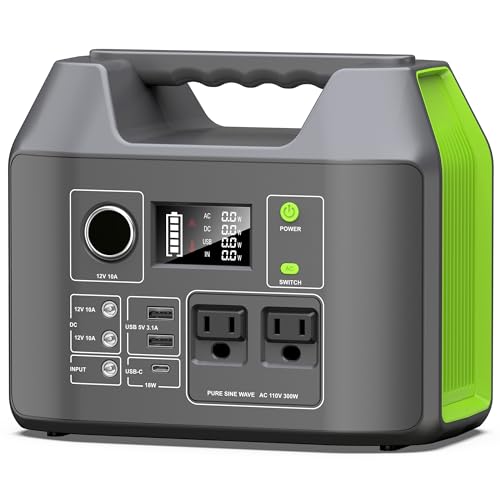
EnginStar Solar Generator, 300W Portable Power Station, 296Wh Lithium Battery Backup w/Two 110V Pure Sine Wave AC Outlet for Camping Road Trip RV, 80000mAh Sufficient Power Supply for Blackout

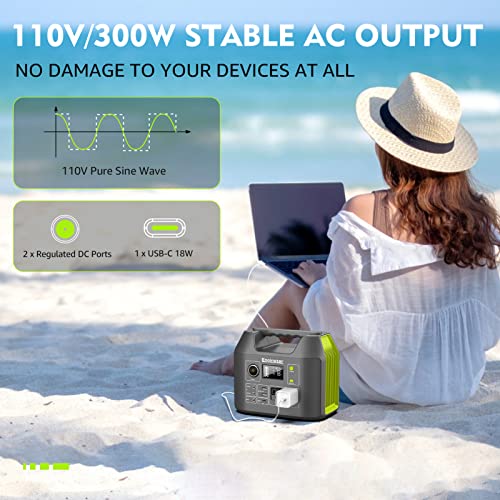
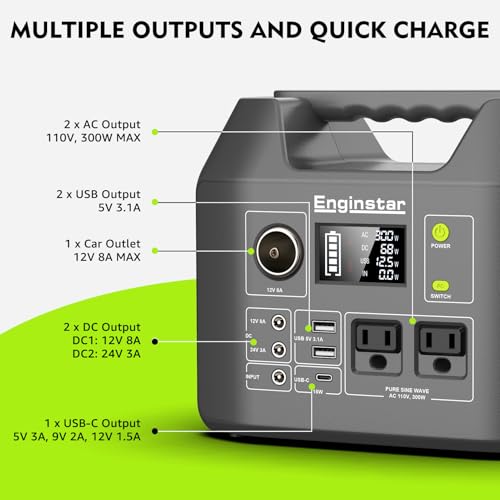


As an Amazon Associate we earn from qualifying purchases. Product prices and availability are accurate as of the date/time indicated.
Capacity in watt-hours or amp-hours at the stated voltage, chemistry, output ports and stated wattages, charging inputs and stated times, cycle life in the maker’s stated terms, display and app patterns, and weight are each maker’s stated details for the current version and exact model. Price ranges are typical retail ranges across each line’s camping sizes and vary by capacity, bundle with solar panels, retailer, and promotion. Ratings are editorial ratings for camping: delivered capacity against the honest budget in class, charging speed and field options, weight per useful watt-hour, cold and storage manners in the makers’ stated terms, support and warranty in aggregate, and value across years of trips.
Detailed Reviews: Best Lithium Battery for Camping Picks
1. EcoFlow Class – Best Lithium Battery for Camping Overall
EcoFlow’s stations lead on the combination campers feel most: LiFePO4 chemistry in the maker’s stated design across the camping sizes, mains charging speeds in the stated terms that changed the Friday departure from a vigil to an hour, a display and app in the stated patterns that make the watt-hour budget visible to the whole family, and a size ladder from the light RIVER class to the DELTA class that lets a camp grow inside one house. For a first station bought to be right for years, this is the row.
2. Anker SOLIX Class – Best for Families
Anker’s SOLIX stations are the family school: robust builds in the maker’s stated construction, capacities in the stated range centred on the fridge-and-family weekend, output patterns in the stated designs that feed a small camp’s whole device economy at once, and the support presence of a house most households already trust with their phones. Their weight is the LiFePO4 school’s honest figure, carried by a car and forgiven by a decade of cycle life in the stated terms. For the base camp that must simply work, this row is the calm purchase.
3. Bluetti Class – Best for Fast Charging and Value Features
Bluetti’s camping stations compete on the refill: fast mains and combined charging patterns in the maker’s stated terms on the models that carry them, capacities and port layouts in the stated designs that give a small station an unusually complete household, and prices that press the leaders in every class. The EB3A pattern’s portability and the AC class’s capacity give the line a rung for the solo camper and the family alike. For the camper whose trips turn around quickly between weekends, the charging speed is a lifestyle feature, and this is its row.
4. Jackery Class – Best for Light Travel
Jackery’s Explorer line serves the weight-conscious end of the camp: stations in the maker’s stated patterns that pair naturally with the house’s folding solar panels in their stated designs, in sizes whose lighter models suit the small car, the short carry, and the phone-and-lantern weekend beautifully. Chemistries and cycle figures vary by model in the stated line, so the exact listing’s terms should be read with this guide’s chemistry section in hand. For the camper who counts kilograms and camps in the sun, this is the natural shelf.
5. Goal Zero Class – Best for Support and Ecosystem
Goal Zero’s Yeti line is the established ecosystem: stations in the maker’s stated LiFePO4 designs for the current camping sizes, a deep accessory and solar catalogue in the stated patterns behind them, and a support and retail presence that suits the buyer who wants a human and a shop behind a decade-long purchase. Its prices sit at the class’s upper side and its owners divide them by years in the usual way. For the camp that will grow panels, lights, and a second station inside one house’s system, this row is the long relationship.
6. Dakota Lithium Class – Best for Van and Trailer Builds
Dakota Lithium’s bare batteries close the table in the other school and at the top of it: LiFePO4 batteries in the maker’s stated amp-hour sizes for 12-volt systems, built and supported for the vehicle, boat, and trailer installations in the stated patterns, with the cycle life in the maker’s stated terms that makes a house system a decade’s infrastructure. They are components, as this guide insists, needing a charger, fusing, and wiring fitted competently to their maker’s stated directions, and inside a build they are the best money in this table. For the camper whose camping is a vehicle, start the electrical plan here, with professional help where your own competence ends.
Buying Guide: Choosing the Best Lithium Battery for Camping
Write the Camp’s Power Budget, Then Buy One Class Above It
Do the budget on paper, in watt-hours, before opening a listing. List the camp’s devices with their stated appetites and their honest hours: phones by their charges, the lantern by its evenings, the laptop by its charges, the CPAP by its nights in its unheated pattern as its maker states, the fridge by its stated daily consumption in the weather you will actually meet, and sum them across the trip’s days. Apply the deductions this guide teaches, a fifth for conversion and system losses in the makers’ stated designs, a further margin for cold where the season argues, and a final margin for the device nobody listed, because every camp has one. Buy the station whose stated capacity clears the final figure, which in practice means one class above the catalogue’s first suggestion, from a maker whose stated cycle life and warranty suit a decade, and check its outputs against the devices’ stated appetites in the same sitting, the fridge’s 12-volt pattern, the laptop’s USB-C wattage, the camera’s charger, because capacity behind the wrong ports is a budget in the wrong currency. Where the budget lands between a station and a bare battery, let the section above arbitrate: a tent buys a station, a build buys a battery and an installer, and a camper with both buys both, in that order, across seasons. Test the winning station at home on the real load, a fridge’s day, a CPAP’s night, before the trip that matters, because the driveway is where a budget’s optimism should die, not the forest.
Plan the Refills: Mains Discipline, Car Honesty, and Solar Siting
Write the refill plan with the same honesty as the budget. Mains is the foundation: charge fully before departure in the maker’s stated pattern, and know the station’s stated refill time so a short notice trip is a plan and not a hope. Car charging enters the plan at its stated rate, a top-up across driving days, valuable on a tour, irrelevant at a static camp, and never the sole plan for a fridge. Solar enters at its real rate: size the panel in its stated watts generously against the daily deficit the budget shows, plan its harvest at a third to a half of nameplate across a good day in the panel maker’s stated terms, and site it as a small ritual, angled to the sun, out of the tent’s and the trees’ shade, moved at lunch, kept clean, its cable routed where feet and tent pegs will not find it, with the station itself in shade and ventilation, since a battery baking beside its panel is a budget being spent on heat. Agree the camp’s power manners where a family or group shares the station: the display is the budget made visible, heavy loads announced, the fridge’s door discipline observed, and the last fifth of capacity treated as a reserve for the medical and the necessary rather than as a film night’s encore. A camp that can read its station’s display together will never be surprised by it, which is the whole art.
Store It Right, Travel With It Lawfully, and Let It Age Slowly
A lithium battery’s decade is written between trips. Store the station or battery in a cool, dry place, at the state of charge its maker states for storage, commonly a partial charge in the makers’ stated guidance, and top or draw it to that state on a season’s rhythm, a note kept with the camping calendar, because a battery stored full on a hot shelf or empty in a cold garage spends its cycle life without giving a single evening’s light for it. Travel with it as the rules direct: secured against sliding and short circuits in the vehicle, terminals and ports protected in the makers’ stated patterns, never in a sealed, sun-baked car for a summer afternoon, and across any carrier, ferry, or flight, only as that carrier’s stated lithium rules allow, which for stations of camping size commonly means they travel by road with you and not by air at all, a fact to plan a trip around rather than discover at a check-in desk. Inspect on the season’s rhythm: case, ports, cables, and the battery’s own behaviour read honestly, a capacity that has fallen, a charge that will not complete, any swelling, damage, heat, or smell being a stop-and-retire verdict executed through the maker’s support and the local stated recycling programme, never through a bin and never through one more trip. Retire and replace on that evidence, and let the old unit’s decade be the argument for its successor’s quality. Run that discipline, a written budget, an honest refill plan, and a kind storage, and the best lithium battery for camping becomes the camp’s silent utility: cold food, lit tents, charged phones, a medical night’s peace, and not one thought given to any of it, which is what power is for.
Frequently Asked Questions About Best Lithium Battery for Camping
What is the best lithium battery for camping?
For most campers, a LiFePO4 portable power station: EcoFlow’s line leads overall for its charging speed and size ladder, Anker SOLIX serves families, Bluetti competes on refill speed and value, Jackery on light travel, and Goal Zero on ecosystem and support, while Dakota Lithium’s bare LiFePO4 batteries are the best answer for a van, trailer, or boat build with a properly installed 12-volt system. Choose the capacity by a written watt-hour budget of your real devices across your real trip, with a fifth deducted for losses and a margin for cold, which lands most phone-and-lantern weekends in the few-hundred watt-hour class, most fridge and CPAP camps in the five-hundred to one-thousand class, and buys one class above the catalogue’s first suggestion.
How big a power station do I need for a camping fridge or a CPAP?
Work it from the device’s own stated figures and test it at home. A 12-volt camping fridge’s daily consumption in its maker’s stated terms varies with the weather and the setting, commonly in the several-hundred watt-hour range across a warm day, so a long weekend with conversion losses and a cold margin argues for the middle class of stations, in the region of a thousand watt-hours in the makers’ stated capacities, or a smaller station with a solar refill plan that genuinely covers the daily deficit. A CPAP’s night, with heated humidification off in its stated settings as its maker directs for battery use, commonly sits in the low hundreds of watt-hours, so several nights fit the same middle class, with the heated features, where a clinician requires them, multiplying the budget and arguing for the large class. In both cases the home test, a full day or night on the station in the driveway, is the verdict no table can give you.
Is LiFePO4 better than lithium-ion for camping?
For most camping, yes, and the trade is worth understanding. LiFePO4 in the makers’ stated chemistry offers cycle lives counted in thousands in their stated terms, strong thermal stability, and a tolerance for the partial charges and long storages of a camping life, so a station built on it is a decade’s purchase. Its cost is weight: it carries fewer watt-hours per kilogram than the lithium-ion chemistries in the lighter stations in this table, which remain the right answer where the battery is carried far, in a small car, or up a hill to a walk-in pitch. Read the exact model’s stated chemistry rather than assuming it from the brand, since several lines in this category sell both, and choose by your carry: the car camper buys LiFePO4’s years, the weight-counter buys lithium-ion’s kilograms, and both buy the maker’s stated cycle figure with their eyes open.
Can I charge a camping power station from solar or my car?
Yes to both, at their honest rates. Car charging through the vehicle’s 12-volt outlet in the makers’ stated patterns delivers a modest wattage, a genuine top-up across a driving day that suits a phone-and-lantern budget and contributes to a fridge budget without covering it. Solar charging delivers its panel’s stated wattage only in strong, direct, well-angled sun, and a real camp day returns a fraction of the nameplate, planned in this guide at a third to a half in good conditions, so size the panel generously against the daily deficit, site and move it with the sun, and keep the station itself shaded and ventilated while it charges. Mains charging before departure remains the fastest and the foundation in the makers’ stated terms. A long static camp on a fridge should therefore be planned as a budget with a solar income, tested at home, rather than as a hope with a panel.
Related guides
- Best Walkie Talkies for Camping and Kayaking in 2026: Midland, Motorola, Cobra, and Rocky Talkie Radios Compared for Waterproofing, Honest Range, Floating Designs, and Keeping a Group Together on Land and Water
- Best Lithium Battery for Camping in 2026: Lithium Battery for Camping, Lithium Camping Batteries, and Best Camping Batteries
- Best Camping Kayaks Under 500 in 2026: 7 Best Camping Kayaks Under 500 Dollars That Are Stable, Roomy, and Built for Camping
- Best Stove for Kayak Camping in 2026: 7 Best Stoves for Kayak Camping That Are Light, Compact, and Boil Fast
More from Amazon
Programs that pair well with the guide above. Offers and eligibility are set by Amazon and may change.
Free shipping on eligible items, Prime Video and more. Eligible new members can start with a free trial.
Start a Prime free trialA Prime membership for ages 18-24 with a trial period. Eligibility is set by Amazon.
See Prime for Young AdultsAudiobooks and podcasts to listen to on the go. Eligible new members can start with a free trial.
Try Audible freeAd-free music streaming. Eligible new subscribers can start with a free trial.
Try Music Unlimited freeAs an Amazon Associate we earn from qualifying purchases.

Write Your Review
No reviews yet. Be the first to share your experience!