
What's inside
As an Amazon Associate I earn from qualifying purchases. This post may contain affiliate links at no extra cost to you.
Finding the best lithium camping battery is different from finding a car battery or a home backup battery. A lithium camping battery has to power a 12V fridge, lights, a phone charger, and a fan for a whole weekend, recharge from a solar panel or a car charger, and be light enough to lift into a car, a campervan, or a trailer without help. A good lithium camping battery should give you almost all of its rated capacity as usable power, last for thousands of charge cycles, charge quickly, and work safely with a built-in battery management system. A poor camping battery will run flat by midnight, lose capacity after one season, or weigh so much that it is hard to move and hard to keep charged.
This guide compares seven real, currently sold lithium camping batteries, with prices from $250 to $900 in the table below: the Battle Born BB10012 100Ah LiFePO4, Renogy 12V 100Ah LiFePO4, Dakota Lithium 100Ah 12V LiFePO4, LiTime 100Ah 12V LiFePO4, Redodo 100Ah 12V LiFePO4, ECO-WORTHY 100Ah 12V LiFePO4, and Weize 12V 100Ah LiFePO4. Their capacities are all 100Ah at 12V, their usable capacities are all 100Ah, their listed cycle life runs from up to 4,000 cycles to up to 5,000 cycles, their weights run from 22 lb to 31 lb, and their ratings run from 4.3 to 4.8 out of 5. Every model here is a lithium iron phosphate, or LiFePO4, battery, every model is sold for camping, RV, and solar use, and every model costs $900 or less at its typical price range. The right choice depends on usable power, cycle life, weight, and how often you camp.
Usable capacity is the first decision for the best lithium camping battery, because it decides how long your fridge and lights will run before the battery needs recharging. All seven batteries in this guide are rated at 100Ah at 12V, which is about 1,280 watt-hours in theory, because 100 multiplied by 12.8 is 1,280. Unlike a lead-acid battery, which should not regularly be discharged below 50 percent if you want it to last, a LiFePO4 battery can be discharged much deeper without damage, so a 100Ah LiFePO4 battery gives you about 100Ah of usable power. That means the Battle Born BB10012 at $750 to $900, the Renogy 12V 100Ah LiFePO4 at $350 to $450, the Dakota Lithium 100Ah 12V LiFePO4 at $600 to $750, the LiTime 100Ah 12V LiFePO4 at $250 to $350, the Redodo 100Ah 12V LiFePO4 at $250 to $340, the ECO-WORTHY 100Ah 12V LiFePO4 at $260 to $360, and the Weize 12V 100Ah LiFePO4 at $250 to $330 each give about 100Ah usable. Work out your daily use in watt-hours first: a 12V fridge may use 400 to 600 watt-hours per day, lights may use 50 to 100 watt-hours, phones may use 20 to 40 watt-hours, and a fan may use 100 to 200 watt-hours. A 100Ah lithium battery is enough for a fridge, lights, and phones for a day, with some margin, and two batteries in parallel will give you two days without sun.
Cycle life is the second decision, and it is the main reason many campers choose lithium over lead-acid, even though lithium costs more upfront. Cycle life is how many full charge and discharge cycles a battery is rated for before its capacity drops noticeably, and it depends on depth of discharge, temperature, and charging. The Renogy 12V 100Ah LiFePO4, LiTime 100Ah 12V LiFePO4, Redodo 100Ah 12V LiFePO4, ECO-WORTHY 100Ah 12V LiFePO4, and Weize 12V 100Ah LiFePO4 are each listed for up to 4,000 cycles, while the Battle Born BB10012 and the Dakota Lithium 100Ah 12V LiFePO4 are each listed for up to 5,000 cycles. Those figures are manufacturer-listed maximums under test conditions, and real life will be lower if the battery is used in very hot or very cold weather, or if it is charged too fast. A battery with a longer cycle life usually costs more per amp-hour upfront, but it can cost less per year if you camp often, because you will replace it less often. If you camp a few weekends a year, a battery listed for up to 4,000 cycles is more than enough. If you live in a campervan or camp every week, a battery listed for up to 5,000 cycles is worth the extra cost.
Weight and portability are the third decision, because a lithium camping battery is not a fixed home battery. You will lift it into a car, a campervan, a trailer, or a battery box, move it to shade or sun, and connect it to a solar panel, a car charger, or an inverter. The lightest battery here is the Redodo 100Ah 12V LiFePO4 at 22 lb, followed by the ECO-WORTHY 100Ah 12V LiFePO4 at 23 lb, the Dakota Lithium 100Ah 12V LiFePO4 at 24 lb, the LiTime 100Ah 12V LiFePO4 at 24 lb, the Weize 12V 100Ah LiFePO4 at 24 lb, the Renogy 12V 100Ah LiFePO4 at 26 lb, and the Battle Born BB10012 at 31 lb. A 22 lb to 26 lb battery can be carried by one person, while a 31 lb battery is still manageable but needs a careful lift. A 100Ah lead-acid battery, by comparison, can weigh 60 lb or more and give only about half the usable power, which is why lithium has become the standard for camping. Use a battery box with handles, keep terminals covered, and secure the battery so it cannot move while driving.
Charging and the battery management system, or BMS, are the fourth decision, because a lithium battery needs the right charger and protection to last. A LiFePO4 battery has a built-in BMS that protects it from overcharging, over-discharging, over-current, and short circuits, and that BMS also balances the cells inside the battery. Use a charger or solar charge controller set to LiFePO4 before you connect it, and do not use a lead-acid charger unless the maker says it is safe for LiFePO4. A lithium battery charges faster than a lead-acid battery and holds its voltage steady until it is almost empty, which is useful for a fridge that needs a steady 12V supply. Do not charge a LiFePO4 battery below freezing unless the battery maker says it has low-temperature charging protection, because charging a cold lithium battery can damage it. Keep the battery out of direct sun in a hot car, keep connections clean and tight, and use a fuse close to the battery positive terminal for safety. Check local rules for transporting lithium batteries, and never puncture, crush, or open a battery.
Cost per year is the final factor before you compare models. A budget lithium battery such as the LiTime 100Ah 12V LiFePO4 at $250 to $350, the Redodo 100Ah 12V LiFePO4 at $250 to $340, or the Weize 12V 100Ah LiFePO4 at $250 to $330 costs a little more than a lead-acid battery upfront, but it gives twice the usable power, weighs less than half as much, and lasts for up to 4,000 cycles. A mid-price lithium battery such as the Renogy 12V 100Ah LiFePO4 at $350 to $450 or the ECO-WORTHY 100Ah 12V LiFePO4 at $260 to $360 offers a balance of price, weight, and support. A premium lithium battery such as the Dakota Lithium 100Ah 12V LiFePO4 at $600 to $750 or the Battle Born BB10012 at $750 to $900 costs the most upfront, but it offers a longer cycle life of up to 5,000 cycles and a stronger warranty in many cases. If you camp a few weekends a year, a budget lithium battery may be enough. If you camp often, run a fridge every day, or live in a campervan, a premium lithium battery is usually the better value over time.
Our Top Picks
Best Lithium Camping Battery: At a Glance
Use this table to compare battery type, capacity, usable capacity, cycle life, weight, price range, and rating. Usable capacity and cycle life are the two figures most campers should check first, because they decide how much power you can actually use each day and how many seasons the battery is likely to last.
| Model | Type | Capacity | Usable Capacity | Cycle Life | Weight | Typical Price Range | Rating out of 5 |
|---|---|---|---|---|---|---|---|
| Battle Born BB10012 100Ah LiFePO4 | LiFePO4 | 100Ah | 100Ah | Up to 5,000 cycles | 31 lb | $750 – $900 | 4.8 |
| Renogy 12V 100Ah LiFePO4 | LiFePO4 | 100Ah | 100Ah | Up to 4,000 cycles | 26 lb | $350 – $450 | 4.6 |
| Dakota Lithium 100Ah 12V LiFePO4 | LiFePO4 | 100Ah | 100Ah | Up to 5,000 cycles | 24 lb | $600 – $750 | 4.7 |
| LiTime 100Ah 12V LiFePO4 | LiFePO4 | 100Ah | 100Ah | Up to 4,000 cycles | 24 lb | $250 – $350 | 4.5 |
| Redodo 100Ah 12V LiFePO4 | LiFePO4 | 100Ah | 100Ah | Up to 4,000 cycles | 22 lb | $250 – $340 | 4.4 |
| ECO-WORTHY 100Ah 12V LiFePO4 | LiFePO4 | 100Ah | 100Ah | Up to 4,000 cycles | 23 lb | $260 – $360 | 4.4 |
| Weize 12V 100Ah LiFePO4 | LiFePO4 | 100Ah | 100Ah | Up to 4,000 cycles | 24 lb | $250 – $330 | 4.3 |

12V 300AH Deep Cycle LiFePO4 Lithium Battery(Self-Heating & APP Monitoring) | Low/High Temp Cut off, Built-in 200A BMS,Perfect for RV, Camping, Off-Grid Applications, etc.
As an Amazon Associate we earn from qualifying purchases. Product prices and availability are accurate as of the date/time indicated.

KUNLUN 12V 10Ah LiFePO4 Lithium Battery (2 Pack) 5000+ Deep Cycles | 12 Volt Lithium Iron Battery Built-in BMS Ideal IP67 Waterproof for Power Wheels Marine Fish Finder Ride-on Toy Camping
As an Amazon Associate we earn from qualifying purchases. Product prices and availability are accurate as of the date/time indicated.
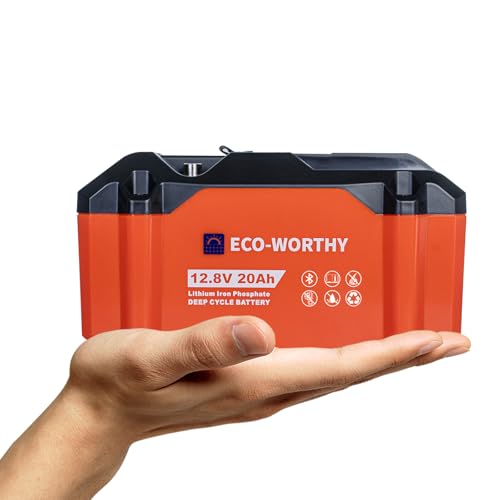
ECO-WORTHY Portable 12V Lithium Battery, 12.8V 20Ah Lithium Iron Phosphate DEEP CYCLE BATTERY, Built-in BMS, 4000+ Cycles, Perfect for Outdoor Camping Fishing RV Marine Trolling Motor Fishfinder
As an Amazon Associate we earn from qualifying purchases. Product prices and availability are accurate as of the date/time indicated.
Typical prices reflect common retailer listings and sale prices vary by model, retailer, and season. Capacity, usable capacity, cycle life, and weight are manufacturer-listed approximate values and can vary by model and configuration. Cycle life is a manufacturer-listed figure under test conditions and depends on depth of discharge, temperature, and charging. Check the battery manual and your charger or solar charge controller settings before you connect a panel or a charger.
Best Lithium Camping Battery: The 7 Batteries Reviewed
1. Battle Born BB10012 100Ah LiFePO4: Best Lithium Camping Battery Overall
The Battle Born BB10012 100Ah LiFePO4, at $750 to $900 with a rating of 4.8 out of 5, has a capacity of 100Ah, usable capacity of 100Ah, cycle life of up to 5,000 cycles, and a weight of 31 lb. It is the highest-rated battery in this guide, and the best overall choice for most campers who want a reliable, long-life lithium battery with strong support and a proven BMS.
It suits a campervan owner, a frequent camper who runs a fridge every day, and a buyer who wants a battery that will last for many seasons without a replacement. The 100Ah usable capacity gives a full day or more of power for lights, a fridge, and phones, the up to 5,000 cycles rating is the joint highest here, alongside the Dakota Lithium 100Ah 12V LiFePO4 at $600 to $750, and the built-in BMS protects against overcharge, over-discharge, and short circuits. The trade-off is weight and price: at 31 lb it is heavier than the Renogy 12V 100Ah LiFePO4 at 26 lb and the Dakota Lithium 100Ah 12V LiFePO4 at 24 lb, and at $750 to $900 it is the highest-priced battery here, higher than the LiTime 100Ah 12V LiFePO4 at $250 to $350. For the best overall lithium camping battery at $750 to $900, it is the strongest choice here.
Best for: Most campers who want a 100Ah LiFePO4 battery, 100Ah usable, and up to 5,000 cycles at 31 lb for $750 to $900.
2. Renogy 12V 100Ah LiFePO4: Best Mid-Price Lithium Camping Battery
The Renogy 12V 100Ah LiFePO4, at $350 to $450 with a rating of 4.6 out of 5, has a capacity of 100Ah, usable capacity of 100Ah, cycle life of up to 4,000 cycles, and a weight of 26 lb. It is the best mid-price choice here, because it offers a full 100Ah usable, a long cycle life, and a weight that is easy to carry, at about half the price of the Battle Born BB10012 at $750 to $900.
It suits a weekend camper, a car camper with a 100W to 200W solar panel, and a buyer who already uses Renogy solar panels and charge controllers. The 100Ah usable capacity is enough for a fridge, lights, and phones for a day, the up to 4,000 cycles rating is enough for many years of weekend use, and the 26 lb weight is light enough for one person to lift. The trade-off is cycle life: at up to 4,000 cycles it is rated lower than the Battle Born BB10012 at up to 5,000 cycles, and its BMS is simpler than the premium models here. For a mid-price lithium camping battery at $350 to $450, it is a strong choice.
Best for: Mid-price camping with a 100Ah LiFePO4 battery, 100Ah usable, and up to 4,000 cycles at 26 lb for $350 to $450.
3. Dakota Lithium 100Ah 12V LiFePO4: Best Premium Lightweight Lithium Camping Battery
The Dakota Lithium 100Ah 12V LiFePO4, at $600 to $750 with a rating of 4.7 out of 5, has a capacity of 100Ah, usable capacity of 100Ah, cycle life of up to 5,000 cycles, and a weight of 24 lb. It is the best premium lightweight choice here, because it combines the joint highest cycle life in this guide with a light weight of 24 lb, which is lighter than the Battle Born BB10012 at 31 lb.
It suits a campervan owner who needs to save weight, a frequent camper who wants a long-life battery, and a buyer who wants a lithium battery with a long warranty. The 100Ah usable capacity is the same as the Battle Born BB10012, the up to 5,000 cycles rating matches the Battle Born BB10012, and the 24 lb weight makes it easier to install in a tight battery box. The trade-off is price: at $600 to $750 it costs more than the Renogy 12V 100Ah LiFePO4 at $350 to $450 and the LiTime 100Ah 12V LiFePO4 at $250 to $350, although it costs less than the Battle Born BB10012 at $750 to $900. For a premium lightweight lithium camping battery at $600 to $750, it is the best choice here.
Best for: Premium lightweight use with a 100Ah LiFePO4 battery, 100Ah usable, and up to 5,000 cycles at 24 lb for $600 to $750.
4. LiTime 100Ah 12V LiFePO4: Best Value Lithium Camping Battery
The LiTime 100Ah 12V LiFePO4, at $250 to $350 with a rating of 4.5 out of 5, has a capacity of 100Ah, usable capacity of 100Ah, cycle life of up to 4,000 cycles, and a weight of 24 lb. It is the best value lithium choice here for a camper who wants a full 100Ah usable at a low price, without paying $600 to $900 for a premium brand.
It suits a budget camper, a first-time lithium buyer, and a buyer who needs two batteries in parallel for a larger system. The 100Ah usable capacity is the same as the Battle Born BB10012 at $750 to $900, the up to 4,000 cycles rating is the same as the Renogy 12V 100Ah LiFePO4 at $350 to $450, and the 24 lb weight is light for a 100Ah battery. The trade-off is support and warranty: LiTime is a budget maker, so check the warranty terms, the retailer return policy, and the BMS features for your exact model before you buy, and confirm low-temperature charging protection if you camp in cold weather. For a value lithium camping battery at $250 to $350, it is a practical choice.
Best for: Value camping with a 100Ah LiFePO4 battery, 100Ah usable, and up to 4,000 cycles at 24 lb for $250 to $350.
5. Redodo 100Ah 12V LiFePO4: Best Lightest Lithium Camping Battery
The Redodo 100Ah 12V LiFePO4, at $250 to $340 with a rating of 4.4 out of 5, has a capacity of 100Ah, usable capacity of 100Ah, cycle life of up to 4,000 cycles, and a weight of 22 lb. It is the lightest battery in this guide at 22 lb, and the best lightest choice for a camper who needs to lift the battery often or fit it in a small battery box.
It suits a solo camper, a car camper with limited space, and a buyer who wants a light lithium battery for a portable solar setup. The 100Ah usable capacity is the same as the other lithium batteries here, the up to 4,000 cycles rating matches the Renogy 12V 100Ah LiFePO4 at $350 to $450, and the 22 lb weight is lighter than the ECO-WORTHY 100Ah 12V LiFePO4 at 23 lb and the LiTime 100Ah 12V LiFePO4 at 24 lb. The trade-off is support: at $250 to $340 it is a budget battery, so check the warranty and BMS details before you buy, and do not charge it below freezing unless the maker says it is safe. For the lightest lithium camping battery at $250 to $340, it is a strong choice.
Best for: Lightest portable use with a 100Ah LiFePO4 battery, 100Ah usable, and up to 4,000 cycles at 22 lb for $250 to $340.
6. ECO-WORTHY 100Ah 12V LiFePO4: Best Lithium Camping Battery for Solar Kits
The ECO-WORTHY 100Ah 12V LiFePO4, at $260 to $360 with a rating of 4.4 out of 5, has a capacity of 100Ah, usable capacity of 100Ah, cycle life of up to 4,000 cycles, and a weight of 23 lb. It is the best choice here for a camper who buys a solar kit, because ECO-WORTHY sells panels, charge controllers, and batteries that are made to work together.
It suits a first-time solar camper, a buyer who wants a battery for a 200W solar kit, and a user who wants a light lithium battery for a trailer. The 100Ah usable capacity is the same as the Battle Born BB10012 at $750 to $900, the up to 4,000 cycles rating is the same as the LiTime 100Ah 12V LiFePO4 at $250 to $350, and the 23 lb weight is light for a 100Ah battery. The trade-off is price: at $260 to $360 it costs a little more than the LiTime 100Ah 12V LiFePO4 at $250 to $350, and it is a budget maker, so check the warranty before you buy. For a lithium camping battery for solar kits at $260 to $360, it is a practical choice.
Best for: Solar kit use with a 100Ah LiFePO4 battery, 100Ah usable, and up to 4,000 cycles at 23 lb for $260 to $360.
7. Weize 12V 100Ah LiFePO4: Best Cheap Lithium Camping Battery
The Weize 12V 100Ah LiFePO4, at $250 to $330 with a rating of 4.3 out of 5, has a capacity of 100Ah, usable capacity of 100Ah, cycle life of up to 4,000 cycles, and a weight of 24 lb. It is the lowest-priced lithium battery in this guide, and the lowest-rated here at 4.3 out of 5, reflecting a simpler BMS and shorter warranty than the premium models, rather than a failure to deliver 100Ah usable when used correctly.
It suits a budget camper, a first-time lithium buyer, and a buyer who wants a low-cost battery for a weekend setup. The 100Ah usable capacity is the same as the Battle Born BB10012 at $750 to $900, the up to 4,000 cycles rating is the same as the Renogy 12V 100Ah LiFePO4 at $350 to $450, and the 24 lb weight is light for a 100Ah battery. The trade-off is support: at $250 to $330 it is a budget battery, so check the warranty, the BMS low-temperature protection, and the charger settings before you buy, and do not charge it below freezing unless the maker says it is safe. For a cheap lithium camping battery at $250 to $330, it is a useful starting point.
Best for: Cheap lithium use with a 100Ah battery, 100Ah usable, and up to 4,000 cycles at 24 lb for $250 to $330.
Best Lithium Camping Battery Buying Guide: What Actually Matters in 2026
Choosing a lithium camping battery is easier when you decide on daily power use, battery type, cycle life, and weight before you look at price or brand. Those four choices decide how long your power will last, how many seasons the battery will serve, and whether you can move it safely.
Best Lithium Camping Battery Buying Guide: Sizing, Daily Use, and Usable Capacity
Sizing, daily use, and usable capacity are the first factor. Add up your daily loads in watt-hours: a 12V fridge may use 400 to 600 watt-hours per day, lights may use 50 to 100 watt-hours, phones may use 20 to 40 watt-hours, and a fan may use 100 to 200 watt-hours, depending on size and runtime. A 100Ah lithium battery with 100Ah usable gives about 1,280 watt-hours in theory, which is enough for a fridge, lights, and phones for a day, with some margin. For a weekend with no sun, choose a battery with enough usable capacity for two days, or add a second battery in parallel. For a week off-grid, add more solar panels as well as more battery capacity, because a battery cannot create power, it can only store what the panel collects. The Battle Born BB10012 at 100Ah usable and $750 to $900, the Renogy 12V 100Ah LiFePO4 at 100Ah usable and $350 to $450, and the LiTime 100Ah 12V LiFePO4 at 100Ah usable and $250 to $350 all give the same usable power, even though their prices are very different.
Best Lithium Camping Battery Buying Guide: Cycle Life, BMS, and Cost Per Year
Cycle life, BMS, and cost per year are the second factor. For frequent camping, a lithium battery with a long cycle life is usually the better value over time, because it gives more usable power, weighs less, and lasts for more cycles than a lead-acid battery. The Battle Born BB10012 and Dakota Lithium 100Ah 12V LiFePO4 are each listed for up to 5,000 cycles, while the Renogy 12V 100Ah LiFePO4, LiTime 100Ah 12V LiFePO4, Redodo 100Ah 12V LiFePO4, ECO-WORTHY 100Ah 12V LiFePO4, and Weize 12V 100Ah LiFePO4 are each listed for up to 4,000 cycles. For cost per year, divide the price by the years you expect to use the battery: a $250 to $350 LiTime battery that lasts for many years can cost less per year than a cheaper lead-acid battery that needs replacing after a few seasons. Check the BMS for overcharge, over-discharge, over-current, and short-circuit protection, and for low-temperature charging protection if you camp in cold weather. For a first lithium setup, a budget lithium battery is often the best balance, because it gives full usable capacity without the premium price of the Battle Born BB10012 at $750 to $900.
Best Lithium Camping Battery Buying Guide: Charging, Solar, and Temperature
Charging, solar, and temperature are the third factor. Use a charger or MPPT solar charge controller set to LiFePO4, and do not use a lead-acid charger unless the maker says it is safe for LiFePO4. A 100W solar panel in good sun can add about 400 to 500 watt-hours per day, while a 200W panel can add about 800 to 1,000 watt-hours per day, depending on sun, angle, and shade, so size your panel to your daily use and your battery size. A 100Ah lithium battery with 100Ah usable needs a 200W panel for a full recharge in a day if it is deeply discharged. Do not charge a LiFePO4 battery below freezing unless the maker says it has low-temperature charging protection, and keep the battery in shade in hot weather. Use a fuse close to the battery, keep terminals clean and tight, and secure the battery so it cannot move while driving. Check the battery manual for the correct charge voltage and for storage advice when the battery will not be used for weeks.
Best Lithium Camping Battery Buying Guide: Weight, Size, Safety, and Price
Weight, size, safety, and price are the final factors. For weight, a battery from 22 lb to 26 lb, such as the Redodo 100Ah 12V LiFePO4 at 22 lb, the ECO-WORTHY 100Ah 12V LiFePO4 at 23 lb, the Dakota Lithium 100Ah 12V LiFePO4 at 24 lb, the LiTime 100Ah 12V LiFePO4 at 24 lb, the Weize 12V 100Ah LiFePO4 at 24 lb, and the Renogy 12V 100Ah LiFePO4 at 26 lb, is easy for one person to lift and easy to fit in a battery box. A battery at 31 lb, such as the Battle Born BB10012, is still manageable, but it needs a careful lift. For size, measure your battery box before you buy, because 100Ah batteries vary in dimensions even when capacity is the same. For safety, use a battery box with a lid, cover terminals, use a fuse, and never puncture, crush, or open a lithium battery. For price, a battery in the $250 to $360 range, such as the Weize at $250 to $330, the Redodo at $250 to $340, the LiTime at $250 to $350, and the ECO-WORTHY at $260 to $360, is a good starting point. A battery in the $350 to $450 range, such as the Renogy, offers a balance of price and support. A battery in the $600 to $900 range, such as the Dakota Lithium at $600 to $750 and the Battle Born at $750 to $900, offers the longest cycle life here. Choose by usable capacity and cycle life first, then by weight, then by price.
For the best first setup, buy a 100Ah lithium battery, a 200W solar panel, and an MPPT charge controller set to LiFePO4, and test the system at home before a trip. The LiTime 100Ah 12V LiFePO4 at $250 to $350 is a good first battery for most budget campers, the Renogy 12V 100Ah LiFePO4 at $350 to $450 is a good first battery if you want a mid-price brand with solar accessories, and the Battle Born BB10012 at $750 to $900 is a good first battery if you want the longest life and strongest support. A good lithium camping battery, chosen for usable capacity first and charged correctly from solar, will run your fridge, lights, and phones through the night, recharge the next day, and last for many camping seasons, without a large spend on a second battery too soon.
Top Picks for Lightweight LiFePO4 Camping Batteries
Lighter lithium batteries are easier to carry to remote sites. These models fit fridges, lights and small off-grid setups.
GOLDENMATE 12V 10Ah LiFePO4 Battery, IP67
A waterproof 10Ah battery in a small case. Good for lights and small electronics.
As an Amazon Associate we earn from qualifying purchases at no extra cost to you.

KUNLUN 12V 10Ah LiFePO4 Battery, 2 Pack
A two-pack of 10Ah batteries listed with 5000+ cycles. Flexible for dual uses.

Kingboss 12.8V 15Ah LiFePO4 Battery
A 12.8V 15Ah battery for solar, lighting and UPS. Mid-range capacity for small setups.

Feuruetc 12V 20Ah Deep Cycle LiFePO4
A 20Ah deep cycle battery for camping. Suits fridges and bigger loads.

GOLDENMATE 12V 20Ah LiFePO4 Battery
A 20Ah waterproof battery. Lightweight enough for backpacks and kayaks.

Best Lithium Camping Battery FAQ
What size lithium battery do I need for camping?
For most weekend camping, a 100Ah lithium battery is a good starting point. A 100Ah LiFePO4 battery, such as the Battle Born BB10012 at $750 to $900, the Renogy 12V 100Ah LiFePO4 at $350 to $450, and the LiTime 100Ah 12V LiFePO4 at $250 to $350, gives about 100Ah usable, or about 1,280 watt-hours in theory, which is enough for a fridge, lights, and phones for a day. Add up your daily use in watt-hours first, choose a battery with enough usable capacity for one to two days without sun, and add a second battery in parallel if you need more. For a fridge alone, a 100Ah battery is usually enough for a day, while a 50Ah battery may run flat by midnight.
Are lithium batteries better than lead-acid for camping?
For most frequent campers, yes. A lithium battery gives about 100Ah usable from a 100Ah battery, weighs 22 lb to 31 lb in this guide, and is listed for up to 4,000 cycles to up to 5,000 cycles. A lead-acid battery gives about 50Ah usable from a 100Ah battery, can weigh 60 lb or more, and is listed for far fewer cycles. A budget lithium battery such as the LiTime 100Ah 12V LiFePO4 at $250 to $350 or the Weize 12V 100Ah LiFePO4 at $250 to $330 gives twice the usable power, half the weight, and a much longer cycle life than a lead-acid battery at a similar price. For occasional weekend use, lead-acid can be enough, but for frequent use, lithium is usually the better value over time.
How do I charge a lithium camping battery from solar?
Use a solar panel and an MPPT solar charge controller set to LiFePO4, and connect the panel to the controller, then the controller to the battery. A 100W panel can add about 400 to 500 watt-hours per day in good sun, while a 200W panel can add about 800 to 1,000 watt-hours per day, depending on sun, angle, and shade. For a 100Ah lithium battery with 100Ah usable, a 200W panel is a good starting point for a full recharge in a day if the battery is deeply discharged. Do not charge a LiFePO4 battery below freezing unless the maker says it has low-temperature charging protection, and use a fuse close to the battery for safety.
What is the cheapest good lithium camping battery?
The cheapest good options in this guide are the Weize 12V 100Ah LiFePO4 at $250 to $330 with a rating of 4.3 out of 5, the Redodo 100Ah 12V LiFePO4 at $250 to $340 with a rating of 4.4 out of 5, and the LiTime 100Ah 12V LiFePO4 at $250 to $350 with a rating of 4.5 out of 5. All three are 100Ah LiFePO4 batteries with 100Ah usable, up to 4,000 cycles, and a weight of 22 lb to 24 lb. Start with one of these three if price is the main factor, and check usable capacity, cycle life, and weight next. For the best overall value, the LiTime 100Ah 12V LiFePO4 at $250 to $350 is a better choice than a lead-acid battery because it offers full usable power and a much longer cycle life.
FAQ
What size lithium battery do I need for camping?
Are lithium batteries better than lead-acid for camping?
How do I charge a lithium camping battery from solar?
What is the cheapest good lithium camping battery?
Related guides
- Best Kayak Camping Gear in 2026: 7 Best Kayak Camping Gear Items That Keep Gear Dry, Safe, and Easy to Carry
- Best Battery Operated Camping Lantern in 2026: Battery Operated Camping Lantern, Camping Lanterns, and Best Lanterns for Camping
- Best Bike Camping Bike in 2026: 7 Best Bike Camping Bikes That Are Tough, Comfortable, and Ready for Loaded Touring
- Best Battery Pack for Heated Camping Chair in 2026: Battery Pack for Heated Camping Chair
More from Amazon
Programs that pair well with the guide above. Offers and eligibility are set by Amazon and may change.
Free shipping on eligible items, Prime Video and more. Eligible new members can start with a free trial.
Start a Prime free trialA Prime membership for ages 18-24 with a trial period. Eligibility is set by Amazon.
See Prime for Young AdultsAudiobooks and podcasts to listen to on the go. Eligible new members can start with a free trial.
Try Audible freeAd-free music streaming. Eligible new subscribers can start with a free trial.
Try Music Unlimited freeAs an Amazon Associate we earn from qualifying purchases.

Write Your Review
No reviews yet. Be the first to share your experience!