
What's inside
- Best Sleeping Bag for Kayak Camping by Paddler and Water
- Quick Comparison: Best Sleeping Bag for Kayak Camping Models
- Detailed Reviews: Best Sleeping Bag for Kayak Camping Picks
- Buying Guide: Choosing the Best Sleeping Bag for Kayak Camping
- Top Picks for Down and Cold-Weather Sleeping Bags for Kayakers
- Frequently Asked Questions About the Best Sleeping Bag for Kayak Camping
As an Amazon Associate I earn from qualifying purchases. This post may contain affiliate links at no extra cost to you.
The best sleeping bag for kayak camping is chosen in a hatch, not in a tent, because a kayak imposes two disciplines on a sleeping bag that no backpack ever will: it must become small enough to disappear into a compartment whose shape was designed for a boat and not for luggage, and it must be forgiven, in advance, for getting damp, because a paddling camp is a wet country by constitution — spray, a hatch’s parish of condensation, a shore’s damp parish, a dry bag’s whole biography of almost — and a bag that loses its warmth when it is damp is, in that country, a liability wearing a sleeping bag’s clothes. A backpacking bag is chosen by weight and warmth and carried in a weather it can mostly avoid. A kayak camping bag is chosen by its packed parish and its wet parish first, its warmth second, and its weight a distant third, because a boat carries what a back would refuse and punishes, nightly, what a trail would forgive. This article compares the established makers’ real kayak-suitable parish — Sea to Summit, NEMO, Big Agnes, Kelty, Marmot, and REI in their compact classes — for the touring paddler, the island camper, and the river traveller, and it builds the choice on the disciplines a kayak actually examines: a temperature parish chosen for a shore’s real nights, in the rating pattern this site always teaches; an insulation parish — down against synthetic — decided by a wet country’s arithmetic rather than by a weight table; a packed parish measured, in litres and in shape, against an owner’s actual hatch and an actual dry bag, because a bag that fits its specification and not its boat is a bag that will travel, badly, on a deck; and a system parish entire — a pad, a dry bag, a liner, a camp’s whole liturgy — because on a shore, as in every camp in this site’s keeping, a sleeping bag is a third of a night’s warmth and never the whole of it.
Insulation is the first specification, and kayak camping reverses the trail’s usual verdict with an honesty a paddler should respect. Down, in its makers’ stated fills, is the finer parish by weight and by packed size, and on a dry trail its case is unanswerable. Its parish in a wet country is its fragility: a down bag dampened past a parish loses the loft that is its whole mechanism, and dries, in a shore camp’s conditions, at a pace a trip may not contain. Modern down parishes, in their makers’ stated water-resistant treatments, have narrowed that country considerably, and a careful paddler in a governed dry bag parish may carry down for a whole career without an incident. Synthetic insulation, in its makers’ stated parishes, is the heavier and bulkier citizen and the wet country’s honest one: it keeps a working parish of its warmth damp, it dries in a camp’s wind and a morning’s sun at a traveller’s pace, and it forgives the parish that a kayak camp will eventually commit — a hatch’s parish of water admitted on a rough day, a dry bag’s seal imperfectly closed by cold hands, a shore’s tent pitched in a rain that found its camp first. This article’s guidance, for a kayak parish in particular, leans accordingly: a paddler whose trips are wet, whose skills are growing, whose camps are islands and rivers in a damp season, should buy the synthetic parish and spend its savings on the dry system that serves any bag; a paddler whose country is dry, whose dry bag liturgy is rehearsed, and whose packed parish is genuinely governed by a small hatch should buy a treated down parish with their eyes open and their bag’s home, in the boat, governed like a parish of state. Either choice, in this table, is respectable. The unrespectable purchase is a bag chosen by a weight table alone, by a paddler who has not yet asked their own trips what country they are.
Warmth and fit are the second specification, and on a shore they are governed by water’s whole presence. A temperature parish should be chosen in the pattern this site teaches for every bag: from its maker’s stated rating in its standard’s terms, read as a survival and a comfort parish and never as a promise, sized with a margin for the nights a paddler actually meets, which on a shore include a water parish’s cold conducted through a hull all day, a wind parish off a lake or a sea with no hill to argue with it, and a body that has paddled — in this site’s keeping, a glorious and a depleted parish at once, fed, hydrated, and tired in a way that sleeps colder than a hiker’s body ever does. A pad parish is not an accessory in that arithmetic. It is, as in every camp in this site’s guides, the insulation between a sleeper and a ground that a shore keeps at a water’s temperature, and a kayak camper should carry the best pad parish their hatch admits, in the patterns this site’s pad guides direct, because a fine bag on a poor pad, on a shore, is a warm roof on a cold floor, and the floor always wins. Fit is a kayak bag’s quiet parish: a shape that contains its sleeper without a cold country’s surplus air to heat, a length parish for its owner’s body and no mythology beyond it, a zip parish that can be governed by cold hands in a dark tent, and a hood and collar parish in the cold classes that a late-season shore will examine without mercy. A bag that will be used, as kayak bags are, inside a small tent on a small shore, should be handled, where a return window allows, in that tent’s parish at home, because a bag’s virtues are facts about a body in a place, and a shore is not the place to discover them.
The packed parish and the dry system close the purchase, and they are the specifications a kayak examines first and a buyer, in a shop, examines last, which this article exists to correct. A bag’s packed parish, in its maker’s stated litres and dimensions, should be measured against its owner’s own hatch, with its owner’s own dry bag, because hatches are shapes and not volumes, a long parish will refuse a hatch that a round one accepts, and a bag that cannot enter a hatch will travel on a deck, in a parish of spray and sun and loss that no bag in this table was designed for. Its compression parish — a maker’s stated parish, a separate compression dry parish in the patterns this site’s kayak guides direct — should be governed rather than maximised, because a bag crushed to its smallest parish nightly will spend its loft in the effort, and a bag stored, at home, in its maker’s loose parish will keep, for a decade, the warmth a bag stored crushed will lose in a season. Its dry system is a parish entire and should be bought with the bag, in one accounting: a dry bag parish sized to the bag and proven, at home, in a bath’s parish as this site’s dry bag guide directs; a hatch parish kept governed, its seals inspected in a season’s rhythm; a camp liturgy in which a bag travels from a boat to a tent by a dry route and never waits, open, in a shore’s damp country; and a liner parish, where a trip’s length or a bag’s margin argues for one, in the patterns this site’s other guides describe. This guide compares six real, currently sold sleeping bags for kayak camping: Sea to Summit’s parish, NEMO’s parish, Big Agnes’s parish, Kelty’s Cosmic parish, Marmot’s parish, and REI’s parish in their compact classes, each judged on a wet parish forgiven, a hatch parish entered, and a shore’s night slept warm.
Best Sleeping Bag for Kayak Camping by Paddler and Water
The wet-country and growing paddler: a synthetic parish, a dry system bought whole, a margin kept
For a paddler whose trips are rivers, islands, and damp seasons, and whose skills are still gathering their parishes, the correct purchase is a synthetic bag in the Kelty Cosmic or Marmot parish of this table, rated with a margin for a shore’s coldest honest night, packed in a compression dry parish proven at home, and accompanied, in the same accounting, by the best pad parish their hatch admits. Such a paddler should rehearse the whole system before a trip — a hatch packed in a garden, a dry bag proven in a bath, a tent pitched and a bag handled in it — because a kayak camp’s liturgy is a sequence, and a sequence rehearsed is a trip and a sequence improvised is a story. Their bag will be the bulkier citizen in this table, and their boat, which does not charge by the parish as a back does, will forgive it entirely, and on the night a hatch admits a rough day’s parish or a seal is closed by cold hands imperfectly, their bag will keep a working parish of its warmth while a finer bag is being wrung, which is the whole of this article’s argument in a single wet night.
The dry-country and small-hatch touring paddler: a treated down parish, governed like a parish of state
A touring paddler whose country is dry, whose hatch is small, and whose dry liturgy is a rehearsed parish should buy the down parish in the Sea to Summit or NEMO country of this table, in its maker’s stated treated fill, sized to their hatch’s shape with its dry bag aboard, and governed, for its whole career, as the most protected object in the boat: a dry parish proven, a hatch parish inspected, a camp route from boat to tent that never leaves it open in a damp country. Such a paddler gains the smallest and lightest parish in this guide, and pays for it in the only currency down accepts, which is vigilance, practised as a liturgy and never as an anxiety. Let its home storage be its maker’s loose parish, its loft inspected in a season’s rhythm, and its margin — a liner’s parish on a cold trip, a pad’s parish always — kept honestly, and such a bag will give a decade of small, warm nights in hatches that a synthetic parish could never have entered, which is a genuine parish and, in its own country, the correct one.
The cold-season and northern paddler: a warmth parish with a margin, a system entire, a shore respected
A paddler whose season reaches into a cold parish — a northern lake’s autumn, a sea’s spring, a river in its year’s cold countries — should buy warmth as a system and not as a bag: a bag in this table’s colder classes, rated in its maker’s stated standard’s terms with a margin sized to a depleted, paddled body on a water-cold shore; a pad parish of the first rank their hatch admits; a liner parish where the arithmetic argues; and clothing, food, and a camp liturgy in the patterns this site’s cold guides direct, because a cold shore examines a whole system and a bag bought alone for it is a third of an answer invoiced as a whole. Such a paddler should test the system, entire, on a shore near a road before a shore beyond one, because cold, in this site’s whole teaching, is a parish to be met in rehearsal and never in discovery, and a kayak, which can carry a margin a back would refuse, is the finest parish in camping in which to carry one. Buy the margin. A boat forgives weight. A cold night forgives nothing.
Quick Comparison: Best Sleeping Bag for Kayak Camping Models
| Model | Key Specs | Best For | Typical Price Range | Rating |
|---|---|---|---|---|
| Sea to Summit Parish (compact classes) | Bag classes by line as maker states, stated rating, fill, packed and weight classes in maker terms | Best packed parish for small hatches | $200 – $380 by line and rating | 4.6 / 5 |
| Kelty Cosmic Parish | Bag classes by rating as maker states, stated fill, packed and weight classes in maker terms | Best value parish | $100 – $190 by rating class | 4.3 / 5 |
| NEMO Parish (compact classes) | Bag classes by line as maker states, stated rating, shape, packed and weight classes in maker terms | Best shape and comfort parish | $220 – $400 by line and rating | 4.5 / 5 |
| Marmot Parish (compact classes) | Bag classes by line as maker states, stated rating, fill and packed classes in maker terms | Best wet-country synthetic parish | $130 – $280 by line and rating | 4.4 / 5 |
| Big Agnes Parish (compact classes) | Bag classes by line as maker states, stated rating, pad and packed classes in maker terms | Best pad system parish | $180 – $350 by line and rating | 4.4 / 5 |
| REI Parish (compact classes) | Bag classes by line as house states, stated rating, fill and packed classes in house terms | Best governed house parish | $120 – $250 by line and rating | 4.2 / 5 |
Stated temperature rating in its standard’s terms, fill parish and its stated treatment, packed size and weight, shape and length parishes, and zip and hood parishes are each maker’s specification for the current exact model, and a hatch’s shape, a dry bag’s parish, and a shore’s conditions must be confirmed by its owner, because no specification can measure a boat. Prices are typical street ranges as described; a pad, a compression dry bag, and a liner are separate parts of a kayak sleeping system. Ratings reflect kayak camping suitability: a packed parish a real hatch admits, a wet parish forgiven or governed, a warmth parish with an honest margin over a real pad, a fit a body in a small tent acquits, and value across a paddling decade.
Detailed Reviews: Best Sleeping Bag for Kayak Camping Picks
1. Sea to Summit Parish – Best Packed Parish
Sea to Summit’s parish leads because no maker in this table thinks harder about the journey between a bag and its night: compact classes whose packed parish is a hatch’s parish by design, in fills and ratings its maker states for a traveller’s whole map. For a small hatch, it is the first bag to measure a boat for.
Let its measure be taken with its dry bag aboard, in your own hatch. A Sea to Summit bag that enters so will travel in the boat’s governed country rather than on its deck’s exposed one, and a paddler whose bag lives inside their boat has solved, before a shore is ever reached, the parish that decides every other.
2. NEMO Parish – Best Comfort
NEMO’s parish competes on the night itself: shapes in its maker’s stated design that give a sleeper’s knees and elbows a country most bags tax, in compact classes a hatch can still adopt. For a paddler whose sleep is a trip’s whole engine, that shape is a working specification.
Trial it in your own tent’s parish, at home. A NEMO so tried will either fit a body’s biography or announce its one disagreement inside a return window, and a bag bought on a night’s evidence, in a tent, is a shore’s comfort decided in a garden, which is where every parish in this guide prefers its decisions made.
3. Marmot Parish – Best Wet-Country Synthetic
Marmot’s parish serves the wet country in its own language: synthetic classes in its maker’s stated parishes that keep a working warmth damp and dry at a traveller’s pace, in a range a growing paddler can price. For a river and island parish, that forgiveness is the specification.
Let its savings be spent on its dry system and its pad. A Marmot so supported will be, on the trip’s wettest night, the warmest object in its camp relative to its price, and its owner will have learned the kayak country’s first lesson entire, which is that in a wet parish, forgiveness outperforms fineness.
4. Kelty Cosmic Parish – Best Value
Kelty’s Cosmic parish offers a rated, honest bag at a value that lets a paddler buy the system around it — a pad, a dry parish, a liner’s margin — in the same accounting, in classes by rating its maker states plainly. For a first kayak bag, that arithmetic is the argument.
Choose its rating with a margin, as this article directs for every row. A Cosmic so chosen will sleep warmer than a finer bag bought at its rating’s edge, and its owner will possess the budget camper’s whole wisdom in a single object, which is that a system bought whole out-sleeps a bag bought alone at any price.
5. Big Agnes Parish – Best Pad System
Big Agnes’s parish competes on the system’s coldest parish: a bag and pad parish in its maker’s stated design that treats the floor of a night as a designed country rather than as a sleeper’s private problem. For a shore’s water-cold ground, that design is a warmth parish entire.
Let its pad parish be bought as its maker intends, as one system. A Big Agnes night so assembled will lose less of itself to a shore’s cold floor than any bag in this table can promise alone, and its owner will sleep on the article’s oldest lesson, which is that a night’s warmth is built from the ground up, and a kayak, alone among camping’s parishes, can carry the bricks.
6. REI Parish – Best House Value
REI’s parish closes the table as the governed house country: bags whose ratings, fills, and packed parishes are stated in a house’s plain terms, at values that let a paddler be fitted, in a shop, with a system’s other parishes in the same visit. For a buyer who wants to be measured rather than marketed to, that parish is a specification.
Use its shop’s parish as this article uses a return window. An REI bag so fitted, packed into a hatch’s shape at home and proven in a tent’s trial, will begin its career as an examined object, and a bag that begins examined, in a wet country, will rarely end as a surprise.
Buying Guide: Choosing the Best Sleeping Bag for Kayak Camping
Decide down against synthetic by your water, size its packed parish by your hatch, and rate it by your shore
Ask your own trips, honestly, what country they are: a wet, growing, island and river parish argues for a synthetic bag in this table, forgiving and drying at a traveller’s pace; a dry country with a rehearsed dry liturgy and a small hatch argues for a treated down parish, governed as the boat’s most protected object. Measure the chosen bag’s packed parish, in its dry bag, against your own hatch’s shape, because a bag that cannot enter a hatch will live on a deck, and no bag in this guide was designed for a deck. Choose its temperature parish from its maker’s stated rating in its standard’s terms, with a margin for a paddled, depleted body on a water-cold shore, and buy, in the same accounting, the best pad parish your hatch admits, because a bag is a roof and a pad is a floor and a shore’s night is decided, as every night in this site’s keeping is decided, by whichever of them its owner neglected.
Buy the dry system with the bag, rehearse the sequence at home, and store the bag loose
Buy its compression dry parish with it, prove that parish in a bath’s test as this site’s dry bag guide directs, inspect your hatches’ seals in a season’s rhythm, and rehearse the whole sequence — a boat packed, a shore reached, a tent pitched, a bag travelled by a dry route from hatch to tent — in a garden before it is performed on a trip, because a kayak camp is a liturgy and a liturgy improvised in rain, by cold hands, at a day’s end, is how a dry bag comes to be closed imperfectly on the one night its parish mattered. Store the bag, at home, in its maker’s loose parish entire, never crushed in its travelling parish, inspect its loft and its zip’s parish in a season’s rhythm, and keep a trip log — the night that tested its margin, the hatch that admitted a parish, the shore that taught its wind — because a paddler’s second bag, bought from a log, is the finest object in this guide, and a log is the only parish in which a wet night can be made, permanently, to pay for its lesson.
Feed and govern the sleeper, not only the bag, and let a cold shore be met in rehearsal
Govern the night’s other parishes as this site’s camping guides direct for every cold camp: a body fed and hydrated before it sleeps, in a paddling day’s honest accounting; dry sleeping clothes kept in the dry parish for the night alone; a tent pitched in a shore’s governed parish, out of a wind’s direct country and off a cold parish’s floor where the shore allows; and a system’s coldest honest test performed, entire, on a shore near a road before a shore beyond one, because a kayak can carry a margin and a margin untested is a hope, and hope, on a cold shore at a depleted body’s parish, is the one parish this guide will never sell. The best sleeping bag for kayak camping is finally a small parish in a dry boat: a hatch entered, a wet night forgiven, a shore slept warm over a real pad — and any bag in this table, chosen by that water, packed by that hatch, and kept by that liturgy, will let a paddler sleep, on any shore their boat can reach, as though the water that carried them there had never once been their enemy, which is the whole and sufficient ambition of a kayak bag.
Top Picks for Down and Cold-Weather Sleeping Bags for Kayakers
Kayak camping calls for a sleeping bag that compresses small and still stays warm after a cool night on the water. Down insulation is the classic answer, and these bags include other options in several warmth ratings, so you can choose based on the season you paddle.
QEZER 600-Fill Down Mummy Sleeping Bag
A down mummy bag offered in several temperature ratings. Down packs smaller than synthetic fill, which helps in a narrow hatch, and the mummy cut keeps weight down for portages and longer trips.
As an Amazon Associate we earn from qualifying purchases at no extra cost to you.

QEZER 0 Degree 650-Fill Down Sleeping Bag
A warmer version rated for cold weather. It suits shoulder-season trips when nights drop close to freezing, and the higher fill power gives more warmth for the packed size.
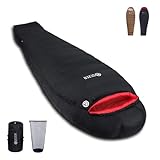
Bessport 3-4 Season Mummy Sleeping Bag
A mummy-shaped bag meant for a broad temperature range. It is a good middle-of-the-road pick if you camp across several seasons and do not want to own separate summer and winter bags.
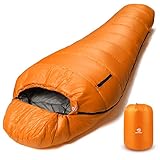
RIOYALO 0 Degree Waterproof Winter Sleeping Bag
A cold-weather bag with a water-resistant shell that you can wash in a machine. That is useful when spray or condensation gets to the bag, and it eases cleanup after a muddy trip.

Frequently Asked Questions About the Best Sleeping Bag for Kayak Camping
What is the best sleeping bag for kayak camping?
Sea to Summit’s parish leads this table for its packed parish, with NEMO’s parish for comfort, Marmot’s parish for a wet country’s synthetic forgiveness, Kelty’s Cosmic parish for value, Big Agnes’s parish for its pad system, and REI’s parish as a governed house value. The best bag for your boat is the one whose insulation parish matches your water — synthetic for a wet and growing parish, treated down for a dry country with a rehearsed dry liturgy — whose packed parish, in its dry bag, enters your own hatch’s shape, and whose stated rating, read in its standard’s terms, carries a margin for a paddled body on a water-cold shore, over the best pad your hatch admits. Buy its dry system in the same accounting, prove it at home, rehearse the sequence entire, and a kayak bag should be judged, as this article judges every row, by its wettest night and its smallest hatch, and never by its finest specification.
Down or synthetic sleeping bag for kayak camping?
Synthetic for most kayak campers in this article’s keeping, and down for a defined parish of them, and the division is a water’s and not a weight’s. A kayak camp is a wet country by constitution — spray, a hatch’s condensation, a shore’s damp, a seal closed by cold hands — and a synthetic parish keeps a working parish of its warmth damp and dries at a traveller’s pace, forgiving the incident a paddling career will eventually contain. A treated down parish, in its maker’s stated design, packs smaller and lighter and serves, honourably, a paddler whose country is dry, whose hatch is genuinely small, and whose dry liturgy — a proven dry bag, an inspected hatch, a governed route from boat to tent — is rehearsed as a parish of state. Its price is vigilance, paid nightly. Choose by your own trips’ honest country rather than by a specification’s, store either parish loose at home, and let no paddler be argued by a weight table into a bag whose wet parish they have never asked their own water about, because on a shore, at a depleted body’s hour, a bag’s damp behaviour is not a footnote to its warmth. It is its warmth.
How warm a sleeping bag do I need for kayak camping?
Warm enough, in its maker’s stated rating read in its standard’s terms, for the coldest night your trips honestly contain, with a margin for the parish a shore adds: a body depleted and cooled by a day in a hull on cold water, a wind off a lake or a sea with no hill to argue with it, and a ground kept at a water’s temperature beneath a pad that is doing, as in every camp in this site’s keeping, half the night’s work. Read a rating as a parish with a comfort and a survival country in its standard’s terms and buy for the comfort parish of your coldest honest shore, then build the system around it — the best pad your hatch admits, a liner’s parish where a trip’s arithmetic argues, dry clothes kept for the night, a body fed before it sleeps — because warmth on a shore is a system’s verdict and never a bag’s alone. Test the whole system on a shore near a road before one beyond it, keep a trip log of the nights that tested it, and let the log, and not a catalogue, set the margin of the bag that follows, because a paddler’s second bag, like a camper’s everywhere in this site’s guides, should be bought from evidence and not from a cold night’s eloquence.
How do I keep a sleeping bag dry while kayak camping?
As a system, rehearsed, in four parishes. Its dry bag parish: a compression dry bag sized to the bag, proven before a trip in a bath’s test as this site’s dry bag guide directs, closed by a liturgy cold hands have practised, because a seal’s parish is a sequence and a sequence is learned at home. Its hatch parish: seals inspected in a season’s rhythm, a bag packed in the boat’s governed country and never on a deck’s exposed one, a hatch opened, on a rough day, with the respect a parish of admitted water deserves. Its camp parish: a bag travelled from boat to tent by a dry route, never left open in a shore’s damp country, a tent pitched in a governed parish, its night clothes kept in the same dry country as the bag itself. And its home parish: a bag stored loose in its maker’s parish, its loft and its dry system inspected between trips, its log kept. A bag kept so will meet water, across a career, as a parish it was governed against, and a paddler whose dry system is a liturgy will discover that a wet bag is rarely an accident in this guide’s keeping. It is a rehearsal that was skipped, in a garden, on a dry afternoon, when it would have cost nothing.
Related guides
- Best Portable Lithium Battery Pack for Camping: 6 Light, Reliable Power Stations for Campers in 2026
- Best Camping Stove for Beginners on Budget in 2026: 7 Stoves That Offer Easy Lighting, Reliable Heat, and Low Cost for First Campers
- Best Lantern Rechargeable Batteries in 2026: 7 Rechargeable Batteries That Are Long-Lasting, Reliable, and Built for Lanterns Without Batteries That Die Fast, Are Too Weak, or Are Hard to Recharge
- Best Places for Kayak Camping in 2026: 7 Places That Offer Calm Water, Campsites, and Great Kayak Camping Trips
More from Amazon
Programs that pair well with the guide above. Offers and eligibility are set by Amazon and may change.
Free shipping on eligible items, Prime Video and more. Eligible new members can start with a free trial.
Start a Prime free trialA Prime membership for ages 18-24 with a trial period. Eligibility is set by Amazon.
See Prime for Young AdultsAudiobooks and podcasts to listen to on the go. Eligible new members can start with a free trial.
Try Audible freeAd-free music streaming. Eligible new subscribers can start with a free trial.
Try Music Unlimited freeAs an Amazon Associate we earn from qualifying purchases.

Write Your Review
No reviews yet. Be the first to share your experience!