
What's inside
- Best Sleeping Pad for Cold Weather Camping: R-Value Is the Whole Argument
- Best Sleeping Pad for Cold Weather Camping: Quick Comparison
- The Six Cold-Weather Pads Reviewed
- Buying Guide: How to Buy the Best Sleeping Pad for Cold Weather on a Budget
- Frequently Asked Questions About Sleeping Pads for Cold Weather
As an Amazon Associate I earn from qualifying purchases. This post may contain affiliate links at no extra cost to you.
The best sleeping pad for cold weather camping is the single piece of gear that decides whether winter camping is a triumph or a story told through chattering teeth, because in cold weather the ground is not merely uncomfortable, it is a heat thief of unlimited appetite. Your sleeping bag cannot protect your underside: your body weight crushes its insulation flat beneath you, and the earth, frozen earth above all, conducts your warmth away all night through whatever lies between. That whatever is the pad, and its insulating power is measured in R-value, the one number this entire article is organized around. For genuinely cold weather, snow, frozen ground, nights well below freezing, the floor is R 5, the comfort zone is R 6 to 7, and the expedition class reaches beyond 8, figures standardized across the industry so that, mercifully, a 7 from one maker means a 7 from another. This guide compares six real, currently sold cold-weather pads, from the mountaineer’s featherweight champion to the car camper’s thick luxury mattress, and it teaches the budget camper’s most valuable cold trick, layering an inexpensive closed-cell foam pad under a mid-range air pad, because this site’s readers deserve the arithmetic that buys winter warmth at a three-season price.
An honest word about budget before the table, because cold is where cheap goes to die. The pool-noddle class of summer pads and uninsulated air mattresses does not become winter gear by optimism, and a cold night spent discovering conduction is a night that ends friendships with winter camping for years. But winter warmth does not require the flagship’s price either: the layering system below, a foam pad of R 2 under an insulated air pad of R 4, sums to roughly R 6 by the standard’s own arithmetic, at a combined cost below most single expedition pads, with the foam doubling as insurance, because a punctured air pad over foam is a bad night, while a punctured air pad over frozen ground is an emergency. Read the table for the best single-pad answers, and read the buying guide for the system answers, and choose by your coldest honest night, not your average one, because cold, like water, finds the level of your weakest preparation.
Our Top Picks
Best Sleeping Pad for Cold Weather Camping: R-Value Is the Whole Argument
Reading R-Value for Winter: Floors, Comfort Zones, and Snow
Translate the numbers into nights. R 2, the foam pad class, is a summer rating that winter campers use only as a layer. R 3 to 4 is the three-season heartland, honest to around freezing for most sleepers in a matched bag. R 5 begins true cold-weather service, cold ground and nights in the teens and twenties Fahrenheit for the average sleeper. R 6 to 7 is the winter comfort zone this guide recommends for snow camping and frozen ground, where the pad must defeat a surface that is itself a block of ice wearing a dusting of powder. Above 8 is expedition and extreme territory, high camps and polar ambitions, and a warmth so complete it can serve, in a pinch, as the margin that forgives a bag rated a little light. Two modifiers belong to you alone: cold sleepers, side sleepers whose hips compress the pad’s heart, and campers on snow rather than merely cold earth should all buy a step above the table’s suggestion, because R-value is measured on a standard’s mannequin and you are not one, you are a person whose January opinion is the one that counts.
How Cold Pads Insulate: Reflective Films, Down, Synthetics, and Air’s Honest Limits
An air pad alone is a poor insulator, because the air inside it circulates and carries heat from your side to the ground side in a slow, tireless conveyor, which is why an uninsulated air mattress is the coldest object in summer camping despite feeling like a bed. Cold-weather pads break that conveyor three ways. Reflective film designs, the XTherm pattern, baffle the interior with metallic layers that bounce radiant heat back and divide the air into still pockets, achieving expedition R-values at weights a backpacker can carry, at some cost in crinkle, a sound the class has spent generations quieting. Insulated fills, synthetic fibers or, in Exped’s and others’ premium work, down itself inside the chambers, still the air by filling its space, at weights and prices that scale with the fill’s loft. Foam, the third way, insulates by its material and cannot leak, which is why it is the layer of last resort under everything. When you read the table’s R-values, know that each was earned by one of these strategies against the same standard test, and that the differences you will feel are in weight, packed size, noise, and thickness, the comfort variables, rather than in the warmth the number already settled.
Thickness, Width, and the Winter Night’s Geometry
Cold magnifies every fit question. Thickness, two and a half inches and upward in this class, is not luxury in winter: it keeps a side sleeper’s hip from bottoming out onto a thin, cold stratum of compressed pad, the exact spot where winter sleepers report the famous cold stripe. Width matters more in winter than in any season, because a sleeper in a winter bag, wearing layers, turning inside a mummy’s architecture, falls off a narrow pad onto frozen ground with a regularity that ruins nights, and the wide versions of these pads, twenty-five inches, are bought by experienced winter campers with a unanimity that should instruct beginners. Length, too, is insulation: feet that hang past the pad’s end rest on the tent floor’s cold, and winter campers size up or place their pack under their feet as a deliberate system. Buy the wide, buy the long, and let the summer ultralight counters call it excess, from their season.
Best Sleeping Pad for Cold Weather Camping: Quick Comparison
| Cold Weather Sleeping Pad Model | Key Specs (Maker Published) | Best For | Typical Price Range | Rating |
|---|---|---|---|---|
| NEMO Tensor Extreme Conditions | Air pad with insulation, R-value 8.5 class, about 3.5 inches thick, quiet construction in this line class | Best sleeping pad for cold weather camping overall | $240 – $290 | 4.8 / 5 |
| Therm-a-Rest NeoAir XTherm NXT | Air pad with reflective baffles, R-value 7.3 class, about 3 inches thick, very light for its warmth | Best for winter backpacking | $230 – $280 | 4.7 / 5 |
| Exped Ultra 7R | Down-insulated air pad, R-value 7.1 class, about 3.5 inches in this line class, pump sack inflation | Best down-insulated warmth | $230 – $300 | 4.6 / 5 |
| Sea to Summit Ether Light XT Extreme | Insulated air pad, R-value 6.2 class, about 4 inches thick, pillow lock system in this line class | Best thickness and comfort | $220 – $270 | 4.5 / 5 |
| Therm-a-Rest MondoKing 3D | Self-inflating foam and air, R-value 7.0 class, about 4.25 inches thick, camp mattress format | Best for cold car camping | $220 – $280 | 4.5 / 5 |
| Big Agnes Rapide SL Insulated | Insulated air pad, R-value 4.8 class, about 3.5 inches thick, light and packable, pair with foam for deep winter | Best layering partner on a budget | $150 – $200 | 4.3 / 5 |

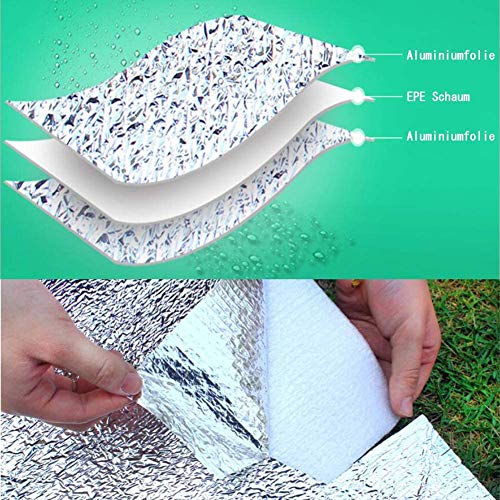
Aehma Foam Sleeping Mat, Aluminum Insulated Camping Pad for Tent Floor | Reflecting Heat keep sleeping warm, Material Aluminum Foil and Foam, waterproof, ultralight, easy foldable, easy cleaning




As an Amazon Associate we earn from qualifying purchases. Product prices and availability are accurate as of the date/time indicated.

TREKOLOGY Sleeping Pad for Camping– Ultra-Lightweight, 4" Thick Camping Mat with 7.2 R-Value for All Seasons (Blue)
As an Amazon Associate we earn from qualifying purchases. Product prices and availability are accurate as of the date/time indicated.
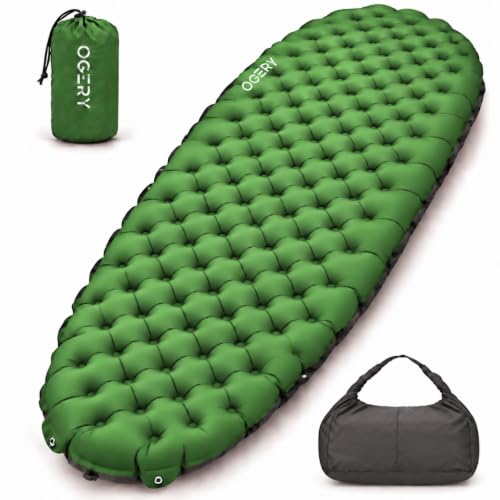
OGERY R-Value 9.0 Sleeping Pad for Camping, Insulated Sleeping Pad | Camping Mattress, 4.7" Thick, Ultralight, Pump Bag Included, Cold Weather, Backpacking, Hiking
As an Amazon Associate we earn from qualifying purchases. Product prices and availability are accurate as of the date/time indicated.
Prices shown are approximate and for reference only. Prices change often, so please check the current price on Amazon before you buy.
R-values follow the industry standard test as makers publish them for current versions. Ratings are editorial, weighing warmth, comfort, weight and packed size for their class, durability, and value.
The Six Cold-Weather Pads Reviewed
1. NEMO Tensor Extreme Conditions: Best Overall
The Tensor Extreme holds the current warmth crown, an R-value in the 8.5 class, at a weight and packed size that belong to a three-season pad, wrapped around a construction notably quieter than the reflective-film rivals whose crinkle has serenaded a generation of winter tents. Its three and a half inches are a side sleeper’s full forgiveness, its surface and baffles hold a sleeper centered rather than migrating, and its warmth is so complete that it reframes the winter system, forgiving a lighter bag, forgiving a colder site, forgiving the beginner’s site choice on their first snow camp. It costs the flagship price its specification predicts. For the camper whose winter is real and recurring, it is the pad the rest of the kit is built around, and its rating leads this table because cold-weather gear is graded, finally, on the coldest night, and on that night this pad has no peer here.
2. Therm-a-Rest NeoAir XTherm NXT: Best for Winter Backpacking
The XTherm is the winter backpacker’s institution, R 7.3 earned by reflective baffles at a weight in the one-pound class for its regular size, a ratio of warmth to carry that defined the category for a decade and still leads its logic. The NXT generation thickened it to about three inches and civilized its noise from the potato-chip era into a rustle most sleepers forget by the second night. Its devotees are the winter travelers who count grams because they carry everything up the mountain in the season when everything is heavier, and its warranty and its maker’s repair service stand behind a decade-class service life. If your cold weather arrives at the end of a trail rather than at the end of a road, this is your row, and it has been the correct answer for so long that its presence here is less a recommendation than a confirmation.
3. Exped Ultra 7R: Best Down-Insulated Warmth
Exped fills its winter pad with down, the same insulation as the bag above it, and the result is an R 7.1 warmth with a feel owners describe as the least technical in the class, no films to crinkle, a surface and a baffle shape that cradle rather than perch, and a pump sack that inflates it without your breath’s moisture, a detail that matters across a winter trip because moist air inside a pad is insulation’s slow enemy and, in deep cold, frost forming inside the pad itself. Its packed size and weight sit a step above the XTherm’s, the honest price of down’s loft, and its devotees pay it for the sleep quality. For the winter camper who tried the reflective pads and missed the feeling of a bed, the Ultra 7R is the reconciliation of warmth with comfort.
4. Sea to Summit Ether Light XT Extreme: Best Thickness
Sea to Summit’s Extreme takes its line’s famous four inches of air-sprung comfort and insulates it to R 6.2, producing the thickest true winter pad in this table and, for the side sleeper whose hip has ended winter trips, possibly the most valuable. Its air sprung cells distribute weight like a mattress rather than like a raft, its surface plays well with its maker’s pillow lock, and its warmth, a half-step below the leaders’, covers the great majority of winter nights that campers actually attempt. Its packed bulk is a car camper’s shrug and a backpacker’s negotiation. Buy it when comfort is the variable that has been failing your winters, because a pad slept on deeply, in one place, all night, insulates better in the body than a warmer pad slept on badly, and this is the pad people sleep on deeply.
5. Therm-a-Rest MondoKing 3D: Best for Cold Car Camping
The MondoKing is the winter pad as camp furniture: over four inches of self-inflating foam-and-air luxury, R 7.0, wide as a household mattress in its large sizes, in a format that rolls to the size of a small tent and cares not at all, because the car is carrying it. For the basecamp, the ice-fishing weekend, the hunting camp, and the winter festival where the tent is a bedroom for a week, it converts frozen ground into a bed a guest would compliment, and its self-inflating core means a puncture demotes it to a foam pad rather than to the ground, winter’s favorite insurance built into its architecture. It is absurd for a backpack and perfect for a trunk, and this guide, which serves budget campers who mostly drive to their cold, gives it its full honors without apology.
6. Big Agnes Rapide SL Insulated: Best Layering Partner
The Rapide SL, at R 4.8, is in this winter table as the system player’s piece: a light, comfortable, three-and-a-half-inch insulated pad at the table’s friendliest price, which alone covers the shoulder seasons and the mild end of winter, and which, laid over a closed-cell foam pad as this guide’s doctrine teaches, sums to winter service around R 6.5 with a puncture-proof floor beneath it. Its own virtues are real, a quiet surface, a stable baffle design, a weight a backpacker respects, and its presence here is a budget argument: the foam pad costs a fraction of any row above, most campers already own one, and the combination out-sleeps its price by a full season. Buy the Rapide for the year-round life, layer it for the deep cold, and let the flagship money wait until your winters are annual and ambitious.
Buying Guide: How to Buy the Best Sleeping Pad for Cold Weather on a Budget
Step One: Set Your R-Value by Your Coldest Honest Night
Name the coldest camping you will actually do in the next three years, in degrees and in ground: a January snow camp at ten degrees is a different purchase from a November deer camp at twenty-five, and both are different from the December car camp on frozen earth that feels colder than either because you stay a week. Set the floor from this guide’s bands, R 5 for the edge of winter, R 6 to 7 for its heart, and then adjust for the sleeper: add a step if you sleep cold, sleep on your side, or camp on snowfields and lake ice, which are colder landlords than frozen soil. Write the number down before shopping, because the shop’s wall of pads is arranged by everything except your January, and a number in your pocket is the only salesperson in the building employed by you.
Step Two: Choose Single-Pad Warmth or the Layered System
Price both architectures honestly. The single expedition pad, the table’s leaders, buys maximum warmth at minimum weight and bulk, the right economy for the backpacker whose every ounce is carried uphill in winter gear’s heaviest season. The layered system, a mid-range insulated pad over a closed-cell foam, buys nearly the same warmth at a lower price and a higher weight, with dividends no single pad pays: the foam is a sit pad, a pack pad, a vapor of insurance under a punctured air pad at the worst hour, and a summer loaner for a friend’s first trip. Car campers and budget campers should default to the layer until their winters outgrow it; backpackers should default to the single pad and let the foam join for the coldest trips as the veterans do, under the expedition pad, pushing a system past R 9 when the mountain insists. Either architecture, bought to the number in step one, is a correct answer. The incorrect answer, in all weathers, is the uninsulated pad and a hopeful attitude.
Step Three: Rehearse the Winter Night at Home
Inflate the pad as winter demands, which for air pads means by pump sack or pump rather than by breath where the maker advises, because a winter trip’s worth of moist breath becomes the pad’s internal frost and its insulation’s slow tax. Sleep one night at home, floor or yard, in the full system, winter bag, layers, and pad, and audit the night like an engineer: cold spots at hip or shoulder argue for thickness or a layer; sliding argues for the wide or for a pad cover’s friction; feet cold at the pad’s end argue for the long size or the pack-under-feet arrangement rehearsed rather than improvised. Store the pad afterward as its kind requires, self-inflating pads loose with valves open, air pads unrolled with the valve open where space allows, because a pad stored crushed and sealed is a pad aging in the dark. The rehearsal costs a night on your own floor. The lesson it teaches is the one winter charges a campsite, a storm, and a very long cold night to deliver.
Frequently Asked Questions About Sleeping Pads for Cold Weather
What R-value do I need for winter camping?
For camping on snow or frozen ground with nights well below freezing, buy R 6 to 7 as your working standard, treat R 5 as the floor for the mildest winter nights and the coldest three-season trips, and look above 7 for expedition use, high camps, and sleepers who know they run cold. The modifiers matter as much as the headline: side sleepers should lean high because their weight compresses the pad at the hip; snow campers should lean high because snow and ice conduct without mercy; and everyone should remember the pad works as a system with the bag, whose temperature rating assumes a pad of roughly this class beneath it, so a winter bag on a summer pad performs like neither’s label. When torn between two pads, take the warmer and vent the bag on the milder nights. No winter camper in this guide’s knowledge has ever, at 3 a.m. on frozen ground, wished their pad were less warm.
Can I just put a foam pad under my regular sleeping pad for winter?
Yes, and it is the budget winter camper’s best idea, endorsed by the physics and by generations of practice: R-values of stacked pads add, so a closed-cell foam pad of about R 2 beneath an insulated air pad of R 4 to 4.8 produces a system around R 6 to 6.8, genuine winter service, with the foam adding puncture insurance, a stable base on snow, and a sit pad’s second career around camp. Put the foam underneath, always, where it protects the air pad from the ground’s sharp and frozen insults and where its own insulation is not compressed by your weight as the top layer’s would be. Secure the pair if your tent floor is slick, a few dots of seam sealer on the foam’s underside or a non-slip layer between them, because a system that migrates apart at midnight is two pads and no system. It is heavier and bulkier than a single expedition pad, and for the car camper and the beginning winter camper those are the right currencies to spend.
Why do my feet and hips get cold even on an insulated pad?
Because cold enters at the pad’s failures of geometry, not of insulation. The hip is the classic: a side sleeper’s weight compresses the pad to its thinnest at one small area, the insulation there is a fraction of the pad’s rating, and the cold writes a stripe exactly under the joint, answered by a thicker pad, a touch more inflation, or the foam layer that does not compress the same way. The feet are the pad’s edge made literal: feet past the pad’s end rest on the tent floor, feet at its very end sit over its coldest, thinnest border, answered by the long size, by the camp trick of the empty pack or a folded jacket under the feet, and by the winter socks and the hot water bottle that experienced winter campers pack as standard. Diagnose the cold’s address before buying anything, because most winter cold spots are a map of where your body left the pad, and the cure is geometry, cheaper than gear.
Should I inflate a winter pad with my breath or a pump?
Use the pump sack or pump the maker provides or recommends, for winter above all, because every breath carries moisture into the pad, and across a cold trip that moisture condenses and can freeze inside the chambers, taxing the insulation, adding weight, and, across seasons of breath inflation, encouraging the interior’s slow degradation. The pump sack that ships with the serious winter pads in this table adds a minute to camp-making and subtracts a problem from every night after, which is the correct trade at any temperature and a mandatory one below freezing. At home, the same discipline governs storage: a pad stored with its valve open breathes the room’s dry air rather than sealing in the trip’s damp. None of this will appear in a highlight reel. All of it appears, compounded, in the tenth winter of a pad that was pumped, stored, and layered correctly, still warm on ground that has retired a decade of careless rivals.
Related guides
- Best Portable Camping Battery Pack in 2026: How to Pick a Portable Camping Battery Pack That Powers Your Phone, Lights, and Camping Gear All Trip
- Best Touring Kayak for Camping in 2026: Best Touring Kayak for Camping
- Best Camping Battery Pack in 2026: 6 Power Banks With at Least 10,000mAh, USB-C Power Delivery, and a Price Range, for Camping
- Best Tandem Kayak for Camping in 2026: How to Pick a Tandem Kayak That Fits Two Campers, Carries Your Camping Gear, and Works for Your Camping Trip
More from Amazon
Programs that pair well with the guide above. Offers and eligibility are set by Amazon and may change.
Free shipping on eligible items, Prime Video and more. Eligible new members can start with a free trial.
Start a Prime free trialA Prime membership for ages 18-24 with a trial period. Eligibility is set by Amazon.
See Prime for Young AdultsAudiobooks and podcasts to listen to on the go. Eligible new members can start with a free trial.
Try Audible freeAd-free music streaming. Eligible new subscribers can start with a free trial.
Try Music Unlimited freeAs an Amazon Associate we earn from qualifying purchases.

Write Your Review
No reviews yet. Be the first to share your experience!