
What's inside
- Why the Best SUV for Camping and Kayaking Needs Roof Capacity, Cargo Room, and Clearance
- Best SUV for Camping and Kayaking Comparison Table
- Best SUV for Camping and Kayaking Reviews for 2026
- Buying Guide: How to Choose the Best SUV for Camping and Kayaking in 2026
- Frequently Asked Questions About the Best SUV for Camping and Kayaking
As an Amazon Associate I earn from qualifying purchases. This post may contain affiliate links at no extra cost to you.
Finding the best SUV for camping and kayaking is about cargo space, roof capacity, towing, ground clearance, and fuel use, not just about buying the largest SUV on the market. An SUV for camping and kayaking needs enough roof strength to carry a kayak safely, enough cargo room for a tent, sleeping bags, a cooler, and paddles, enough towing capacity for a small trailer or a second kayak, and enough ground clearance to reach a dirt launch or a forest campsite without scraping the underside. An SUV that is too small can force you to choose between a kayak and your camping gear, while an SUV that is too large can be hard to park, hard to fuel, and hard to afford.
For most campers and paddlers, the best SUV for camping and kayaking is a midsize or compact SUV with a roof rail system, a cargo area of at least 30 cubic feet behind the rear seats, a towing capacity of at least 1,500 pounds, a ground clearance of at least 8 inches, and a roof load limit that can handle a kayak and a roof rack. This guide compares six real, currently sold SUVs, from an affordable Subaru Crosstrek to a premium Ford Bronco, so you can see how price, cargo space, towing, clearance, roof capacity, and fuel economy change as you move up the range.
At Budget-Camper.com, we focus on budget camping gear and vehicles that work well for real trips, not just for specifications on a window sticker. Always check your SUV roof load limit, your kayak weight, your trailer weight, and your local regulations before you load a kayak, because a kayak that is too heavy for your roof or a trailer that is too heavy for your hitch can affect braking and handling. A vehicle cannot make camping or kayaking safe on its own, and no gear can replace planning, water, a first-aid kit, a life jacket, a helmet where required, and telling someone where you are going and when you expect to return.
Our Top Picks
Why the Best SUV for Camping and Kayaking Needs Roof Capacity, Cargo Room, and Clearance
An SUV for camping and kayaking needs roof capacity, because a kayak usually weighs 40 to 80 pounds and a roof rack adds another 15 to 30 pounds, so a roof that can only carry 75 pounds may not be enough for a kayak plus a rack. A roof with a dynamic load limit of 150 pounds or more can carry a kayak safely while driving, while a roof with a lower limit may need a lighter kayak or a trailer instead. Always check the difference between dynamic load, while driving, and static load, while parked, because the static limit is usually much higher.
Cargo room is the second factor. A compact SUV with about 30 cubic feet behind the rear seats can hold a tent, two sleeping bags, a cooler, and a dry bag, while an SUV with 70 cubic feet or more with the rear seats folded can also hold a camp kitchen, a camp chair set, and a second cooler. A flat cargo floor makes it easier to load long items, such as paddles and fishing rods, and a low load height makes it easier to lift a heavy cooler into the back.
Ground clearance is the third factor. An SUV with 8 to 9 inches of clearance can handle a dirt road, a gravel launch, and a rutted campsite driveway, while an SUV with 5 to 6 inches of clearance may scrape on the same road. All-wheel drive also matters, because it can help on wet grass, mud, and loose gravel, although it does not replace good tires, careful driving, and checking conditions before you go.
Best SUV for Camping and Kayaking Comparison Table
Use this table to compare six real, currently sold SUVs for camping and kayaking at a glance. Cargo space, towing capacity, ground clearance, roof load, and fuel economy are manufacturer-listed values for the standard configurations, and may vary by trim, engine, and options. Price ranges reflect typical retail pricing in 2026 rather than a single dealer price. Ratings summarize typical owner and reviewer feedback for space, comfort, off-road ability, kayak carrying, and value.
| SUV for Camping and Kayaking | Cargo Behind Rear Seats | Max Cargo | Towing Capacity | Ground Clearance | Roof Load | Fuel Economy | Typical Price Range | Rating |
|---|---|---|---|---|---|---|---|---|
| Subaru Crosstrek | About 20 cu ft | About 55 cu ft | About 1,500 lb | About 8.7 in | About 150 lb | About 29 mpg combined | $25,000-$30,000 | 4.6 / 5 |
| Toyota RAV4 | About 38 cu ft | About 70 cu ft | About 1,500 lb | About 8.1 in | About 150 lb | About 30 mpg combined | $30,000-$35,000 | 4.7 / 5 |
| Honda CR-V | About 39 cu ft | About 76 cu ft | About 1,500 lb | About 8.2 in | About 165 lb | About 30 mpg combined | $32,000-$38,000 | 4.7 / 5 |
| Jeep Wrangler 4-Door | About 31 cu ft | About 72 cu ft | About 3,500 lb | About 10 in | About 150 lb | About 20 mpg combined | $35,000-$45,000 | 4.6 / 5 |
| Toyota 4Runner | About 47 cu ft | About 90 cu ft | About 5,000 lb | About 9.6 in | About 150 lb | About 22 mpg combined | $40,000-$45,000 | 4.7 / 5 |
| Ford Bronco | About 38 cu ft | About 77 cu ft | About 3,500 lb | About 11.5 in | About 150 lb | About 20 mpg combined | $42,000-$50,000 | 4.7 / 5 |

WildFinder SUV Tent, Universal Car Tents for Camping, SUV Tailgate Tent | 10x9ft Large, PU3000 Waterproof, Camping Tent Universal Compatible with SUV, CUV, Easy Setup Standalone Shelter for Outdoor
As an Amazon Associate we earn from qualifying purchases. Product prices and availability are accurate as of the date/time indicated.

KingCamp SUV Tent, Instant 6-8 Person Waterproof & Windproof Tailgate Car Camping Tent with Movie Screen for Family Camping & Outdoor Adventures
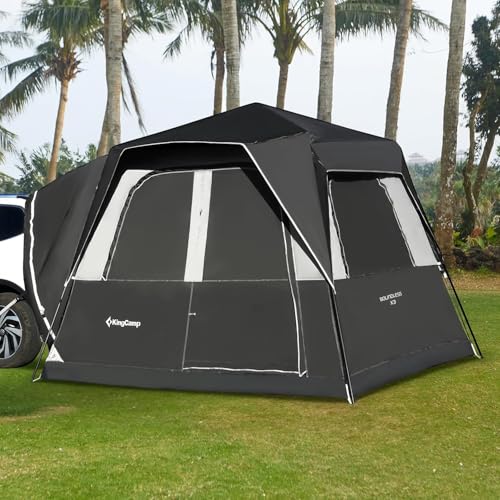


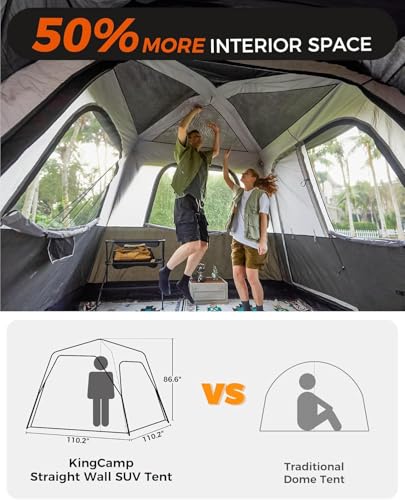

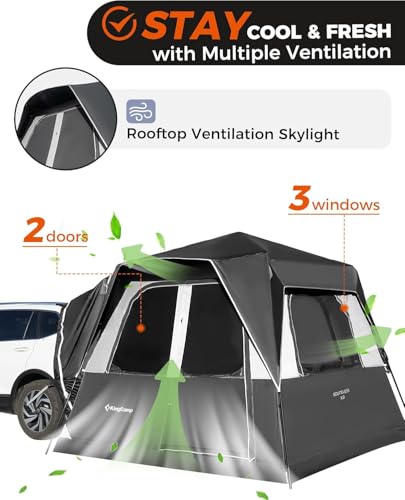


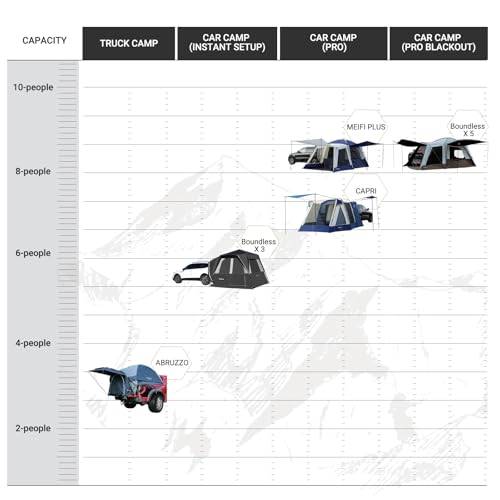
As an Amazon Associate we earn from qualifying purchases. Product prices and availability are accurate as of the date/time indicated.

TIMBER RIDGE 5 Person Truck-Bed-Tents SUV Camping Tent | Car Camping Weather Resistant Storage Bag 10' W X 8' L X 7.1' H Portable
As an Amazon Associate we earn from qualifying purchases. Product prices and availability are accurate as of the date/time indicated.
Prices shown are approximate and for reference only. Prices change often, so please check the current price on Amazon before you buy.
Best SUV for Camping and Kayaking Reviews for 2026
1. Subaru Crosstrek Best SUV for Camping and Kayaking
The Subaru Crosstrek pairs about 20 cubic feet of cargo behind its rear seats with about 55 cubic feet with the seats folded, giving a small family or a couple room for a tent, sleeping bags, and a cooler without a trailer. Its ground clearance of about 8.7 inches and standard all-wheel drive help on gravel launches and dirt campsite roads, while its roof load of about 150 pounds is enough for a kayak and a roof rack on most trips.
For a budget camping and kayaking SUV, the Crosstrek is practical because its fuel economy of about 29 mpg combined is the most efficient in this table, its compact size is easy to park at a busy launch, and its all-wheel drive gives confidence on wet grass and mud. Its towing capacity of about 1,500 pounds is enough for a small utility trailer or a kayak trailer, although it is lower than a 4Runner or a Wrangler, so it suits a paddler who carries a kayak on the roof rather than towing a large trailer.
2. Toyota RAV4 Best SUV for Camping and Kayaking
The Toyota RAV4 combines about 38 cubic feet of cargo behind its rear seats with about 70 cubic feet with the seats folded, which is a large step up in space from the Crosstrek for a family that needs room for a camp kitchen, chairs, and extra dry bags. Its roof load of about 150 pounds and its ground clearance of about 8.1 inches make it a solid choice for a roof-mounted kayak, while its fuel economy of about 30 mpg combined helps on long drives to a distant launch.
In a family camping setup, the RAV4 is useful because its flat cargo floor makes it easy to slide a cooler and a tent bag in and out, its rear seats fold easily for a sleeping platform, and its available all-wheel drive helps on loose gravel. Its towing capacity of about 1,500 pounds is similar to the Crosstrek, so it is best for a paddler who wants more interior space than a Crosstrek without moving to a larger, thirstier SUV.
3. Honda CR-V Best SUV for Camping and Kayaking
The Honda CR-V uses about 39 cubic feet of cargo behind its rear seats and about 76 cubic feet with the seats folded, giving it the most cargo room behind the rear seats in this comparison and plenty of room for a tent, a cooler, and a kayak gear bag at the same time. Its roof load of about 165 pounds is the highest in this table, which helps when a kayak and a roof rack together are close to the limit on another SUV.
For a comfortable road-trip SUV, the CR-V is a strong choice because its interior is quiet and roomy, its ground clearance of about 8.2 inches is enough for most dirt launches, and its fuel economy of about 30 mpg combined is similar to the RAV4. Its towing capacity of about 1,500 pounds means it is not the best choice for a heavy trailer, but it suits a camper who values cargo space, comfort, and roof capacity over towing.
4. Jeep Wrangler 4-Door Best SUV for Camping and Kayaking
The Jeep Wrangler 4-Door pairs about 31 cubic feet of cargo behind its rear seats with about 72 cubic feet with the seats folded, and adds a towing capacity of about 3,500 pounds that is more than double the capacity of the RAV4 and CR-V. Its ground clearance of about 10 inches and its removable roof and doors make it a distinctive choice for a paddler who drives on rough tracks to a remote launch, although its roof load of about 150 pounds still needs to be checked before loading a kayak.
In a rough-road setup, the Wrangler is useful because its four-wheel drive and high clearance can handle mud, ruts, and rocks that would stop a lower SUV, and its towing capacity can handle a kayak trailer or a small camper trailer. Its fuel economy of about 20 mpg combined is lower than the Crosstrek, RAV4, and CR-V, and its ride is firmer, so it suits a camper who prioritises off-road ability and towing over fuel economy and quiet comfort.
5. Toyota 4Runner Best SUV for Camping and Kayaking
The Toyota 4Runner combines about 47 cubic feet of cargo behind its rear seats with about 90 cubic feet with the seats folded, giving it the largest maximum cargo space in this table and room for a large tent, a camp kitchen, and gear for a family of four. Its towing capacity of about 5,000 pounds is the highest in this table, and its ground clearance of about 9.6 inches makes it a strong choice for a dirt road to a campsite or a launch.
For a long camping trip, the 4Runner is a solid choice because its body-on-frame build is durable on rough roads, its large cargo area can double as a sleeping space for one person with the seats folded, and its roof load of about 150 pounds can carry a kayak. Its fuel economy of about 22 mpg combined is lower than a RAV4, but it suits a camper who needs maximum cargo and towing for a trailer, a kayak, and a full camp setup.
6. Ford Bronco Best SUV for Camping and Kayaking
The Ford Bronco pairs about 38 cubic feet of cargo behind its rear seats with about 77 cubic feet with the seats folded, and adds a ground clearance of about 11.5 inches that is the highest in this table. Its towing capacity of about 3,500 pounds and its roof load of about 150 pounds make it a capable choice for a kayak on the roof or a trailer behind, while its removable roof panels give an open-air drive to a launch.
For a top off-road camping and kayaking SUV, the Bronco is a top choice because its clearance, four-wheel drive, and removable panels make it fun and capable on a trail, and its cargo space is enough for a weekend camp setup. Its fuel economy of about 20 mpg combined is lower than the smaller SUVs in this table, so it is best for a camper who wants the highest clearance in this comparison and is willing to pay more at the pump for that ability.
Buying Guide: How to Choose the Best SUV for Camping and Kayaking in 2026
Start with your kayak, your group size, and your roads, not with a single specification. If you carry one kayak on the roof, a compact SUV with a roof load of 150 pounds is enough. If you carry two kayaks, a trailer, or a family of four with full camping gear, a larger SUV with more cargo and towing may be better. Check your kayak weight, your roof rack weight, and your roof load limit together before you buy, because the total must stay under the limit while driving.
Roof Racks, Kayak Carriers, and Loading Height for Camping and Kayaking SUVs
Roof racks and kayak carriers affect how easy it is to load a kayak. A J-cradle carrier holds a kayak on its side and uses less roof width, while a saddle carrier holds a kayak flat and can be easier to load for a heavy kayak. A load-assist carrier can help one person lift a kayak onto a tall SUV, such as a 4Runner or a Bronco, while a low SUV, such as a Crosstrek, is easier to load without assistance. A fact not in the table is that you should also check the roof rail type, because a raised rail can accept a crossbar easily, while a flush rail may need a specific crossbar kit, and a naked roof may need a clamp-on rack that is rated for your vehicle, and a kayak should always be tied at the bow and stern as well as at the rack, because a single strap can fail in wind.
Cargo Space, Sleeping in the SUV, and Towing for Camping and Kayaking SUVs
Cargo space affects whether you can sleep in the SUV or need a tent. An SUV with 70 to 90 cubic feet of maximum cargo and a flat floor with the seats folded can sleep one or two people on a sleeping pad, while an SUV with 55 cubic feet is better as gear storage with a tent outside. Towing also matters: a 1,500-pound limit is enough for a small kayak trailer, while a 3,500-pound or 5,000-pound limit can tow a small camper trailer as well. Always check your hitch, your trailer brakes where required, and your state rules before towing.
Ground Clearance, All-Wheel Drive, and Fuel Economy for Camping and Kayaking SUVs
Ground clearance and drive type affect where you can go. An SUV with 8 to 9 inches of clearance and all-wheel drive can handle most dirt launches, while an SUV with 10 to 11.5 inches of clearance and four-wheel drive can handle rougher tracks. Fuel economy also matters on a long trip: an SUV that gets about 30 mpg combined will use much less fuel on a 500-mile round trip than an SUV that gets about 20 mpg combined, so a smaller SUV can save money that can be spent on campsite fees, food, and gear.
Budget Guide for the Best SUV for Camping and Kayaking
The budget pick in this comparison is the Subaru Crosstrek, because it is the cheapest model in the table and still offers about 8.7 inches of ground clearance, standard all-wheel drive, about 150 pounds of roof load, and about 29 mpg combined that are enough for camping and kayaking. In the $25,000-$30,000 range, the Subaru Crosstrek is the SUV to start with if you want the lowest-cost option in this guide and a roof-ready compact SUV. In the $30,000-$35,000 range, the Subaru Crosstrek remains the cheapest model in this guide, and a Toyota RAV4 in that range costs more than the Subaru Crosstrek but adds more cargo space. In the $32,000-$38,000 range, the Subaru Crosstrek is still the cheapest model, and a Honda CR-V in that range costs more than the Subaru Crosstrek but adds a higher roof load. In the $35,000-$45,000 range, the Subaru Crosstrek is still the cheapest model, and a Jeep Wrangler 4-Door in that range costs more than the Subaru Crosstrek but adds higher clearance and towing. In the $40,000-$45,000 range, the Subaru Crosstrek is still the cheapest model, and a Toyota 4Runner in that range costs more than the Subaru Crosstrek but adds much more cargo and towing. In the $42,000-$50,000 range, the Subaru Crosstrek is still the cheapest model, and a Ford Bronco in that range costs more than the Subaru Crosstrek but adds the highest clearance in this table. For most campers and paddlers, a compact SUV will help more than a large SUV, because it is cheaper to buy, cheaper to fuel, and easier to park at a launch, but it costs less in every range above when compared with the larger models. Spend the saving on a good roof rack, a kayak carrier, bow and stern straps, and a dry bag for your gear.
Before you buy, also check the campsite and launch rules for vehicle size, trailer parking, and overnight parking. Some launches do not allow trailers, so a roof-mounted kayak may be better, while some campsites charge extra for a trailer. Always leave the campsite and launch as you found it, take all rubbish with you, secure your kayak before driving, and check your straps after the first few miles, because a strap can loosen as a kayak settles.
Frequently Asked Questions About the Best SUV for Camping and Kayaking
What is the best SUV for camping and kayaking in 2026?
For the best SUV for camping and kayaking in 2026, the Subaru Crosstrek is often the best budget choice because it offers about 8.7 inches of ground clearance, standard all-wheel drive, about 150 pounds of roof load, and about 29 mpg combined. A useful extra fact is that you should also check the roof rail type, because a raised rail can accept a crossbar easily, while a flush rail may need a specific crossbar kit, and a naked roof may need a clamp-on rack that is rated for your vehicle, and a kayak should always be tied at the bow and stern as well as at the rack, because a single strap can fail in wind. Choose based on your kayak weight, your group size, and whether you need towing or just roof carrying.
Can I carry a kayak on the roof of a small SUV?
Can you carry a kayak on the roof of a small SUV depends on your roof load limit and your kayak weight. A small SUV with a roof load of about 150 pounds can usually carry a kayak that weighs 40 to 80 pounds plus a roof rack that weighs 15 to 30 pounds, while a heavier tandem kayak may need a trailer or a larger SUV. A useful extra fact is that you should use bow and stern tie-downs, check your straps after the first few miles, and load the kayak with the cockpit facing down or up according to your carrier instructions, because a loose kayak can shift in wind and affect handling. For most solo kayaks, a small SUV with a roof rack is a good choice.
How much towing do I need for a kayak trailer?
How much towing you need for a kayak trailer depends on your trailer and kayak weight. A small kayak trailer with one or two kayaks usually weighs 500 to 1,000 pounds loaded, so a 1,500-pound towing limit is enough, while a larger trailer with a camper or extra gear may need 3,500 pounds or more. A useful extra fact is that you should check your hitch class, your trailer tongue weight, and your state rules for trailer brakes, because a trailer that is too heavy for your hitch can affect braking and steering, and a trailer with a low tongue weight can sway at highway speed. For a kayak trailer, a 1,500-pound limit is usually a good starting point.
Can I sleep in my SUV while camping and kayaking?
Can you sleep in your SUV while camping and kayaking depends on your cargo space and your campsite rules. An SUV with 70 to 90 cubic feet of maximum cargo and a flat floor with the seats folded can sleep one or two people on a sleeping pad, while an SUV with 55 cubic feet is usually too small for two adults to sleep comfortably. A useful extra fact is that you should check campsite rules before sleeping in your vehicle, because some campsites do not allow car camping, and you should crack a window for ventilation, use a window shade for privacy, and keep a flashlight and water within reach. For car sleeping, a larger SUV with a flat floor is usually better, while a tent is usually more comfortable for a family.
Related guides
- Best Weatherproof Sleeping Pad for Families in 2026: Durable, Water-Resistant Camping Pads for Kids and Adults
- Best Small Headlamp for Backpacking in 2026: 7 Small Headlamps That Offer Bright Light, Light Weight, and Reliable Performance for Backpacking
- Best Tent When Tent Is Too Heavy in 2026: Best Tent When Tent Is Too Heavy for Light Packing, Easy Carry, and Simple Camping
- Camping Table in 2026: The Complete Budget Guide to Choosing a Camping Table That Fits Your Chairs, Your Car, and Your Cook Kit, From Coleman and ALPS Mountaineering to KingCamp and Trekology
More from Amazon
Programs that pair well with the guide above. Offers and eligibility are set by Amazon and may change.
Free shipping on eligible items, Prime Video and more. Eligible new members can start with a free trial.
Start a Prime free trialA Prime membership for ages 18-24 with a trial period. Eligibility is set by Amazon.
See Prime for Young AdultsAudiobooks and podcasts to listen to on the go. Eligible new members can start with a free trial.
Try Audible freeAd-free music streaming. Eligible new subscribers can start with a free trial.
Try Music Unlimited freeAs an Amazon Associate we earn from qualifying purchases.

Write Your Review
No reviews yet. Be the first to share your experience!