
What's inside
- What Makes the Best Lithium Camping Battery Worth Carrying
- Quick Comparison: Best Lithium Camping Batteries Compared
- Best Lithium Camping Batteries: The Seven Reviewed
- Buying Guide: How to Choose the Best Lithium Camping Battery
- How We Selected the Best Lithium Camping Batteries
- Top Picks for LiFePO4 Camping Batteries
- Frequently Asked Questions About the Best Lithium Camping Battery
As an Amazon Associate I earn from qualifying purchases. This post may contain affiliate links at no extra cost to you.
The best lithium camping battery is not the one with the biggest number on the box. It is the one that runs your actual camp — phones, lights, a camera, maybe a 12-volt fridge, maybe a CPAP — for the number of nights you actually stay out, and then recharges in a way that fits your trip. Buy too small and you are rationing light on the second night. Buy too large and you have spent fridge money on a battery you have to lift in and out of the car at every stop.
Start by separating two products that share this keyword. A portable power station is a battery with an inverter, outlets, USB ports, a screen, and charging inputs built in. It is ready to use the day it arrives and suits most car campers. A bare 12-volt lithium battery, usually LiFePO4, is a building block for a system: you add your own charger, inverter, wiring, and protection. It suits camper vans, trailers, and base camps where the battery stays installed. Both are legitimate. Confusing them is how people end up with a battery they cannot charge and cannot plug anything into.
Most of the models worth buying now use lithium iron phosphate, called LiFePO4 or LFP. Compared with older lithium chemistries and lead-acid batteries, LiFePO4 units are generally rated for many more charge cycles, tolerate being run down further, weigh much less than a lead-acid battery of similar usable capacity, and hold their voltage more steadily while discharging. Follow the maker’s instructions for charging temperature, storage charge, and approved chargers, do not charge a lithium battery that the maker says is too cold to charge, keep it dry, and never modify the case, wiring, or battery management system.
What Makes the Best Lithium Camping Battery Worth Carrying
Usable Watt-Hours Matter More Than the Headline
Capacity is measured in watt-hours. A phone battery holds roughly 10 to 20 watt-hours, a string of camp lights may draw a few watts per hour, a laptop charge can take 50 to 80 watt-hours, and a 12-volt camping fridge can consume several hundred watt-hours over a full day depending on weather, settings, and how often it is opened. Add up a realistic day, multiply by your nights between charges, and add a margin for inverter losses and cold weather. That number, not a marketing figure, is the size you need. Remember that running a battery completely empty every trip shortens its life and leaves you no reserve, so size for your normal use to end with something left.
Output Decides What You Can Actually Plug In
Check both the AC inverter rating in watts and the 12-volt and USB outputs. A small station may happily charge phones and run lights yet shut down the moment you connect a kettle, a hair dryer, or a power tool, because those appliances draw far more than most campers expect. For most tent and car campers, the sensible loads are phones, lights, cameras, laptops, fans, and a 12-volt fridge run directly from the DC output, which avoids inverter losses. If you use a CPAP, check its draw with the maker, whether a DC converter is available for it, and test the full setup at home for a whole night before relying on it at camp.
Recharging Is Half the Product
A battery is only as useful as your plan to refill it. Wall charging at home before a trip is the baseline. Solar charging depends on panel size, sun, angle, shade, and season, and a panel’s rated watts are a laboratory figure you will rarely see all day at a campsite. Vehicle charging while driving suits road trips and van life. Look at the maker’s stated maximum solar input and vehicle charging options, price the panel or charging cable into the total, and be honest about your sites: a shaded forest camp will not feed a large battery from a small panel, however efficient the battery is.
Quick Comparison: Best Lithium Camping Batteries Compared
| Lithium Camping Battery Model | Best For | Key Specs | Typical Price Range | Rating |
|---|---|---|---|---|
| EcoFlow RIVER 2 Pro | Best lithium camping battery overall | Portable power station, LiFePO4, about 768Wh, AC, USB-C and 12V outputs, solar and vehicle charging options as published | $380 – $500 | 4.7 / 5 |
| Anker SOLIX C1000 | Best for fridges and longer weekends | Portable power station, LiFePO4, about 1056Wh, higher AC output, multiple USB and 12V outputs, fast wall charging as published | $550 – $800 | 4.7 / 5 |
| BLUETTI EB3A | Best compact for tent camping | Portable power station, LiFePO4, about 268Wh, lightweight carry, AC, USB and 12V outputs, solar input as published | $200 – $300 | 4.5 / 5 |
| Jackery Explorer 1000 Plus | Best expandable system | Portable power station, LiFePO4, about 1264Wh base capacity, expandable with maker battery packs, AC, USB and 12V outputs | $800 – $1,100 | 4.6 / 5 |
| Goal Zero Yeti 500 | Best simple mid-size station | Portable power station, LiFePO4, about 499Wh, AC, USB and 12V outputs, solar charging with maker panels as published | $350 – $500 | 4.5 / 5 |
| Dakota Lithium 12V 100Ah LiFePO4 | Best bare 12V battery for vans and trailers | 12V LiFePO4 battery, about 1280Wh nominal, built-in battery management, requires separate charger, inverter and wiring | $650 – $900 | 4.6 / 5 |
| Battle Born 100Ah 12V LiFePO4 | Best bare battery for a built system | 12V LiFePO4 battery, about 1200Wh nominal, built-in battery management, designed for series or parallel system builds per maker guidance | $700 – $950 | 4.6 / 5 |
Ratings are editorial assessments for camping use, based on the makers’ published specifications, chemistry, outputs, charging options, and value at typical prices. Prices are typical retail ranges and change with sales and bundles. For the two bare 12-volt batteries, the price is for the battery alone; a working camp system also needs a suitable charger and, for AC appliances, an inverter, which must be added to the total.
Best Lithium Camping Batteries: The Seven Reviewed
1. EcoFlow RIVER 2 Pro – Best Overall for Most Campers
The RIVER 2 Pro sits in the size class most car campers actually need. Its capacity covers a long weekend of phones, lights, cameras, and a laptop, and can support a efficient 12-volt fridge for a limited run when you manage loads carefully. It is light enough to carry from car to picnic table without planning the lift, charges quickly from a wall outlet before a trip, and accepts solar and vehicle charging for longer stays. If you want one battery, for one car, for ordinary camping, start here and only size up if your load list proves you need to.
2. Anker SOLIX C1000 – Best for a Fridge and a Longer Weekend
The SOLIX C1000 is the step up for campers whose fridge is non-negotiable. The extra capacity turns a one-night fridge setup into a comfortable weekend, with room for lights and devices alongside, and its stronger AC output covers more household-style loads when you need them at a base camp or during a power outage at home. It costs and weighs more than the mid-size stations, so it earns its place only if your census says so. Run the fridge from DC where possible and test the whole load at home first.
3. BLUETTI EB3A – Best Compact for Tent Campers
The EB3A is for the camper whose power needs are honestly small: two phones, a headlamp or two, a small light, and a camera. In that role it is excellent — light, quick to charge, and easy to tuck into a packed car. Its limit is equally clear. It is not a fridge battery for a weekend, and it is not a base-camp system. Bought for the loads it can actually serve, it is one of the best-value ways to leave power banks and disposable batteries behind.
4. Jackery Explorer 1000 Plus – Best if You Plan to Expand
Some campers know their system will grow: a bigger fridge, a longer stay, a second panel, eventually a small trailer. The Explorer 1000 Plus suits that path because its capacity can be expanded with the maker’s own add-on batteries rather than replaced. That flexibility costs more up front than a fixed mid-size station, and the full expanded system gets heavy, so treat it as base-camp or vehicle-based power, not something you carry far from the car.
5. Goal Zero Yeti 500 – Best Simple Mid-Size Option
The Yeti 500 is a straightforward middle choice for campers who value a simple interface and an established accessory ecosystem of lights and panels from the same maker. Its capacity class covers devices, lights, and short fridge support, and it works well for weekend car camping and home backup for small essentials. Compare the total price with the maker’s panel if you plan to solar charge, because system cost, not station cost alone, is the fair comparison.
6. Dakota Lithium 12V 100Ah – Best Bare Battery for a Vehicle Build
If you are building a van, trailer, or permanent base-camp system, a bare 12-volt LiFePO4 battery like this one can offer more capacity for the money and a far cleaner installation than a portable station. Dakota Lithium publishes its battery for exactly this kind of use, with a built-in management system. The catch is responsibility: you must add a compatible lithium charger, correct wiring and fusing, and an inverter if you need AC, installed to the maker’s guidance and local electrical rules. If that sentence excites you, this is your row. If it worries you, buy a station.
7. Battle Born 100Ah 12V – Best Bare Battery for a Growing System
Battle Born is a familiar name in RV and marine builds, and its 100Ah LiFePO4 battery is designed to be combined into larger banks under the maker’s guidance. It suits campers building a system that may expand over seasons, who are comfortable planning charging, monitoring, and protection properly. As with any bare battery, the published price is the beginning of the system cost, not the end, and professional installation is a sensible expense if you are not experienced with 12-volt systems.
Buying Guide: How to Choose the Best Lithium Camping Battery
Do the Load Census on Paper First
Write down every device you will run, how many watts it draws or how many watt-hours a charge takes, and how many hours or charges per day you honestly need. Multiply, add your nights, then add a reserve. This ten-minute exercise prevents the two classic mistakes: buying a small station for a fridge, and buying a huge station for two phones. Include a CPAP, medical device, or work laptop explicitly if they travel with you, test them at home, and never let a camping battery be the untested sole plan for a device your health depends on.
Choose Station or System, Then Stay in That Lane
If your battery will move between car, tent, picnic table, and home, buy a portable power station. If it will live in a van, trailer, or cabin and feed installed lights, a fridge, and sockets, buy a bare 12-volt battery and build the system properly. Mixing the two halfway — a bare battery, loose cables, and a borrowed charger — is where cost, frustration, and safety problems live. Follow the maker’s approved charger and cable guidance for whichever lane you choose.
Price the Refill, the Carry, and the Storage
Add the solar panel, vehicle charging cable, or extra battery pack you will actually buy, then look at the total weight and packed size against your car and your back. Finally, read the maker’s storage instructions now, not in November: most LiFePO4 batteries prefer to be stored partly charged, in a cool dry place, and checked periodically. A battery stored correctly wakes up ready next season. A battery stored flat, hot, or damp may not, whatever its cycle rating promised.
How We Selected the Best Lithium Camping Batteries
We included only real, named, currently sold models from established makers, with published capacity, chemistry, output, and charging specifications. Portable stations and bare 12-volt batteries were assessed in their own categories, and every model was judged on usable capacity for real camp loads, output honesty, charging options, weight, and whole-system cost, with safety and maker instructions treated as requirements rather than options.
Top Picks for LiFePO4 Camping Batteries
LiFePO4 batteries are valued for long life and steady output. These choices include 12V batteries for trolling motors and RV setups, and a ready-to-use power station for simple camping without any wiring or tools.
NERMAK 12V 50Ah LiFePO4 Deep Cycle Battery
A 50Ah deep cycle battery with a stated life of thousands of cycles. It suits small camp setups, fish finders and lights, and it is a sensible entry point for anyone building their first 12V power box.
As an Amazon Associate we earn from qualifying purchases at no extra cost to you.
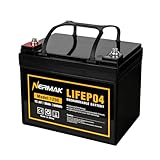
ECO-WORTHY 12V 50Ah LiFePO4 Lithium Battery
A 50Ah pack with an XT60 interface and built-in protection. It is a good starting point for DIY camping power boxes, since the connector makes it simple to hook up common accessories and charge controllers.

LiTime 12V 50Ah LiFePO4 Trolling Motor Battery
A battery sold for trolling motors, marine and camping use. It is a fit for kayak anglers and small boats that need lightweight power, and it also works as a base for a simple off-grid camp setup.
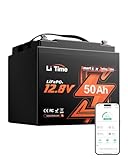
Eiiev 12V 100Ah LiFePO4 Battery With 100A BMS
A 100Ah battery with a built-in battery management system. It offers more capacity for vans and larger camp setups, so it suits campers who need power for several days of lights, pumps and electronics.

BLUETTI Elite 100 Mini Portable Power Station, 1004.8Wh
A ready-to-use power station with over 1000Wh. It saves wiring work and covers lights, fans and a small fridge for a long weekend, which makes it the simplest option on this list for people who want power now.

Frequently Asked Questions About the Best Lithium Camping Battery
How many watt-hours do I need for camping?
For phones, lights, and cameras over a weekend, a station in roughly the 250 to 500Wh class is often enough. Add a 12-volt fridge, a laptop, or a CPAP and most campers should look at roughly 750 to 1000Wh or more, based on their own load census. Count your devices, multiply by nights between charges, add a reserve for losses and weather, and test the setup at home before a trip.
Can a lithium camping battery run a camping fridge?
Yes, if it is sized for it. A 12-volt fridge’s daily consumption varies widely with ambient temperature, settings, and use, so check the fridge maker’s figures, run it from the battery’s DC output where possible, and test it at home for a full day. Small stations are suitable only for short runs; a full weekend on a fridge usually calls for a larger station or a 12-volt system battery, ideally with solar or vehicle charging to replace what each day uses.
Is LiFePO4 better than lead-acid for camping?
For most campers, yes. LiFePO4 batteries are generally much lighter than lead-acid batteries of similar usable capacity, can be discharged more deeply without the same penalty, hold voltage more steadily, and are rated for considerably more cycles. They cost more up front and need a compatible charger and protection from charging in conditions the maker prohibits. Lead-acid can still suit a very tight budget for light use, but the weight and usable-capacity gap is hard to ignore on the road.
How should I store a lithium camping battery between trips?
Follow the maker’s storage guidance for your exact model. In general, store it indoors in a cool, dry place, at the partial state of charge the maker recommends rather than completely full or empty, away from fuels, sharp objects, and extreme heat, and check and top it up at the intervals the maker states. Never store a damaged, swollen, or overheating battery; stop using it and contact the maker for instructions.
Related guides
- Best Battery Powered Camping Fan in 2026: 7 Battery Powered Camping Fans That Are Quiet, Strong, and Built for Camping Without a Fan That Is Too Weak, Too Loud, or Dies Fast
- Best Food for Kayak Camping in 2026: 7 Foods That Are Light, Easy, and Built for Kayak Camping Without Food That Is Too Heavy, Too Hard to Cook, or Spoils Fast
- Best Battery Operated Camping Lights in 2026 for Camping Lights, Battery Lights, and Choosing the Best Battery Operated Camping Lights
- Best Dry Bags for Kayak Camping in 2026 for Kayak Camping, Dry Bags, and Choosing the Best Dry Bags for Kayak Camping
More from Amazon
Programs that pair well with the guide above. Offers and eligibility are set by Amazon and may change.
Free shipping on eligible items, Prime Video and more. Eligible new members can start with a free trial.
Start a Prime free trialA Prime membership for ages 18-24 with a trial period. Eligibility is set by Amazon.
See Prime for Young AdultsAudiobooks and podcasts to listen to on the go. Eligible new members can start with a free trial.
Try Audible freeAd-free music streaming. Eligible new subscribers can start with a free trial.
Try Music Unlimited freeAs an Amazon Associate we earn from qualifying purchases.

Write Your Review
No reviews yet. Be the first to share your experience!